Search This Blog

Showing posts with label Ritual sexual abuse. Show all posts

Monday, 2 December 2013

Anonymous Vs. Steubenville

Comment: How ironic that Lostutter is facing 25 years in prison for revealing Establishment crimes, where the worst sexual predators in our society converge and who perpetuate the sexual abuse in our society.  

-------------------

Rolling Stone

On November 25th, the most notorious rape case in recent memory took yet another shocking twist. In Steubenville, Ohio, where a 16-year-old girl was raped by two high school football players in August 2012, a grand jury indicted the city's School Superintendent, Michael McVey, on felony charges of tampering with evidence and obstructing justice. An elementary school principal and two coaches in the district were indicted as well, facing misdemeanor charges including failure to report child abuse and making false statements. Shortly after the news hit that morning, Deric Lostutter, a ... 26-year-old programmer in Lexington, Kentucky, [sent] me a message. "We were called liars and more," he wrote, but "we were right about it." He had reason to feel vindicated. As one of the most notorious members of the hacker collective, Anonymous, Lostutter battled to bring justice to Steubenville, exposing secrets of a town that's still reeling from the fallout today. He just never expected that he'd get raided by the FBI, and face more prison time than the rapists in the end. 

Anonymous is a purposefully chaotic and leaderless collective. Anyone can proclaim themselves a member or declare an "operation" against a target. But getting others to [care] is another story. This is what makes Lostutter stand out. Less than two months after creating his alter ego as KYAnonymous, he launched and organized two of group's most renowned and righteous operations yet: battling the Westboro Baptist Church and, most famously, the town of Steubenville, Ohio, after the high-profile rape of a teenage girl by players on the high school football team.

Read More


Wednesday, 12 October 2011

Men Who Hate Women: The Franklin Scandal and the Truth About Our Leaders


Excellent if very disturbing article from Mr. Koehli:

-----------------

Franklin scandal

Män som hatar kvinnor - 'Men Who Hate Women'. That's the original Swedish title of Stieg Larsson's runaway best-seller, The Girl with the Dragon Tattoo. Those who have read the novel or seen the Swedish film adaptation know that it's the perfect description. Larsson weaves a story of rape, sadism, spousal abuse, human trafficking, white-collar crime, and political corruption around the iconic characters of Lisbeth Salander and investigative journalist Mikael Blomkvist. Yeah, it may just be a novel, but after the research I've been doing lately, I'm convinced that there's more to the Larsson's subject matter than just a page-turning good read. As the character 'V' put it in V for Vendetta, "Artists use lies to tell the truth, while politicians use them to cover the truth up." That's the truth, and if I've learned anything in recent years, it's that truth is stranger than fiction, and even more disturbing.

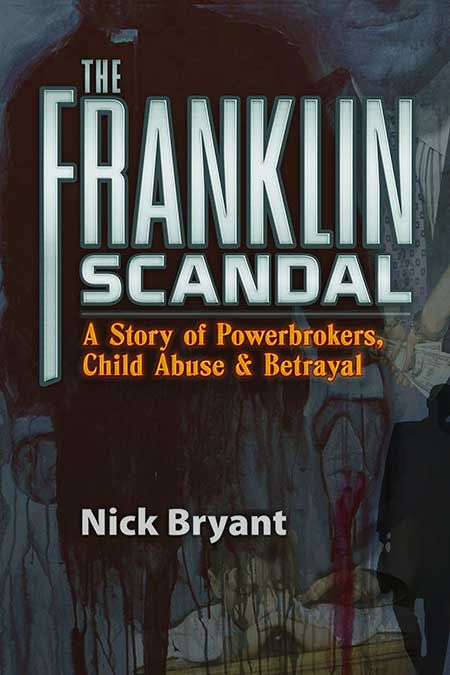
While I'm a fan of Larsson's work, and fiction in general, there's something to be said about true accounts. They have a way of 'seating' in the mind, making what was at first only 'interesting' and perhaps 'entertaining' fiction become real: solid, vital, life-altering. Fiction gives us the truth, but at a distance. It's up to the reader to divine the real-life applications and implications. But when they become clear, it can be a profound and painful experience. It's all too easy to take the easy way out when that experience is just too painful, with the potential of shattering too many deeply held illusions about the way reality really works. "It's just a story, after all." Those six curiosity-killing words are enough to prevent a person from doing the research to see that there may be more to a story than just the product of a good imagination. There may be a disturbing underbelly to the surface events of everyday life. In my case, that's where real-life investigative reporter Nick Bryant's 2009 book The Franklin Scandal: A Story of Powerbrokers, Child Abuse & Betrayal comes into the story. It's the book that made a lot of things hit home for me, and it was absolutely devastating.

Bryant is a professional journalist, having published articles in many 'mainstream' newspapers and journals. But after deciding to research the infamous 'Franklin scandal' of the late '80s and early '90s, no mainstream editor would take his story. It was just too hard to believe. For those readers unfamiliar with the scandal, you can watch a never-aired documentary produced by UK-based Yorkshire Television titled Conspiracy of Silence. The documentary was commissioned by Discovery Channel, who pulled out at the last minute. Luckily, someone with access to a rough cut of the piece leaked it and Bryant has made it freely available on his website, here. The Frankliln Scandal not only confirms what the Yorkshire team presented, but adds reams of new details and documents demonstrating a level of criminality, corruption, perversion of justice, and sadism that is simply mind-blowing.

Tuesday, 19 July 2011

Sex, Lies and Society Part IX


Family, Ritual and Networks

The Outreau abuse trial started in 2000 and lasted until December of 2005 where over 66 adults were accused of raping, sexually abusing and prostituting 45 children between January 1999 and February 2002. The incidents took place on a poverty stricken council estate “in a chronically deprived community.” 1 

Many of the accused were said to have been innocent of the crimes, with just four of the 17 men and women originally charged found guilty. What was deemed as evidence was later said – perhaps conveniently – to be no more than the imaginings of Myriam Delay and the wild inventions of other children. As well as crucial evidence that was never heard in court which would have exonerated many of the accused, most of the 13 suspects who continued to plead their innocence were placed in detention in 2001. In the beginning of 2006 President Jacque Chirac called the case of the Outreau 13 “…as an unprecedented judicial disaster…” 2

France has been repeatedly criticised by the European Court of Human Rights and campaign groups for its pre-trial detention that can last up to five years. Many lost their jobs and saw their children taken into care.

The case has revealed serious flaws in France’s judicial system, which should never have allowed most of the cases to come to court. This can only benefit those who commit the crimes and serves to feed the idea that much of the organized paedophilia and sexual abuse are children’s fantasies. It underlines just how difficult it is to obtain prosecutions of high level networks if isolated groupings within society are loaded with problems. It remains disturbing however, that Miriam Delay on 10th day of her trial, suddenly admits to fabricating much of the story concerning tales of gang rapes and a child prostitution ring based in her home.
After a trial that shattered lives of 18 people accused in case, with one committing suicide and others losing custody of their children it begs the question was it all lies? The answer is no. There were cases of abuse. Delay’s retraction appeared to prove that no “commercial” bartering of “services” was organised.

Yet what are we to make of the trial that followed a few months later and which bore a remarkable resemblance to he Outreau trail? It was “one of the country's biggest criminal trials, and the largest paedophile trial held in France” 66 men and women faced “charges of rape and child sex abuse on 45 children, some of them their own. The abuse is alleged to have taken place over three years between 1999 and 2002 in the western town of Angers.”

The Deputy public prosecutor Herve Lollic told the AFP news agency: “We are certain of not having identified all the victims and it is probable that we have not identified all the aggressors,” which doesn’t inspire the greatest confidence that justice would be done. However, by July 2005 videotaped testimony of the children provided “horrific details of abuse” which took place between 1999 and 2002. Charges were brought against an intra familial paedophile ring in a poor area of a town in western France. ‘These were people in difficulty, excluded from normal society, who found each other. And for them, everything was sexualised,’ said one local news journalist.  Another expert at the trial mentioned that ‘these were people who were unable to manage their sexual impulses. And nobody told them these things shouldn't be done …’ 3

After so many cases of abuse in the last 20 years it is almost understandable that social workers are trying to cultivate due caution but at the same time suitable vigilance. This may have accounted for the fact that 21 of the 23 families in the case had been monitored by French social workers after the first report in 1999, but the investigation only began in earnest in 2002. This seems to be yet another instance of gross mismanagement or criminal apathy in light of the severity of the abuse. The Deputy public prosecutor said “…I fear that these things do not just happen in Angers…” 

With such painfully slow realisations forming at this late stage it is no wonder that intra-familial abuse and other forms of exploitation continue to rise in society. Where cases of intra-generational abuse occur, how does one penetrate the wall of secrecy set up as a natural course by the victims and perpetrators alike? When these walls are finally broken down, the methods adopted often lead to fatal flaws that see the wrong persons accused and caught up in the ensuing and very slippery shadows, which then causes suspicion and accusations to all, regardless of tangible evidence.

 From the UK to the US and things are no better. Children are suffering unnecessarily as victims only to become further victims of court ineptitude and cultural and personal bias resulting in families being broken up and effectively destroyed. Meanwhile, the real abusers continue to get away quite literally, with murder.

From a series of life history interviews conducted by Sara Scott PhD from the Department of Sociology and Social Work at the University Liverpool, UK, the stories from one particular family detail a history of “violence, cruelty and sexual abuse.” One interviewee responded to a question about her uncle and abuse:
  
… once I was at boarding school he used to have to pick up us up from the airport and stay over night and going back to school and things like that; he used to abuse then a fair bit…. My uncle in many ways was like my dad. He’d come across as a very nice bloke, good laugh and a joke. They managed to do what my parents had done, build up and image of everything’s fine, nothing’s wrong… ‘We’re the perfect family.’  My uncle has a daughter and four grandchildren – at least one I know that’s been abused.  I’m almost certain he’s abused his own daughter, he abused my sister, he abused my dad… very much into abusing people.
          
He abused you dad when he was young? 

Yeah, from what I can gather from what my sister’s told me from when he was fairly young until his teens. Quite badly abused my dad, because of the 18 years [between them]. 4 
Scott goes onto emphasize the “ordinary” and “routine” nature of such abuse which existed in these families. Abuse began when the children were infants where it was so much part of their formative years that it became normalized:

[Kate]: Yeah, I can remember what I call normal abuse… which basically didn’t have any cult meaning, it was just my father. That was pretty much a regular occurrence as much as eating my meals actually. I can’t really distinguish particularly… It would happen at home or used to take me for walks in the park… anywhere really… I don’t think it really bothered him at all. […]

[Sinead:] As soon as I saw my mum each day I would get bath. And my mum used to pay particular attention to my private parts. She would wash me quite roughly and insert her fingers inside me. Sometimes my dad would help and he would help, and he would do the same thing. That must  of gone on since I was born really. I do remember my dad would quite often insert things inside me, his hand was a favourite. It got to be normal, I just used to relax, it didn’t hurt so much. It was so ordinary, I didn’t think: ‘O, my God, what are they doing?’ That went on till I went to school. 5
It seems to be true with many cases of intra-familial abuse that emotional cruelty and degradation also featured to a greater or lesser degree. In the case of the above middle class English family such instances included: “….pissing on me when I was in bath and putting my head down the toilet and putting faeces in my mouth. Nice, you know, nice things like that… I hate him.” 6
 
Far from being merely a product of dysfunctional family, incest is obviously carried out most often by parents committing rape upon their own child which tends to cut through the psychoanalysis double-speak of “parents loving too much” or the “failure of family obligations.” 7

If we look to the internet there are ample opportunities for those to find others who are attempting to make incest acceptable along with paedophilia. As with most forms of deviancy of the kind that includes bestiality, Sadomasochism and fetishes of all types the internet provides a homogenous and anonymous entry into all manner of fantasy that is attempting to slip from pathology to normalcy. There are even chat-rooms and websites that are de facto support groups for people engaged in incest. Ideas that advocate a better understanding of consensual sex between “kin”, blur the line yet again between the complexities of father-daughter relationships for example, where perhaps the only way to find a proper relationship is to give in to the adult’s manipulations -  sex being the only way to gain attention or “love.” However, our concern here is for the child for whom the idea of consent, when confronted by the father or mother in such cases is a cruel abstraction devoid of any meaning. It can only be a form of parental rape at this stage and it must be prosecuted as such. 

In the UK the old offence of incest was replaced with a more modern law that prohibits sexual relations between children under 18 and their blood relations, adoptive parents and siblings, step-parents, foster carers and those in a position of responsibility in the family. The “position of responsibility” covers people such as a friend of the child's mother, a relative by marriage, such as an uncle, or another adult that lives in the same household. Whereas in the New York, US, the penalty for those who molest an unrelated child differs greatly with the penalty for those who molest children to whom they are related. One may ask what is worse? A stranger who rapes a child or the child’s own father committing the crime? There is surely something even more abhorrent about a father or mother betraying such trust which is, after all, about satisfying their own desire at the expense of their own flesh and blood. 

Not so, overseas. Sex with a child under the age of 11 is a Class B felony, punishable by up to 25 years in prison. If, however, the sexually abused child is closely related to the perpetrator, state law ensures significantly more lenient treatment, to the extent that the prosecutor may choose to charge the same acts as incest. The problem being this is not listed as a sex offence, but as an “offense affecting the marital relationship,”  8  It is therefore a Class E felony, whereby even a convicted offender may be granted probation. 

Imagine how useful a political tool this has become for the high-flying family man with a supercharged career and a penchant for abusing his children as he climbs the ladder to the top? Find the right lawyer, pay the money and rely on incest loopholes to finish the job. Such inconsistencies are not so surprising when we look at some of the definitions of sexual practices in law.

In the State of North Carolina orgies are defined as “7 people in a closed room with their feet off of the ground.” Necrophilia (sex with corpses) was not illegal in Iowa until the late 1980s, then it is little wonder that child abuse and the courts are in such chaos.  Similar eccentric laws exist in many Southern States.

Regardless of the precise statistics of each category we can be sure that the prevalence of familial abuse and sexual abuse in general, is not decreasing, though crime in general may well be on the decrease. Either way, if we go back to the US in 1970 the results of one study recorded 86,324 persons arrested for sexual offences. In 1986, 168,579 persons were arrested for sexual offences which are almost double the number. The United States Department of Justice recorded in 1981 and 1989 respectively, that from 1970 to 1979 the rate of increase for sexual offences, other than forcible rape and prostitution was 5 percent. From 1979 to 1988 the rate of increase for these offences was 44.5 percent. 9 Therefore, we can make the tentative observation that the single largest group in our prison population may be those convicted of sexual offences, second only to drug offences. 

It is also worth noting that the high rate of physical and sexual abuse (including rape and violence within the family) will induce post traumatic stress disorder (PTSD) in children in particular, especially where genital pain is involved. This becomes understandable when we realise that an estimated 61percent of violent sex offenders in State prisons have a prior conviction history and a further estimate of 1 in 4 imprisoned rape and sexual assault offenders with dominant past histories of violent crime, with 1 in 7 having been previously convicted of a violent sex crime. 10 Child abusers who have been known to re-offend as late as 20 years following release into the community, this is not a problem that will disappear with sporadic under-funded, community-based supervision and management. This is a problem that goes very deep indeed into all aspects of social systems: economics, politics, and education.

Female sexual abuse is another taboo. Women in society are seen as the carers, nurturers and protectors. To accept that some women also abuse, whether sexually physically is therefore a strong taboo and all taboos have a paucity of research and data. As always, this too creates tensions between child advocates, agencies and feminist groups who fear that it will feed into the already difficult plight of women in society generally not least the arena of abuse. 

With the use of force and coercion to maintain power, women will, to some degree necessarily be a part of that, albeit in significantly lower figures than the male. Women are largely still barred from positions of responsibility and influence where patriarchy still dominates over gender, race, class, sexual orientation, physical and mental health. Therefore, the suppression of the feminine as we have seen is almost an unconscious given. 

There is one theory that suggests that women frequently abuse children physically rather than sexually. This is the most readily available individual, or individuals to whom the abuser can claim to exert control and retain that power normally denied to them, especially within a fragmented and disintegrating home environment where pathologies tend to manifest. 11 This however, could be a case of social science being too flexible. Perhaps it is a simple case of sadistic narcissism or psychopathy exerting its will. 

Examples of female sexual abuse fall into distinct categories including: teachers who are involved with adolescent and/or pre-pubescent boys or consider themselves “in love” and/or want to teach them about sex; 12 Women who are coerced into offending and who are initially abuse dependent i.e. allows another male to initiate the action but can end up abusing on their own; # and abusers who have been sexually abused themselves from a very young age and go on to inflict the same abuse towards their own children. This may not be necessarily aggressive, threatening abuse, rather “a cry for emotional intimacy.” 13

Psychopathy may also play its part where cases are just too pathological to be classed as anything else. The case where a mother feared she would “lose her boyfriend while she recuperated from surgery arranged for her 15-year-old daughter to have sex with him” could be viewed as one example. 14

Though the above suggests there are important differences between male and female abuse, this type of offending, despite the cultural stereotyping of young boys “enjoying it and wanting it” can be just as detrimental creating concerns regarding masculinity, deep-seated anger, fear, betrayal, helplessness, negative attitudes towards relationships with the opposite sex and continuing occurrences of self-blame and guilt. In other words, female sexual abuse, like male abuse, has long term psychological effects that can ruin lives. 

Social service and mental health professionals are unused to the idea that females can and do abuse children making the detection and of such crimes even more difficult. This means that children remain vulnerable to continuing and undetected abuse of this kind. There are estimates that 5 percent of girls and up to 20 percent of boys that have been abused are perpetrated by women, though the tiny amount of data available is less than definitive. 15
 
One programme to broach the subject of female abuse aired in the UK almost ten years ago. “The Sexual Abuse by Women of Children and Teenagers” by the BBC’s social and current affairs series Panorama raised several taboo issues.
16  The programme suggested that though female abuse may still be lower than male abuse, it was vastly underestimated in scope and frequency with up to as many as 250,000 having been abused as children by women in the UK alone. 

Children are not only becoming victims within the family but are also manifesting narcissistic and sociopathic tendencies which have been inflicted upon them. Time and time again within the democracies of so called enveloped countries the young are absorbing and enacting the pathologies of a world that has been forced and coerced into losing its way. There can be no greater barometer than by looking at the plight of children under globalization. There is  something very wrong indeed in our institutions and social systems if the very core of the family is exhibiting symptoms of emotional decay and psychological disorders to the extent that parents, siblings resort to abuse, torture and murder. And when this is discovered serves as a convenient cover for much more extreme networks of abuse within the Establishment classes. This is further exacerbated by a climate of fear placing pressure on parents who are made to feel hypersensitive and over protective of their own children.  The child abuse industry shows no signs of slowing. 


Notes 


1  ‘French paedophile ring case turns into judicial fiasco’ The Guardian, December 2, 2005. 
2  ‘Outrage over innocent 13 jailed in sex abuse scandal’ The Times, January 20, 2006.
3  ‘Child abuse gang horrifies France’ By Sarah Shenker, BBC News, July 27, 2005.
4 The Politics and Experience of Ritual Abuse: Beyond Disbelief By Sara Scott, 2001, published by Open University Press.ISBN 0-335-20419-8. p.66.
5  p.67 (Scott, 2001)  
6 Ibid.
7 Systemic treatment of incest: A therapeutic handbook. T.S Trepper and M. J Barrett, New York: Brunner/Mazel. (1989).
8  ‘The Incest Loophole’ By Andrew Vachss, The New York Times Op-Ed, November 20, 2005.
9 U. S. Department of Justice (1981). Sourcebook of criminal justice statistics-1981. Bureau of Justice Statistics, Washington, D. C. /U. S. Department of Justice (1989). Sourcebook of criminal justice statistics-1989. Bureau of Justice Statistics, Washington, D. C.
10 US Department of Justice, Bureau of Justice Statistics, February 1997.
11 'Unspeakable Acts', Trouble and Strife 2 I (Summer), I3 p. I5 by L. Kelly. 1991.
12 Bridget Mary Nolan , a former Australian teacher was convicted in December 2005 of having sexual intercourse with an underage student at her school. She was sentenced on March 1, 2006 to two years and four months but the which led to a suspended sentence after Nolan entered a $1,000, three-year good behaviour bond. The sentencing judge justified his decision not to hand down a jail sentence due to her showing "genuine remorse." The Australian, January 2006, p. 5./ The Australian. 2 March 2006, p. 3.
13 A woman told investigators that she was “…coaxed into raping her 6-year-old son when her husband threatened to leave will spend the next 16 years in prison….The woman's 30-year-old husband was sentenced …to two concurrent life.” published in The Akron Beacon-Journal, October 5, 2002.
14 ‘Breaking the last taboo: child sexual abuse by female perpetrators’ By Renee Koonin, Australian Social Work journal, Volume 30, No 2. May 1995.
15 A paper: Child Sexual Abuse: New Theory and Research, 'Women as Perpetrators,’ by D. Finkelhor, and D. Russell New York: Free Press. (1984).
16 The Sexual Abuse by Women of Children and Teenagers UK TV Programme, Panorama, BBC1, 10 pm Monday 6th October 1997.     


Monday, 18 July 2011

Sex, Lies and Society Part VIII


Contrary to the belief that rapists are hiding in the bushes or in the shadows  of the parking garage,  almost two-thirds of all rapes were committed by someone who is known to the victim. 73% of sexual assault were perpetrated by a non-stranger — 38% of perpetrators were a friend or acquaintance  of the victim, 28% were an intimate and 7% were another relative. - National Crime Victimization Survey, 2005

One comprehensive report analysed data between 1976 and 1994 and estimated more than 37,000 children had been murdered. 1  In fact, during the same period 1 in 5 child murders were committed by a family member and 1 in 5 child victims were known to be killed by another child. Children under 18 accounted for 11 percent of all murder victims in the US in 1994. Nearly half of these 2,660 child victims were between 15 and 17. In most murders of a young child, a family member killed the child, while in most murders of an older child, age 15 to 17, the perpetrator was an acquaintance to the victim or was unknown to law enforcement authorities.

Keeping to the same statistical research we also find that in family murder of a child 10 percent of victims was age 15 - 17, while in murders by strangers 67 percent of victims were in this age category. Since the mid-1980’s the increases in the number and the rate of murder among 15- to 17-year-olds, particularly among black youth in this age range, outpaced changes in murder in all other age groups. 2  Since 1980, there has been a 15 percent annual average increase in the number of prisoners sentenced –- for violent sexual assault (other than rape) which is “faster than any other category of violent crime and faster than all other categories except drug trafficking.” 3 The majority of these prisoners are young men.

In another survey conducted by Staying with the US Nation Committee for the Prevention of Child Abuse (NCPCA) the steady growth of child abuse over the last ten years was confirmed with the total number of reports across the US increasing by 45 percent since 1987 and the rate of child abuse fatalities similarly increasing by 39 percent since 1985.4  Based on data from all three years, the survey found 82 percent of children were under the age of five while 42 percent were under the age of one at the time of their death.

 Physical violence against children is more prevalent than sexual abuse yet they often they go together. Since the 1970s, the phenomenon of child abuse has been increasing and so too the limits of the extremes that surface:
Head trauma, strangulation and drowning were the most frequent methods of filicide (the killing of a person's own child). Fathers tended to use more active methods, such as striking, squeezing or stabbing; mothers more often drowned, suffocated or gassed their victims. Unusual methods included putting sulfuric acid in a nursing bottle, and biting a child to death. One father put his son on a drill press and drilled a hole through the heart. 5
In a study of child abuse in New York City the incidence of child abuse increased 1026 percent between 1964 and 1974 which ranged from neglect, physical violence, sexual molestation and assault to incest and emotional terrorism. 6 The US Department of Health, Education and Welfare stated: “An epidemic of child abuse is occurring in this country.” 7

Though fluctuating parallel to the number of cases investigated which has dipped of late, similar to the high incidence of missing persons, the increase was in part attributed to a growing awareness from the public and the willingness to report child abuse. Yet the number of total child maltreatment instances that were investigated by state agencies remained constant from 1986 to 1993 for example, but the percentage of cases investigated declined dramatically, suggesting a steady rise. Indeed, the instances of child abuse and neglect almost doubled in those seven years alone totalling more than 2.8 million children. 8

Back in the UK, 1 in 14 children have been violently assaulted by their parents. Incidences of being kicked, punched, choked, burnt or threatened with a knife have been listed as the common attacks within the home. Broken bones, bruising, bites, burns and head injuries were some of the results of this abuse, some of which were carried out by mothers at 52 percent and with fathers at 45 percent. It is almost a given that fathers are assumed to have been responsible for carrying out the vast majority of domestic abuse cases involving children yet many surveys and studies both in the UK and the US seem to prove that this is another myth. Most sexual abuse is carried out by step-fathers and siblings, with poverty and low income families most likely to harbour the abuse. 9, 10
 
One of the most common forms of sexual abuse is that of incest (or intra-familial abuse) remaining one of the most under-reported and least discussed crimes in the US. This is due in part, to the lack of accurate statistics and information borne from the fear and secrecy inherent in such a crime not least the difficulty in gathering such highly sensitive information. Social and familial pressure maintains a strong taboo that is almost impenetrable. The coercion by the abuser and the feelings of guilt and shame further cement the wall of silence.

Research indicates that 46 percent of children who are raped are victims of family members. Incest is traditionally defined as “sexual intercourse between persons too closely related to marry (as between a parent and a child)” yet here too the definition has been expanded to include a sexual abuse by anyone who has “authority or power over the child.”11 The perpetrators of incest may include immediate or extended family members, babysitters, school teachers, scout masters, and priests/ministers. This could be said to be one reason perhaps for the high rates and appears to be a highly dubious expansion of categorization.
The study of a nationally representative sample of state prisoners serving time for violent crime in 1991 revealed that 20 percent of their crimes were committed against children, and three out of four prisoners who victimized a child reported the crime took place in their own home or in the victim’s home. 12

While intra-familial abuse (incest) seems to often cross over into ritual abuse there are cases that are inter-generational and “poly-incestuous” involving parents, grand-parents, aunts and uncles. Sometimes this can extend to over three or four generations or more. 13 Deprived neighbourhoods with poor unemployment and a history of economic hardships also featured in a variety of studies. The “infection” naturally draws in “friends of the family” further increasing the perpetuation of abuse and the likelihood of psychopaths participating further increasing the severity of the effects.

Psychopaths tend to recognize each other “intuitively” and would be attracted to secret clubs or networks of this nature. Much like any microcosm of the macrocosmic principle of Pathocracy – psychopaths go where they can indulge their every whim with impunity, be it in the heart of the family or at the apex of the Establishment. Only the level of cunning, manipulation and charisma dictates where such persons will end up. But if the statistical level of abuse is correct then the damage done to generations of children, some of who may then continue the abuse on their own sons and daughters may begin to rise exponentially.

The already seriously flawed European Justice system was brought into sharp relief with the most recent case of Myriam Delay in France, where although abuse did take place, an extended ring of paedophilia in this case was said to have been absent. “The trial had shattered the lives of 18 people accused in the case, with one committing suicide and others losing custody of their children, while sending France into a paroxysm of soul-searching.”


Notes

1 US Department of Justice · Office of Justice Programs Bureau of Justice Statistics, Crime and Victims Statistics 1998.
2 Statistical data from Yesican.org/
3 US Department of Justice, Bureau of Justice Statistics, February 1997.
4 Nation Committee for the Prevention of Child Abuse (NCPCA) 2000 Annual Fifty State Survey.
5 ‘Child Murder by Parents: A Psychiatric Review of Filicide’ by Philip J. Resnick American Journal of Psychiatry, 1969.
6 Quoted from ‘Child Abuse in America: Slaughter of the Innocents’ By James W. Prescott, Ph.D.From Hustler, October 1977. 
7 Ibid.
8 Survey shows Dramatic Increase in Child Abuse and Neglect 1986-1993 Wednesday, Sept. 18, 1996, Michael Kharfen, US Depart. Of Health and Services, www.acf.dhhs.gov.
9 ‘Revealed: The Truth about Child Sex Abuse in Britain’s Families’ by Jeremy Laurance, The Independent, November 2000.
10 ‘'One in 14' children attacked, BBC News, 19 November, 2000.
11 1990. Secret Survivors: Uncovering Incest and Its Aftereffects in Women, by Sue E. Blume, published by  John Wiley and Sons, New York, NY.
12 The National Center for Victims of Crime (NCVC) ncvc.org.

Sunday, 17 July 2011

Sex, Lies and Society Part VII


“Moral Panic” and Social control

The question of “moral panic” was first coined by British sociologist Stanley Cohen from his study of “mods” and “rockers” during the 1970s. He used this term to define the role of media and deviant behaviour which fed on peoples’ already sensitive fears of the unknown, raw from economic hardship. The threat from this perceived deviancy was thereby exaggerated, fuelling unrest. Cohen defined this collective behaviour as:
A condition, episode, person or group emerges to become defined as a threat to societal values and interests; its nature is presented in a stylized and stereotypical fashion by the mass media; the moral barricades are manned by editors, bishops, politicians and other right thinking people; socially accredited experts pronounce their diagnosis and solutions; ways of coping are evolved or (more often) resorted to; the condition then disappears, submerges or deteriorates and becomes visible. 1
A recent UK Home office report found that “a lack of intimacy and high levels of loneliness” were common factors in the profiles of the vast majority of sex offenders, similar to the appalling level of uncared for children in the UK and abroad.2

With “Sarah Payne’s law” in the UK and Megan’s law in the US 3 both seek to alert the public about the whereabouts of the sex offender in your town or village under the guise of freedom and protection. What it actually does is to further isolate and exclude the offender, - child molester or not - and reinforces this identity and stigmatization, naturally driving such people underground and continuing the likelihood of child abuse or other related crimes.

The question of such moral panics disappearing is dependent on how useful their presence may be. Self appointed vanguards of this moral imperative would love to believe they are upholding the sanctity of society as they perceive it. It is more likely that they are merely cogs in the wheel of a purposely initiated “panic” that is tailored towards a pre-designed conclusion sourced from the Establishment. The witch hunts of 17th Europe; the trials of the Spanish Inquisition; the Nazi programs of genocide and the McCarthysim of 1950s America are testament to the ease by which ponerization of the populace can be initiated.

The primary mode of panic thus adopted appears to have been the “Elite-engineered”4 model, with other secondary models under its influence. We can include the Grass Roots model of dissatisfied society achieving catharsis through retribution and the Interest Group model made up of advocates, activists, interests groups and think-tanks seeking to bring awareness to the “moral evils” in society. These latter forces work in tandem and come up against the infinitely more knowledgeable core of Elite control, the top tiers of which have had the populace under a microscope for a considerable length of time. These “positive” forces for change can thus be easily manipulated yet an awareness of this fact is still missing.

When the action of negative feedback is excluded from contemporary discourse concerning abuse and the nature of the child molester, the obvious outcome is a headlong rush to reaction without any understanding of the consequences. Judgments about whether one is a child molester, a terrorist, mentally ill, a deviant or dissident, it is becoming the province of authorities which are tied to regressive world-views and corrupt political interests.

Moral panics lead to various individuals and groups becoming scapegoats for a host of inner demons the history of which is long and rich, whether they are the “white trash” of nomadic America or the gypsies on the outskirts of London. When crude moral panics surface with their clamours for “justice,” scape-goating always emerges from its artificial womb.

The seemingly most horrific and depraved of crimes can be the most precise mirror of societies which can then be focused towards a group or individuals that best fit those fears and denials. The politicization of grief and crime is a familiar story. The reaction of populations against the threat of predators, real or imagined in any given context, creates the vortex to which all “deviance” or resistance is drawn. Behind this chaos lie select members in power for whom such confusion is ripe for manipulation. The reaction seems to follow a pattern whereby those least able to defend themselves are targeted such as ethnic, religious and sexual minorities. Sexual offenders in the US, under the present laws, many of whom have placed on the register as dangerous paedophiles, may have only committed relatively minor offences. This often serves to bypass the real culprits who were responsible for the crimes, sexual or otherwise. Hence it’s usefulness.

As we shall see, medical and health authorities are becoming the next stage in the law and justice treadmill. There is a medicalization of social control that is coming closer where mental illness, ethics and political bias are merged. That is not to say that we must embrace deviancy that is clearly harmful to the child as outlined previously. There must be the clearest definitions possible so as to maintain the purest objectivity in a world of full of murky disinformation.

While the “moral panic” meme does have validity it also acts to mask deeper social problems that lie festering at the roots. Social constructivists focus on how these issues become defined at particular historical junctures but they neglect the overall synthesis of why these social problems appear and are singled out for public exposure.

Ponerization operates on precisely these gaps in awareness, where sophisticated “twists” on truth discombobulate individuals and groupings perceived as threatening to the status quo. The tide of emotional rage becomes paramount and reasoning leaves by the back door, so often held open by the authorities. The multiple strands of warring interests groups exclude the possibility that there is unwarranted panic about Satanism and ritual abuse or conversely, in certain circumstances it does indeed exist and such panic serves to ensure it's cover. Far from dealing with the dark and hidden aspects of our collective shadows we have found new ways to limit reality and thus our own understanding by creating new demons, whether they are paedophiles or terrorists. Both exist but not in the ways that we think. It is far easier to see abuse that is not right on our doorsteps and even easier to project our denials onto a convenient pariah.

The technique of scapegoating comprehensively pervades the media, judiciary and law enforcement. Though there are numerous cases of justified sentencing of child molesters and rapists, there is also a tragic quota of those wrongfully accused. If the individual is guilty, a remorseless witch hunt results in a regression towards vigilantism and the herd mentality, often destroying all that goes before it. The net result - so beneficial to those protected by the Establishment - leaves society with a situation far worse than the one that preceded it.Miscarriages of justice are intermingled with genuine abuse all of which produce an exponential footprint of trauma that engulfs the communities and feeds media sensationalism.

Examples of high profile ritual or familial abuse claims and from around the world including The Orkney Islands, The Pitcairn Islands, The Isle of Lewis, Rochdale child abuse case, Cleveland cases of sexual abuse in the UK and the Christchurch Crèche case in New Zealand; the separate cases of Saskatoon, Saskatchewan and Martensville ritual abuse: the Shieldfield child abuse scandal and countless others. It is precisely because in some cases the abuse was present that the methods used by police and the judiciary ensured that innocent men and women took the fall for predators ensconced in the community and in connected positions of power.

The high profile but rare cases of violent sexual abuse and sometimes murder which have been committed play a part in giving undue credence to such crimes making them appear much more common than they are. 5 This has led to sensationalisation of the issue thereby increasing the “fear factor” and parental paranoia that is leading to restrictions on natural child development. as well as civil liberties. In combination with other social factors, the erosion of childhood has led to “a drastic decline in children’s outdoor activity and unsupervised play…” 6 This is partly due to the so-called litigation and “claims culture” which has produced so much alienation and social fragmentation in modern America and which is now spreading across Europe. We are now living in a world where parents and adults alike are becoming wary of even talking to a child that is not their own or tending to a minor injury in the school-ground lest they be accused of inappropriate “touching.” 7 The well promoted obsession with lone child molesters is out of all proportion to the cases reported. So, let us get this in proportion and look at an example which paints a rather different picture. 

Last year over 100 children in the UK alone were killed on the roads, more than 6,000 were injured and 1,000 seriously, leaving them disfigured or disabled for life. Over 40,000 children ran away from home with Britain having one of the worst records of child poverty in Europe. Among 100,000 and 200,000 people under eighteen, experience homelessness each year. How many children in the UK have been killed by the lone child molester in around three decades? Seven. 8

Staying with the UK, a Home Office report from 1999 became yet another research study to be added to the growing body of respected research confirming the real risk from sexual abuse comes not from isolated child molesters but from relatives, family friends and siblings. The research also found: “…that only one in five men jailed for molesting children was likely to be caught re-offending, compared with re-conviction figures of 50 percent for non-sexual offenders within two years of the original crime.”

This serves as another reminder that sexual crime can always provide an infinite variety of scapegoats and condemnations while ignoring the core reasons for why these offences take place. We might equally say that recognized offenders were expert in covering up their crime coupled with the fact that the age of the victim invariably ensures that the molestation is not reported adding difficulties for definitive data.

While the lone child molester and “stranger danger” gets enormous coverage in the press, the less sensationalist yet far more disturbing trend is the incidence of abuse that occurs not from the lone paedophile but from the Establishment and within the family unit. According to Mary Marsh director for the National Society For the Prevention of Cruelty to Children (NSPCC): “Over the last 30 years, hundreds of children have been beaten, starved, burned, suffocated, poisoned, shaken, strangled or stabbed to death by their parents”9 She believed the child abuse killings were a “national disgrace” her belief drawn from the statistics which suggest that more children die in the home than in the street. Yet still the lone child molester threat continues to pervade popular culture holding parental sensibilities to ransom with 63 percent of parents believing most child murders occur outside the home. 10

NSPCC’s poll found that 70 percent of parents were “more concerned for their children’s safety after the deaths of Soham schoolgirls Holly Wells and Jessica Chapman.”11 Cases such as these allow newspapers to milk the fears of all parents who in turn campaign for legislation that adds to the overreaction for a predator that is statistically already within the home and our so beloved institutions of power and influence. Yet so far it seems, neglect, rape and physical violence represents an overall increase far above sexual abuse. More than three children die each day in America as a result of child abuse or neglect. 12

Time after time, statistics confirm that there is a much higher incidence of physical abuse as oppose to sexual and emotional abuse with neglect often well into double figures. In the same NSPCC study, this form of abuse is seven times more prevalent than sexual abuse. Indeed, it seems the younger the child the greater the risk of murder (infanticide) for those aged under five. The US fairs no better. The number of homicides of children under age 5 has increased over the past two decades, albeit with a modest decline in the last few years, according to government figures. The number of infanticides of children age 1 and younger is also increasing since the 1990s. Infant sexual abuse (nepiophilia) is also an increasing problem within the family. The effects of sexual abuse on those of pre-verbal age are relatively unknown. Research suggests evidence that the foetus can be highly sensitive to external stimuli of a positive or negative nature. We can also then surmise that the infant will be equally sensitized to the intent and physical effects of sexual abuse.

A toddler’s brain has twice as many connections among its 100 billion neurons as the brain of a fully matured adult. 13 It is a crucial process of connecting within an intricate and complex system, housing neural circuits of learning that is highly dependent on external stimuli. The parents and the environment can directly effect whether or not the child inherits damaged circuits and the surfacing pathologies, however slight, or creative ones that lay down a healthy foundation for the future. When infants and children are exposed to unhealthy social encounters from others which include stress and anxiety, then the brains do not wire themselves properly in the “emotional centres,” which leads to negative cognitive reactions. If we then take the trauma associated with infant abuse, we can imagine the damage inflicted on the neurology of a developing baby and the future generational line.

A leading expert in the field of sexual abuse of the infant child, Dr. Bruce Perry at the Baylor College of Medicine, believes the development of the cerebral cortex can be reduced by as much as 20 percent by abuse with many brain structures remaining under-developed.  Instead of dense neural clusters as by-products of creative learning, there are effectively “holes” sourced from trauma, stress and anxiety.  Perry indicates that the human brain has a variety of ways by which it can store or “recall” experience right across the board of motor, vestibular, emotional, social and cognitive applications. The body locks in these memories that, according to Perry, are non-cognitive and pre-verbal: “It is the experiences of early childhood that create the foundational organisation of neural systems that will be used for a lifetime.”
14

 Of these neural patterns, instead of laying down stable and proper functional platforms for further learning, the imprinting shock of abuse lays down trauma and anxiety related to psycho-sexual development during the general mapping process. This then leads to a greater propensity for widespread damage in biological life of an emerging infant with natural personality development prone to severe disruption.
 
With the long term effects of child abuse covering a wide range of  psychological problems and the proven tendency toward substance abuse and difficulty with close relationships, 15 we can tentatively conclude that the effects may be a form of emotional fall-out that has a very long legacy indeed.


Notes

1 p.9 Folk Devils and Moral Panics the Creation of the Mods and Rockers by Stanley Cohen, (1973) published by Paladin.
2 Research and Development Statistics (RDS)Home Office UK, Crime in England and Wales, 2004/2005 http://www.homeoffice.gov.uk/ 
3 ‘Megan’s Law,’ was passed after seven year-old Megan Kanka was raped and murdered by a paroled convict who had moved onto her street in New Jersey in 1994. Photos and addresses of all high-risk, Class 3 sex offenders are to be posted on the Internet.
4 “Moral Panics and the Social Construction of Deviant Behavior: A Theory and Application to the Case of Child Ritual Abuse”, by Jeffrey S. Victor, Social Perspectives Autumn 1998
5 There is evidence that child abductions are on the rise in England and Wales: From The Independent, May 2006, ‘Indypedia’: 1985 - 102 1990- 208 1995 - 355. This also includes family kidnappings and not necessarily those by strangers. 2000/01 --- 546 2005/0
6 ‘Play on’ By Jenny Cunningham, 3rd January 2002, spiked-online.com
7 ‘Protection risks doing more harm than good.’ By Sandra Dick, January 18 2005, The Scotsman.
8 Research and Development Statistics (RDS) Home Office UK, http://www.homeoffice.gov.uk/ 
9 ‘Home Office Report says: Most child sex attacks committed by relatives, family friends.’ Agence France Presse, 1999. BBC News, 13 October, 2002.
10 ‘NSPCC steps up campaign on child abuse killings’ 14 October 2002, nspcc.co.uk/ The “fear-mongering” methods by which organizations like NSPCC alert the public to these dangers is also under scrutiny by some commentators.
11 Child murder rate 'a national disgrace' BBC News,13 October, 2002.
12 Ibid.
13 Nation Committee for the Prevention of Child Abuse (NCPCA) 1996 Annual Fifty State Survey: […] 25 states provided the following breakdown for reported cases: 62percent involved neglect, 25percent physical abuse, 7percent sexual abuse, 3percent emotional maltreatment and 4percent other. For substantiated cases, 31 states gave the following breakdowns: 60percent neglect, 23 percent physical, 9percent sexual, 4percent emotional maltreatment and 5percent other.
14 ‘The Long Term Neurological and Developmental Effects of Sexual Abuse on Infant Children’ Mike Earl-Taylor and Lindsay Thomas, March 2003 (quoted from science in Africa.co.za 
15 Trauma, Violence, and Abuse: A Review Journal. January 2000, by Bruce Perry Vol. 1, Number 1. Sage Publications, Inc.


Tuesday, 28 June 2011

In the Name of the Father Part I


“Standards of conduct appropriate to civil society or the workings of a
democracy cannot be purely and simply applied to the Church.”
- Cardinal Joseph Ratzinger


The High Priests of Paedophilia?

 According to the first comprehensive national study of the prevalence of sexual abuse by priests within the Catholic Church, some 4 percent of U.S. priests ministering from 1950 to 2002 were accused of sex abuse with a minor. It was further discovered that over 95 percent of the dioceses and 60 percent of the religious communities were affected. 1 Though rigorous and wide ranging, this study cannot ascertain the full extent of sexual abuse within the Church.

Released in Washington on February 27, 2002, the John Jay study was commissioned by the U.S. bishops’ National Review Board, which released its own report at the same news conference on the causes of the clergy sex abuse crisis that has continued to rock the church for the past four years. The review board named by the bishops and composed of prominent lay people, is monitoring compliance with the U.S. bishops’ policies to prevent clergy sex abuse. The study concentrated on providing suitable statistics about the nature and scope of the crisis. The findings were shocking.

Over 4,392 clergymen - most of whom were priests - were accused of abusing 10,667 people. Sex-abuse related costs totalled $573 million, with $219 million covered by insurance companies. With child sex abuse more prevalent among diocesan clergy, of the total clergy accused, 929 were religious priests. The Church authorities’ response to persistent claims of abuse was to hush up claims and send the accused clergy for medical evaluation and treatment. While no action was taken against 10 percent of priests accused, only 6 percent of the allegations saw priests reprimanded. After this “tap on the hand” they were promptly returned to ministry. From other studies and reports it is clear that this secret preferential treatment had been taking place for many decades.

According to the study, 81 percent were males, ranging from 11 to 14, being over half of the total victims in this age group. Most of the victims were post-pubescent adolescents with a small percentage pre-puberty, though the study mentioned that 22 percent of the victims were under 10 years old. Homosexual child molestation seems to be more prevalent within the Church than the higher statistical evidence of young girls being abused in society as a whole. The abuse itself was multiple and extreme. Commensurate with the cunning of the sexual predator, the family social contacts presented the most frequent context for abuse whereby priests used the trust of families to gain access to children. Tragically up to 7 percent of these children had a prior history of abuse and were thus easily targeted again by those in which they had placed their trust – the professed messengers and mediators of God.

Though comprehensive enough, this belies the fact that it can only include those who chose to reveal these crimes. As the authors stated, the data from the 1990s had not been recorded as well as the natural time lag of victims not reporting their abuse, priests still to this day being protected and many of the victims unable to have the courage to come forward. They also admit that the financial costs are likely to be far higher: “14 percent of the dioceses and religious communities did not provide financial data and the total did not include settlements made after 2002, such as the $85 million agreed to by the Boston Archdiocese.” The study was based on detailed questionnaires returned by 195 of the 202 dioceses, Eastern eparchies and other ecclesial territories tied to the United States. This 97 percent compliance was “an extraordinarily high response rate,” said the study. Regarding action by civil authorities, the study said that: “3 percent of all priests against whom allegations were made were convicted and about 2 percent received prison sentences.” This alone should give us pause for thought regarding the Churches professed “tough stance” on there in-house child molesters.

While news of the abuse was beginning to seep out, Pope John Paul II was doggedly holding onto power and the belief held by many that he was a symbol of freedom and compassion around the world. Looking at the facts of his tenure this belief proves to have little connection to reality.

The Vatican acts as lawmaker, prosecutor and judge, which is tied irrevocably to its own survival. It guards this survival jealously. Human rights are an anathema to such a corporation. It requires far too many adjustments and reforms that, if implemented would eventually bring the whole business crashing down. This is probably why the European Council’s Declaration of Human Rights has yet to be signed by the Vatican. Wojtyla decided it would be a good thing to preach about human rights and the due process of the law while ensuring that such a process was frozen within his own dominion. 

Similarly, it is easy to place the Virgin Mary on a Gold encrusted pedestal while ignoring the rights of women around the world. Condemning birth control and refusing the ordination of women is a classic contradiction and symbolic of Catholicism in its entirety. Pope John Paul moulded and shaped the episcopate discarding some of the more congenial and inclusive wording of the Vatican councils in favour of total obedience. He was big on re-Romanization and a return to “traditional values.” The net result of these values is unending fear, misery and suffering born from those divorced from reality and compassion while theologically claiming the reverse.

Wojtyla’s papacy, like his predecessors in the 11th and 16th centuries, served to add to the schizophrenia of the Vatican still further, creating more of an obstacle to the prospect of hope, freedom and diversity among Christian churches. A serious lack of new priests taking up their posts is symptomatic of millions worldwide who have become tired of the corruption and hypocrisy of the Catholic Church. The scandal of abuse on its own is enough to understand why.


 “God’s Rottweiler”


Now, with the embodiment of contradictions that Karol Wojtyla represented, we go to the hand-picked Pope Benedict XVI a.k.a. Cardinal Joseph Ratzinger, affectionately known as “the enforcer,” “the panzer cardinal” and “God’s Rottweiler.” The quality of compassion that merited these nick-names was seen when he attempted to add his own brand of healing for Christians and Muslims.

Rather than providing inspiration towards reconciliation, which it so desperately needs, the Pope effectively sowed the most objectionable propaganda of hatred, consciously and purposefully. The Guardian reported that “The Vatican last night said Pope Benedict XVI had not intended to offend when he quoted a 14th-century Christian emperor as saying the Prophet Muhammad had introduced only ‘evil and inhuman’ ideas into the world.” 2 It is precisely because Ratzinger knew of the delicacy of the issue that he chose such an inflammatory passage to quote. Knowing that he represents the religious arm of the “War on Terror” sideshow, he could not however, be as brazen as Bush in his loathing of Islam, so he did it under the pretence of faith and reason.

Joseph Ratzinger’s neo-conservatism is sourced from a colourful past which included a brief membership of the Hitler Youth movement and wartime service with a German army, anti-aircraft unit. His Nazi youth history and his insistence “that it was impossible to resist” the regime at the time, is not the primary reason for the scepticism that he embodies the milk of human kindness. His vocal declarations of compassion have distinct overtones of that same fascism that so swept him off his youthful feet decades before.3 He is a Pope that George Bush can do business with and no doubt has been given a suitably tailored script to steer the faithful. He will be able to hark back to the past by guiding the masses into choppier waters, with a highly predictable set of fascist reaffirmations.
 Perhaps it was this same spirit of “resistance” that led the UK Observer to report in April 24, 2005 about the upstanding qualities of the new Pope and how he was busy “obstructing” the sex abuse inquiry by ordering bishops to keep the allegations secret. Ratzinger certainly led by example on this issue and sent a letter to his staff to conduct investigations - in secret. By doing that, the clergy knew that they could keep the evidence secret for 10 years and by that time the children would be adults. The priests would then be free to make merry with the Communion wine and reminisce about the good old days.

The order was made in a confidential letter, obtained by The Observer, which was sent to every Catholic bishop in May 2001. The lacklustre inquiry was finally lumbering into action after the growing revelations of enormous systematic and institutional sexual abuse was beginning to breach the boat. Ratzinger was tasked with keeping the doors firmly closed:

[...] The letter is referred to in documents relating to a lawsuit filed earlier this year against a church in Texas and Ratzinger on behalf of two alleged abuse victims. By sending the letter, lawyers acting for the alleged victims claim the cardinal conspired to obstruct justice.


Daniel Shea, the lawyer for the two alleged victims who discovered the letter, said: ‘It speaks for itself. You have to ask: why do you not start the clock ticking until the kid turns 18? It's an obstruction of justice.’


Father John Beal, professor of canon law at the Catholic University of America, gave an oral deposition under oath on 8 April, 2004 in which he admitted to Shea that the letter extended the church's jurisdiction and control over sexual assault crimes.


The Ratzinger letter was co-signed by Archbishop Tarcisio Bertone who gave an interview two years ago in which he hinted at the church’s opposition to allowing outside agencies to investigate abuse claims. 4
These zipped mouths outside the public domain makes you wonder what secret documents are still locked away in the Vatican vaults marked “for the Pope’s eyes only.” Nothing like openness and honesty on behalf of God’s representatives.
 In the 1990s the child abuse scandal began to affect cracks in their secrecy. Whether by conscious intent or by a natural excess, an August 2003 report from The Observer obtained an “explosive” document which revealed just how corrupted the Church had become. The 40-year-old confidential document, which lawyers called a “blueprint for deception and concealment” came from the secret Vatican archive and clearly showed the seal of Pope John XXIII. The letter was sent to every bishop in the world. “The instructions outlined a policy of “strictest” secrecy in dealing with allegations of sexual abuse. In other words, it was a cover-up of monumental proportions. Members of the church were being asked to lie and if they did not do so, they would be threatened with excommunication:
[...] They also call for the victim to take an oath of secrecy at the time of making a complaint to Church officials. It states that the instructions are to ‘be diligently stored in the secret archives of the Curia [Vatican] as strictly confidential. Nor is it to be published nor added to with any commentaries.’


The document, which has been confirmed as genuine by the Roman Catholic Church in England and Wales, is called ‘Crimine solicitationies,’ which translates as 'instruction on proceeding in cases of solicitation'.


It focuses on sexual abuse initiated as part of the confessional relationship between a priest and a member of his congregation. But the instructions also cover what it calls the ‘worst crime’, described as an obscene act perpetrated by a cleric with ' youths of either sex or with brute animals (bestiality)’.


Bishops are instructed to pursue these cases 'in the most secretive way... restrained by a perpetual silence... and everyone... is to observe the strictest secret which is commonly regarded as a secret of the Holy Office... under the penalty of excommunication’


Texan lawyer Daniel Shea…said: ‘these instructions went out to every bishop around the globe and would certainly have applied in Britain. It proves there was an international conspiracy by the Church to hush up sexual abuse issues. It is a devious attempt to conceal criminal conduct and is a blueprint for deception and concealment’


British lawyer Richard Scorer, who acts for children abused by Catholic priests in the UK, echoes this view and has described the document as 'explosive'.


He said: 'We always suspected that the Catholic Church systematically covered up abuse and tried to silence victims. This document appears to prove it. Threatening excommunication to anybody who speaks out shows the lengths the most senior figures in the Vatican were prepared to go to prevent the information getting out to the public domain.’


Scorer pointed out that as the documents dates back to 1962 it rides roughshod over the Catholic Church's claim that the issue of sexual abuse was a modern phenomenon. [...] 5

With an effective impunity mandated directly from the Pope, the crimes were allowed to flourish unabated to the present day. The fact that special attention was given to condemning bestiality: “with 'youths of either sex or with brute animals (bestiality)” suggests that their in-house investigations involved a great variety of chronic abuse previously unimagined. As well as protecting the perceived sanctity and authority of the Church, it may have also served as a double layer of protection that would ensure investigations stayed within the upper echelons of the cardinals’ clique, thus making them null and void.

In the city of Seattle; Washington State, U.S., Rev. James McGreal became the subject of four lawsuits which shed light on the number of victims the archdiocese allowed the priest to abuse. The Church was forced to pay out over $7.87 million to the victims. McGreal, who served in at least 10 parishes and two hospitals in the archdiocese between 1948 and 1988, was considered an extremely dangerous sexual predator. Although around 20 men sued the Church, filed court records say that McGreal admitted to his therapist that he molested “hundreds of victims.” 6
 The former priest who was removed from the ministry in 1988 is now 80 years old, residing in a Missouri home for “troubled Priests,” the fees of which are being paid for by the Church. So, if you're a practicing Catholic or a part-time sinner and you give the odd donation to your local Church, directly or indirectly, you are funding the protection and no doubt, suitably comfortable lodgings of priestly paedophiles. In Boston, Massachusetts four priests brought before the courts indicated the true scale of the problem.

The defrocked priest John Geoghan was “one of the worst serial molesters in the recent history of the Catholic Church in America. For three decades, Geoghan preyed on young boys in a half-dozen parishes in the Boston area while church leaders looked the other way. Despite his disturbing pattern of abusive behaviour, Geoghan was transferred from parish to parish for years before the church finally defrocked him in 1998.”7 A Child rape charge and many civil claims were pending before Geoghan was strangled to death in 2002, although he was meant to be in “protective custody.” Allegations have surfaced that prison guards were complicit in his murder. The fact that the man who killed him was serving a life term for killing a gay man only increases the likelihood of complicity regarding his death.
The late Rev. Joseph E. Birmingham “allegedly befriended and then abused at least 50 boys over a 29-year career as a priest in the Boston Archdiocese, even as archdiocesan officials ignored numerous complaints against him.” 8 The Rev. Paul R. Shanley “ran a ‘street ministry’ in Boston in the 1960s and ‘70s, taking advantage of youths who came to him for guidance. Finally, the Rev. Ronald H. Paquin “is the only Boston-area priest who has admitted guilt in a criminal molestation case, and is serving 12 to 15 years in prison for rape. He also has acknowledged molesting several boys during his ministry at parishes in Haverhill and Meth.” 9
His “eminence” Bernard Cardinal Law resigned as Archbishop of Boston on December 13, 2002, whereupon Pope John Paul II appointed Cardinal Law to several authoritative positions in Rome and the Vatican City, just to show how well he understood the concerns of the abused. It is this Cardinal that proved to be the catalyst of further investigations into the abuse taking place due to his unwillingness to seek justice on behalf of the victims. Over 50 priests signed a letter declaring no confidence in Law and asking him to resign - something that had never before happened in the history of the Church in America. The Archdiocese was forced to close 65 parishes before Cardinal Law stepped down from service.

A recent Grand Jury in Philadelphia came to some damning indictments regarding the “immoral cover-up” in the Philadelphia Diocese, leading to “excoriation” of prominent priests. In September of 2005 the Grand Jury concluded that Church officials allowed hundreds of sexual assaults against children to go unpunished and protected the priests who committed the crimes. Cardinals Anthony J. Bevilacqua and John Krol were accused of widespread corruption which included: “‘burying’ abuse reports, ignoring warnings about abusive priests, and shuttling offenders from parish to parish, where some found new victims”:

Sexually abusive priests were left quietly in place or ‘recycled’ to unsuspecting new parishes - vastly expanding the number of children who were abused,’ the grand jury concluded.”


The hierarchy ‘excused and enabled the abuse’ for decades, the grand jury said in a 418-page report, while demonstrating "utter indifference to the suffering of the victims.’”


The grand jurors, who spent three years investigating, concluded that Krol and Bevilacqua were more concerned with protecting the reputation and legal and financial interests of the archdiocese than the children entrusted to its care:


“In its callous, calculating manner, the archdiocese’s ‘handling’ of the abuse scandal was at least as immoral as the abuse itself," the grand jury stated in its report.


Yet the panel recommended no criminal charges, saying it was thwarted by the statute of limitations and a church hierarchy that keep silent about the abuses until it was too late for prosecutors to make a case.


The archdiocese angrily denounced the grand jury report as “incredibly biased and anti-Catholic.”


In a blistering 70-page response, the church officials and lawyers called it "a vile, mean-spirited diatribe.” 10
The actions of the Philadelphia archdiocese do mirror a similar mandated intent to stymie investigations of abuse claims across the north western states of the US. These “orders” are indeed as “immoral” as the abuse itself, yet forms part of Vatican tradition. As the District Attorney Lynne M. Abraham pointed out in a rebuttal of the Church’s denial, it contained: “all too familiar denials, deceptions and evasions” that she said had characterized the church's handling of the abuse crisis. The Philadelphia Inquirer further reported:


“The truth, as horrifying as it is, is now out in the open. We believe it will help survivors heal.”


The grand jury report was startling in its expression of sheer outrage and striking for the depth of detail of the abuses.


"What we have found were not acts of God, but of men who acted in His name and defiled it," the grand jury said.


The grand jury concluded that at least 63 priests - and probably many more - abused hundreds of victims over the past several decades. […] …the grand jury found that many victims were abused for years and that many priests abused multiple victims, sometimes preying on members of the same family.

According to the report, victims of the abuse included  an 11-year-old girl who was repeatedly raped by a priest who took her for an abortion when she became pregnant; a fifth grader who was molested by a priest inside a confessional; A teenage girl who was groped by a priest while she lay immobilized in traction in a hospital room; a priest who abused boys playing the roles of Jesus and other biblical characters in a parish Passion play by making them disrobe, don loincloths, and whip each other until they had cuts, bruises and welts; another who falsely told a 12-year-old boy his mother knew of the assaults and consented to the rape of her son; a priest who offered money to boys in exchange for sadomasochistic acts of bondage and wrote a letter asking a boy to make him his “slave.” The latter priest is still in the ministry. 

If we were in any doubt as to the culpability of the Church hierarchy, Cardinal Bevilacqua “allowed known abusers to remain in ministry after receiving warnings about them…In three cases, the priests abused again after finding more victims in their new assignments,…” and most astonishingly, “church officials did not call police to report assaults against children, even in cases in which priests admitted the attacks.” When the Cardinal was asked by the grand jury as to why the Church had not informed the police: 
“‘Bevilacqua told the grand jury that the law did not require them to.’”

‘That answer is unacceptable,” the grand jury said. ‘It reflects a willingness to allow such crimes to continue, as well as an utter indifference to the suffering of the victims.’”

The grand jury also observed that as recently as 2002, Bevilacqua and his representatives knowingly understated the extent of sexual abuse within the church.

[…] There was evidence of rape, involuntary deviate sexual intercourse, statutory sexual assault, indecent assault, endangering the welfare of children, and corruption of minors.
But in all cases, the panel said, the abuse happened years, if not decades, ago, and the statute of limitations on any crimes had expired.

The panel said it had considered charging the archdiocese with endangering the welfare of children, corruption of minors, victim/witness intimidation, hindering apprehension, and obstruction of justice. But again, it said, the statute of limitations on any crimes had expired. 
So the panel was left with what it described as ‘a travesty of justice, a multitude of crimes for which no one can be held criminally accountable.’” 11
It seems by August of 2006 the Philadelphia archdiocese was still failing to take adequate steps to address the problems of sexual abuse in their parishes. Keep quiet and “suffer the little children unto thee.” That is exactly how the Church intends it to be. It appears that God isn’t listening.

Since the grand jury investigation and the discovery that archdiocesan files contained accusations against 169 priests the archdiocese only posted on its Web site the names of 57 priests whom it acknowledges as abusers. What is still more disturbing is why the archdiocese chose to believe that there was not enough evidence to take action against the abusers. According to Sorensen and McCartney the former prosecuting lawyers:

“It is troubling - and telling - that the church has not revealed the names of many accused priests or explained why it has evidently kept them in ministry,…” 12 Moreover the Philadelphia Inquirer also reported that the archdiocese had “failed to lend full public backing to a set of legislative proposals that would lift the statute of limitations on all future sex abuse and expand the definition of who must report abuse to authorities.”
The Pennsylvania Catholic Conference is “quietly opposing the bills.”  


Notes
 
 The Nature and Scope of the Problem of Sexual Abuse of Minors by Catholic Priests and Deacons in the United States   A Research  study Conducted by the John Jay College of Criminal Justice.
2 ‘Muslim anger builds over Pope's speech’ Agencies, Guardian Unlimited, September 15, 2006.
3‘Papal hopeful is a former Hitler Youth’ The Sunday Times, April 17, 2005. “‘Resistance was truly impossible,” Georg Ratzinger said. [his brother] “Before we were conscripted, one of our teachers said we should fight and become heroic Nazis and another told us not to worry as only one soldier in a thousand was killed. But neither of us ever used a rifle against the enemy.” “Some locals in Traunstein, like Elizabeth Lohner, 84, whose brother-in-law was sent to Dachau as a conscientious objector, dismiss such suggestions. “It was possible to resist, and those people set an example for others,” she said. “The Ratzingers were young and had made a different choice.”
4 ‘Pope ‘obstructed’ sex abuse inquiry’ - Confidential letter reveals Ratzinger ordered bishops to keep allegations secret – by Jamie Doward, The Observer, April 24, 2005.
5 ‘Vatican told bishops to cover up sex abuse’ - Expulsion threat in secret documents – by Antony Barnett, The Observer, August 17, 2003. See original 1962 Vatican document at wwwtheguardian.co.uk.
6 ‘Washington: Church Settles Abuse Suits’ The New York Times, September 12, 2003.
7 The Boston Globe Spotlight Investigation: Abuse in the Catholic Church – ‘The Geoghan Case.’
8 Ibid. ‘The Birmingham Case.’
9 Ibid. ‘The Shanley Case.’
10 ‘Grand jury harshly criticizes Archdiocese for hiding clergy sexual abuse’ The Philadelphia Inquirer, Sep. 21, 2005.
11 ‘An 'Immoral' Cover-up’ By Nancy Phillips and David O'Reilly, The Philidelphia Inquirer, September 22, 2005.

12 ‘Letter: Church failing on sex abuse’ Two former prosecutors told Cardinal Rigali that children remain at risk because steps have been inadequate. By David O'Reilly, The Philidelphia Inquirer, August 6, 2006.

Related Posts Plugin for WordPress, Blogger...