Search This Blog

Showing posts with label DNA. Show all posts

Wednesday, 19 June 2019

The Unholy Alliance Between DNA Sites and Facial Recognition

Dagny Taggert
The Organic Prepper

Technology that was once only seen in dystopian science fiction is rapidly infecting real life. Two means of collecting personal data – DNA databases and facial recognition software – are forming an unholy alliance, and the privacy implications could be devastating.

Privacy concerns surrounding DNA and facial recognition aren’t anything new. As the popularity of DNA genealogy websites like Ancestry DNA and 23andMe increase, so do questions over who has access to that data and how it will be used. The use of facial recognition and other biometric data technology is on the rise, and people are expressing concerns (and outrage) about that technology as well.

Genealogy sites have been making the news of late, mainly for concerns over how our personal data is used – and who has access to that information.

Recently, GEDmatch, which has more than 1 million genetic profiles in its database, decided to stop providing information to police without user permission. Last month, the site faced criticism when it allowed Utah police to use the database while investigating a violent assault. “Prior to the change, GEDmatch had allowed police to use its data only for rapes and homicides,” reports Bloomberg:

Read more

Monday, 10 June 2019

Ancient Siberia was home to previously unknown humans, say scientists

The Guardian

DNA analysis reveals hardy group genetically distinct from Eurasians and East Asians

It was cold, remote and involved picking fights with woolly mammoths – but it seems ancient Siberia 30,000 years ago was home to a hardy and previously unknown group of humans. Scientists say the discovery could help solve longstanding mysteries about the ancestors of native North Americans.

While it is commonly believed the ancestors of native North Americans arrived from Eurasia via a now submerged land bridge called Beringia, exactly which groups crossed and gave rise to native North American populations has been difficult to unpick.

Now scientists say they might have found some answers to the conundrums.

Writing in the journal Nature, Eske Willerslev and colleagues reveal how they drew on existing data from modern populations as well as analysing ancient DNA from the remains of 34 individuals obtained from sites around north-eastern Siberia, dating from more than 31,000 years ago up to 600 years ago.

While it had previously been thought that these remains might be from the ancestors of native North Americans, the DNA data suggests otherwise.

Read more

Tuesday, 28 May 2019

Facial recognition: Britain faces a dystopian future

George Harrison
spiked.com

Automated facial recognition (AFR) is the state’s latest, and most invasive, surveillance technology.

Since 2015, three police forces – South Wales, Metropolitan and Leicestershire – have made use of AFR in controversial live trials. Now, South Wales Police have been taken to court by office worker Ed Bridges, who started a crowdfunding campaign when he felt his privacy had been violated by AFR.

Bridges’ legal challenge has been backed by civil-rights organisation Liberty, which argues that the indiscriminate deployment of AFR is equivalent to taking DNA samples or fingerprints without consent. According to Liberty, there are no legal grounds for scanning thousands of innocent people in this way. It also claims the technology discriminates against black people, whose faces are disproportionately flagged by mistake, meaning they are more likely to be stopped by police unfairly.

In London, AFR has been put on hold while the Metropolitan Police carries out a review. The Met is also facing a legal challenge of its own from Big Brother Watch, another civil-liberties group. Director Silkie Carlo, a vocal critic of AFR since its inception, told spiked: ‘People are right to be concerned when they can see us moving towards a police state. The result of this technology is that the normal relationship between innocence and suspicion has been inverted.’

One camera, placed in a busy, inner-city location, can scan the faces of up to 18,000 pedestrians per minute, automatically logging the features of anyone unlucky enough to walk past. A computer immediately checks these faces against a database of wanted mugs and lets nearby officers know if there’s a match.

I have previously warned on spiked against the illiberal use of this technology, and the flaws inherent in AFR policing have since become even clearer. Around 50 deployments have taken place so far in Wales alone, including during the Champions League final in Cardiff in June 2017. On that occasion, the cameras scanned 2,470 people – 92 per cent of whom were wrongly identified as criminals.

The trials do not exactly inspire confidence in the accuracy of this technology. But even if AFR worked perfectly, its use would still violate our right to privacy and turn us all into suspects. In previous live AFR trials, it was unclear what would happen to members of the public who refuse to be scanned. Well, now we know: anyone who doesn’t consent to being turned into a walking ID-card will be treated like a criminal.

Read more

Friday, 3 May 2019

More Than 1,000 Fake Families Found At US Border

Mary Margaret Olohan
The Daily Caller


The Department of Homeland Security (DHS) discovered more than 1,000 fake families trying to sneak across the southwest U.S. border.

DHS officials said that since Oct. 1, 2018, authorities have discovered about five fake families a day sneaking across the border with children they have borrowed or abducted, The Washington Times reported Wednesday. Officials worry there may be more families, saying that the 1,000 fraudulent families discovered so far are merely the ones they have caught.
DHS officials have also noted a 315 percent increase in the number of fake family units between October 2017 and February 2018.

Homeland Security plans to start a program to check the DNA of the alleged families and ensure the safety of children who are being used in this way.

"The whole goal here is to identify these fake family units," an official told The Washington Times.

This escalating strategy is a result of the 2015 Flores settlement update that makes deporting families with children who claim asylum virtually impossible, according to The Washington Times.


Read more

Monday, 29 April 2019

Genetically Modified Babies. The Genetic Editing of Human Life is “Big Business”

Prof Michel Chossudovsky
Global Research

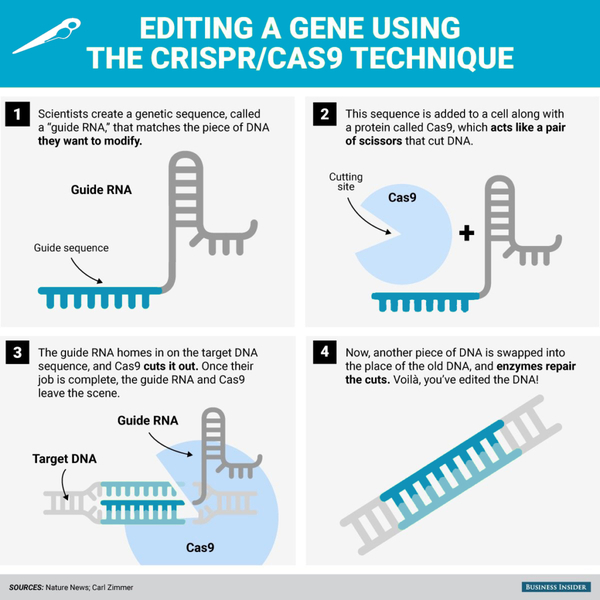
Last November, He Jiankui, a Chinese biology professor at Southern University of Science and Technology (SUST) in Shenzhen (Guangdong Province) announced that he and his team had created the World’s first “genetically edited babies”: twin babies Lula and Nana. 

Dr. He Jiankui, used the CRISPR technology “to alter the embryos of seven couples [allegedly] to make them resistant to HIV”.  He Jiankui made his announcement at the Second International Summit on Human Genome Editing held at the University of Hong Kong.  

Dr. He claims to have used CRISP “to tweak the DNA of human embryos during in vitro fertilization”.

The broad implications of this experiment are far-reaching. The genetic editing of human life forms including embryos has a bearing on the future of humanity.

It opens up the pandora’s box of genetic engineering applied to human beings.
It undermines the “reproduction of real life”. Potentially, it destroys humanity.


 Screenshot Source Nature News Carl Zimmer, Click image to enlarge


The experiment raises important scientific and ethical issues. Human embryos are not commodities.

The Chinese government immediately opened an investigation, Dr He Jiankui was fired by his University in January 2019.

Corporate Interests: Genetic Editing is “Big Business”

Despite government regulations and ethical issues, there are powerful corporate interests involved in the development and patenting of genetic editing of life forms including Dr. He’s findings on “genetically modified babies”.

Read more

Saturday, 27 April 2019

New Lifelike Biomaterial Self-Reproduces and Has a Metabolism

Singularity Hub

Life demands flux.

Every living organism is constantly changing: cells divide and die, proteins build and disintegrate, DNA breaks and heals. Life demands metabolism—the simultaneous builder and destroyer of living materials—to continuously upgrade our bodies. That’s how we heal and grow, how we propagate and survive.

What if we could endow cold, static, lifeless robots with the gift of metabolism?

In a study published this month in Science Robotics, an international team developed a DNA-based method that gives raw biomaterials an artificial metabolism. Dubbed DASH—DNA-based assembly and synthesis of hierarchical materials—the method automatically generates “slime”-like nanobots that dynamically move and navigate their environments.


Read more

Thursday, 25 April 2019

Cornell scientists create ‘living’ machines that eat, grow, and evolve

The Next Web

The field of robotics is going through a renaissance thanks to advances in machine learning and sensor technology. Each generation of robot is engineered with greater mechanical complexity and smarter operating software than the last. But what if, instead of painstakingly designing and engineering a robot, you could just tear open a packet of primordial soup, toss it in the microwave on high for two minutes, and then grow your own ‘lifelike’ robot?

If you’re a Cornell research team, you’d grow a bunch and make them race.

Scientists from Cornell University have successfully constructed DNA-based machines with incredibly life-like capabilities. These human-engineered organic machines are capable of locomotion, consuming resources for energy, growing and decaying, and evolving. Eventually they die.

That sure sounds a lot like life, but Dan Luo, professor of biological and environmental engineering in the College of Agriculture and Life Sciences at Cornell, who worked on the research, says otherwise. He told The Stanford Chronicle:
We are introducing a brand-new, lifelike material concept powered by its very own artificial metabolism. We are not making something that’s alive, but we are creating materials that are much more lifelike than have ever been seen before.
Just how lifelike? 

Read more

Tuesday, 12 March 2019

Israelis ‘undergo Jewish DNA test before being allowed to marry’

Middle East Monitor


Israel’s rabbinate “has been performing genetic testing on Israelis from the former Soviet Union, to check if they are ‘genetically Jewish’ as a condition for marriage registration”, according to Ynet.

The new site reported that “at least 20 couples have come forward after having been asked to undergo the procedure in the past year.”

“Although the existence of such tests was initially denied by Interior Minister Aryeh Deri, Ashkenazi Chief Rabbi David Lau admitted to having requested that some couples prove their Jewish status,” Ynet added, noting that “Lau claimed those were isolated incidents and there was no coercion.”

Ynet’s investigation revealed that “the complicated procedure was undertaken not only by the couples themselves but also by their relatives.”

Sunday, 10 March 2019

Darwin Devolves by Michael Behe: Another Huge Advance Against Darwinism and for Intelligent Design

Stream.org

Michael Behe, professor of biochemistry at Lehigh University, has been keeping committed Darwinists awake nights for years. His 1996 book Darwin’s Black Box: The Biochemical Challenge to Evolution asked a long-ignored question: If Darwin’s theory explains everything so well, why hasn’t anyone shown how it works at the minutest level, biochemistry? If it doesn’t work there, it doesn’t work anywhere. Today Behe releases a new book, based on new science, showing once again that it doesn’t work there. Darwin Devolves: The New Science About DNA That Challenges Evolution is going to cause a lot more sleepless nights.

The new science he covers in this book shows that Darwin’s theory can explain some changes, but quickly breaks down. DNA sequencing has only been available in the past decade or two. Its findings show that when organisms change, they do it almost always by breaking genes, not by making new ones. So in general, the evidence shows can shows that when species evolve, they’re really devolving. And that devolution prevents future evolution.

Read more

Monday, 18 February 2019

Could DNA Be Hacked, Like Software?

mindmatters.ai

People often say that our genome is like a language. For example, a recent science paper explains that “genomes appear similar to natural language texts, and protein domains can be treated as analogs of words.”1

For that reason, DNA can be used to encode messages:

If just encoding text, one way is to convert each letter of the alphabet into a three-letter code. Using three bases, such as A, C, and T, gives 27 combinations—enough for the English alphabet plus a space—with a code such as AAA = A, AAC = B, and so on (1 in graphic below). However, researchers often want to encode more than just text, so most current methods instead first translate data into binary code—the language of 1s and 0s used in electronic media. Using binary, the four bases of DNA could theoretically store up to two bits of information per nucleotide, with a code such as A = 00, C = 01, and so on Catherine Offord, “Infographic: Writing with DNA” at The Scientist
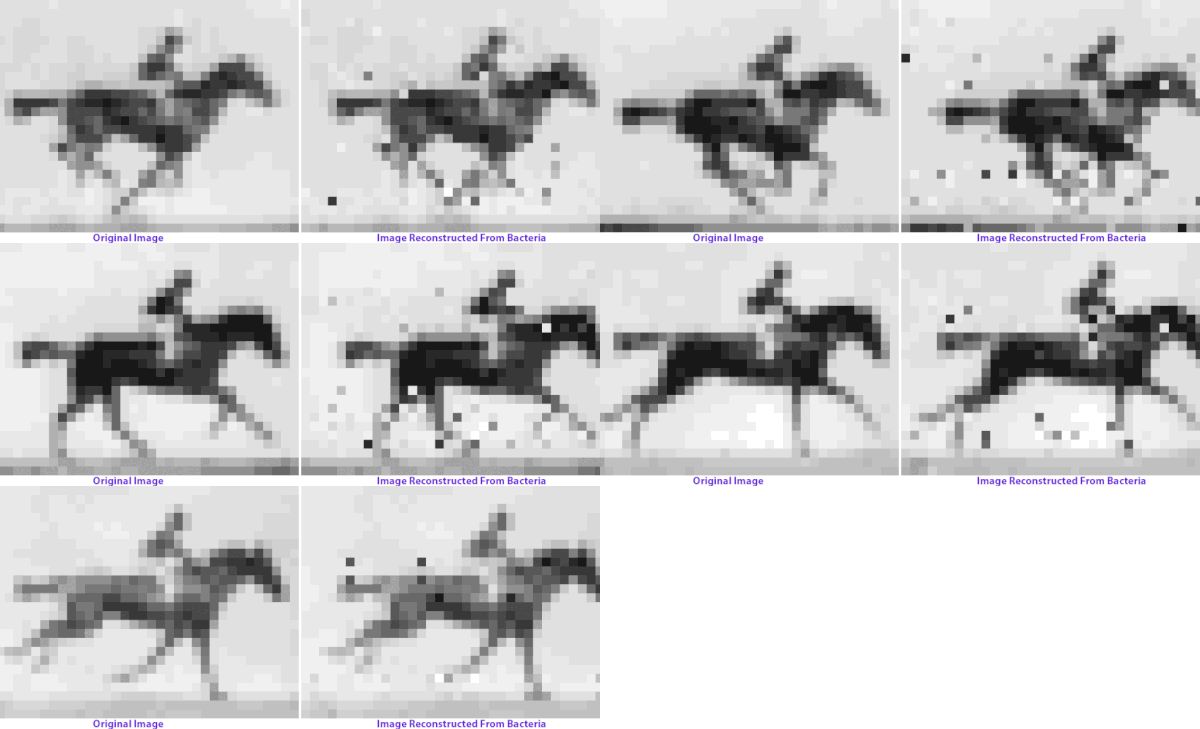
In 2017, one Harvard group encoded a video, an image of one of the earliest surviving motion pictures, in a DNA sample from bacteria:


5422293876 horse 0

Courtesy Seth Shipman, Harvard University

But in some ways, our genomes are much more powerful than words. They are part of a process that utters not just ideas but living beings. Including human beings, who ourselves have ideas. 

In August 2017, researchers announced that they had used DNA to encode malware to hack a computer program that reads genetic sequences:

Read more

Wednesday, 6 February 2019

Talking with Jean François Gariépy - The Revolutionary Phenotype


JF's channel: youtube.jfg.world 

"The Revolutionary Phenotype is a science book that brings us four billion years into the past, when the first living molecules showed up on Planet Earth. Unlike what was previously thought, we learn that DNA-based life did not emerge from random events in a primordial soup. Indeed, the first molecules of DNA were fabricated by a previous life form. By describing the fascinating events referred to as Phenotypic Revolutions, this book provides a dire warning to humanity: if humans continue to play with their own genes, we will be the next life form to fall to our own creation."


Monday, 4 February 2019

One Of The Biggest At-Home DNA Testing Companies Is Secretly Sharing Data With The FBI

Zero Hedge

Just one week ago, we warned that the government — helped by Congress (which adopted legislation allowing police to collect and test DNA immediately following arrests), President Trump (who signed the Rapid DNA Act into law), the courts (which have ruled that police can routinely take DNA samples from people who are arrested but not yet convicted of a crime), and local police agencies (which are chomping at the bit to acquire this new crime-fighting gadget) — was embarking on a diabolical campaign to create a nation of suspects predicated on a massive national DNA database.

As it turns out we were right, but we forgot one key spoke of the government's campaign to collect genetic information from as many individuals as possible: "innocent", commercial companies, who not only collect DNA from willing clients, but are also paid for it.

FamilyTreeDNA, one of the pioneers of the growing market for "at home", consumer genetic testing, confirmed a report from BuzzFeed that it has quietly granted the Federal Bureau of Investigation access to its vast trove of nearly 2 million genetic profiles.

While concerns about unrestricted access to genetic information gathered by testing companies had swelled since April, when police used a genealogy website to ensnare a suspect in the decades-old case of the Golden State Killer, that site, GEDmatch, was open-source, meaning police were able to upload crime-scene DNA data to the site without permission. However, the latest arrangement marks the first time a commercial testing company has voluntarily given law enforcement access to user data.

Worse, it did so secretly, without obtaining prior permission from its users.

The move is of significant concern to much more than just privacy-minded FamilyTreeDNA customers. As Bloomberg notes, one person sharing genetic information also exposes those to whom they are closely related. That’s how police caught the alleged Golden State Killer. And here is a stunning statistics - according to a 2018 study, only 2% of the population needs to have done a DNA test for virtually everyone’s genetic information to be represented in that data.

Read more

Friday, 22 June 2018

Gene-edited farm animals are on their way

BBC News

Scientists have created pigs that are immune to one of the world's costliest livestock diseases.

The team edited the animals' DNA to make them resist the deadly respiratory disease known as PRRS - a move that could prevent billions of pounds in losses each year.

However, consumers have traditionally been reluctant to eat genetically altered animals and crops.

This poses a significant barrier to farmers owning gene-edited pigs.

And because genome, or gene, editing (GE) is relatively new, the absence of regulation currently prevents their sale anyway.

GE is different to the more widely used technology of genetic modification. The former involves the precise alteration of an organism's DNA, while the latter is characterised by the introduction of foreign genetic sequences into another living thing.

Read more

US military wants to know what synthetic-biology weapons could look like

Comment: US military telegraphing what they already know and what they are already experimenting with. Their "concerns" and curiosity are merely a way to suggest Russia is at fault or a legion of terrorists (most of which have been created and funded by the same minds). It's an interesting article when seen as a snapshot of their objectives. 

-------------------------

Antonio Regalado
MIT Tech Review

A study ordered by the US Department of Defense has concluded that new genetic-engineering tools are expanding the range of malicious uses of biology and decreasing the amount of time needed to carry them out.
The new tools aren’t in themselves a danger and are widely employed to create disease-resistant plants and new types of medicine. However, rapid progress by companies and university labs raises the specter of “synthetic-biology-enabled weapons,” according to the 221-page report.

The report, issued by the National Academies of Sciences, is among the first to try to rank national security threats made possible by recent advances in gene engineering such as the gene-editing technology CRISPR.

“Synthetic biology does expand the risk. That is not a good-news story,” says Gigi Gronvall, a public health researcher at Johns Hopkins and one of the report’s 13 authors. “This report provides a framework to systematically evaluate the threat of misuse.”

Experts are divided on the perils posed by synthetic biology, a term used to describe a wide set of techniques for speeding genetic engineering. In 2016, the US intelligence community placed gene editing on its list of potential weapons of mass destruction.

“Many different groups have written and spoken about the topic, with a wide spread of opinion,” says D. Christian Hassell, deputy assistant secretary of defense for chemical and biological defense, who commissioned the report in order to obtain a “consensus opinion from among the top leaders and thinkers” in the field.

Hassell says the military’s current view is that “synbio is not a major threat issue at the moment” but bears preparing for, in part because defenses like vaccines can take years to develop.

The current report attempted to weigh potential threats by considering factors such as the technical barriers to implementation, the scope of casualties, and the chance of detecting an attack. It found that while “some malicious applications of synthetic biology may not seem plausible right now, they could become achievable with future advances.”

Among the risks the authors termed of “high concern” is the possibility that terrorists or a nation-state could re-create a virus such as smallpox. That is a present danger because a technology for synthesizing a virus from its DNA instructions has previously been demonstrated.

Read more

Wednesday, 20 June 2018

After Two Decades, A Suspect In The Murder of JonBenet Ramsey Has Been Announced (Video)

awarenessact.com

It’s a case that has both captivated and haunted the American public for over 20 years. The tragic story of child beauty queen JonBenet Ramsay continues to make headlines today, as investigators and crime enthusiasts continue to filter through the available information in the hope that they will discover something vital that was previously overlooked.
On Christmas morning 1996, JonBenet Ramsey’s parents reported the young girl missing, a lengthy ransom note discovered in their house. Approximately 8 hours after the report, Ramsey’s father John Ramsey discovered her body in the basement of their Boulder, Colorado home. The official cause of death, according to the autopsy, was asphyxiation due to strangulation, and her death was ruled a homicide.

Initially, law enforcement believed that the body had been staged by her parents, with her mother writing the ransom note in order to cover up their crime, however, this theory was dismissed when DNA analysis in 1998 cleared all immediate family members. While her parents gave a number of television interviews, there were no breaks in the case for a significant period of time, with the case passing to a new DA successor in 2002. In 2003, DNA testing on the samples from JonBenet’s clothing were discovered to belong to an unknown male. This led to a 2008 letter of apology to the family, apologizing for accusing them of fault, and in February 2009 the local law enforcement reopened the investigation.

There hasn’t been much change in the investigation in the years that followed. In 2016, in honor of the 20th anniversary of the crime, CBS released the documentary miniseries ‘The Case of: JonBenet Ramsey.’ In this documentary, an investigative team including former FBI agent Jim Clemente, Dr. Henry Lee, forensic pathologist Dr. Werner Spitz, James Fitzgerald, former chief investigator for the Boulder District Attorney James Kolar, Stan Burke and former Scotland Yard criminal behavior analyst Laura Richards, analyzed every piece of the case form the ransom note, the 911 call, etc. all while using re-created rooms of the Ramsay’s house to put everything into perspective.

The team came to a startling conclusion – that JonBenet’s young brother Burke, 9 at the time of her death, may have killed her accidentally, and her parents made an effort to hide this fact. Having previously exhibited violence towards his sister, they argued that this tragedy was part of a pre-existing pattern of behavior. 

Read more

Tuesday, 19 June 2018

New Meta-Analysis Reveals Extensive Phenotypic Differences Between GMO and Non-GMO Cultivated Plants

Green Med Info

Claims of "substantial equivalence" of GM plants again shown to be false

The myth of “substantial equivalence” between GM crops and their closest non-GM relatives (called “isolines”) has taken yet another scientific hit, this time from a new peer-reviewed paper discussed in an article on the website Hygeia Analytics.

The researchers from Mexico City published their meta-analysis of genetic data on rice, canola, maize, sunflower, and pumpkin. They looked at wild, GMO, and non-GMO cultivated varieties of these five crops, analyzing phenotypic change.

The phenotype of a crop is defined by a set of characteristics expressed by the crop’s genetic code (DNA). In theory, genetically engineered plants will show phenotypic changes only linked to the traits that scientists added to the GMO in the hope that they will be expressed. For example, a corn plant engineered to express the Bt toxin should not be different from normal corn in other ways.

However, the Hygeia article says, "Genetics are complicated and unintended consequences often occur." Of the five crops analyzed in the new study, maize, pumpkin and rice showed the most variation between GMO and non-GMO cultivars. These three crops demonstrated wide variation for traits related to days to flowering, number of seeds/fruit, plant height, and pollen viability. In fact, the researchers report that for non-GMO and GMO cultivars of maize, pumpkin and rice, “almost all analyzed traits differ statistically".

Read more

Thursday, 14 June 2018

Next? US intelligence developing human DNA-like models to hoard your personal data

RT

As US intelligence services struggle to store the trove of data collected during its snooping operations, a team of researchers are developing radical new storage technology based on an unusual model - human DNA. The Molecular Information Storage program, run by the rather protractively-named Intelligence Advanced Research Projects Activity (IARPA), is recruiting scientists to help develop a system for storing huge amounts of data on "sequence-controlled polymer," molecules with a similar makeup and structure to DNA.
 

The technology has huge potential as researchers believe DNA-like polymer technology can store data more than 100,000 times more efficiently than current methods. The IARPA hopes that it could one day process entire exabytes of data while reducing the amount of physical space required to store it. To give you an idea of the scale: one exabyte, or one quintillion bytes, is four million times the storage capacity of a 256GB iPhone X.

The issue of how to store data is a live one for the world's intelligence services. Costly data centers take up huge amounts of land, an unsustainable situation given the increasing amount of data generated by each person on a daily basis.

"Faced with exponential data growth, large data consumers may soon face a choice between investing exponentially more resources in storage or discarding an exponentially increasing fraction of data," the IARPA said in a statement cited by Nextgov.

Some data centers are even housed in urban locations. The Lakeside Technology Center in Chicago is the largest data storage facility in the US, spanning 1.1 million square feet, an entire city block. On the site of the former printing press for the Yellow Pages, the center was transformed in 1999 and now holds more than 50 generators whirring around the clock. The Chicago facility is only matched by the NSA's $1.5billion Bumblehive data center in Bluffdale, Utah, which is just over 1 million square feet.
Ultimately, the IARPA aims to scale down an exabyte storage facility so that it can fit in one room and run for less than $1million per year.

There are three distinct strands to the project, with the agency hoping to create systems for storing and retrieving information. The IARPA is calling on developers to help put together an easy-to-use operating system.

Monday, 11 June 2018

HART: Homeland Security’s Massive New Database Will Include Face Recognition, DNA, and Peoples’ “Non-Obvious Relationships”

EFF

Why do we know so little about it?   

The U.S. Department of Homeland Security (DHS) is quietly building what will likely become the largest database of biometric and biographic data on citizens and foreigners in the United States. The agency’s new Homeland Advanced Recognition Technology (HART)database will include multiple forms of biometrics—from face recognition to DNA, data from questionable sources, and highly personal data on innocent people. It will be shared with federal agencies outside of DHS as well as state and local law enforcement and foreign governments. And yet, we still know very little about it.

The records DHS plans to include in HART will chill and deter people from exercising their First Amendment protected rights to speak, assemble, and associate. Data like face recognition makes it possible to identify and track people in real time, including at lawful political protests and other gatherings. Other data DHS is planning to collect—including information about people’s “relationship patterns” and from officer “encounters” with the public—can be used to identify political affiliations, religious activities, and familial and friendly relationships. These data points are also frequently colored by conjecture and bias.

In late May, EFF filed comments criticizing DHS’s plans to collect, store, and share biometric and biographic records it receives from external agencies and to exempt this information from the federal Privacy Act. These newly-designated “External Biometric Records” (EBRs) will be integral to DHS’s bigger plans to build out HART. As we told the agency in our comments, DHS must do more to minimize the threats to privacy and civil liberties posed by this vast new trove of highly sensitive personal data.

Read more

Friday, 8 June 2018

Scientist built 'DNA-robots' remote controlled by magnetic fields

Phil Dooley
Cosmos Magazine


Scientists have built a tiny robot from strands of DNA and devised a way to remote-control it using magnetic fields.

The team from Ohio State University in the US envisage these robots being deployed into human bodies to perform controlled medical procedures such as delivering a drug to a tumour.

"There's a growing interest in interacting with a molecular system in real time," says Carlos Castro, lead author of the team's paper, published in the journal Nature Communications.

"You could do it with a joystick, as if you might be playing a video game."

Castro's team has been perfecting a technique known as 'DNA origami' to assemble strands of DNA into tiny machines. To date they've made levers, rotating parts and sliding joints, even a vehicle to deliver a cancer drug into a leukaemia cell.

So far scientists have designed these machines - including a two-legged DNA robot that walked along a DNA strand sorting molecules - to be triggered by changes in solution or when encountering a specific protein.

But Castro wanted to find a way to control the robots interactively. He teamed up with physicist Ratnasingham Sooryakumar, a colleague at Ohio State University and specialist in magnetic control protocols. Together they devised the system, but it took four years to bring it to reality.  


Read more

Wednesday, 30 May 2018

How Do You Know Who Your Father Is? Because Your Mother Told You So?

Tough Love and Common Sense

According to the American Association of Blood Banks, 30% of DNA paternity tests nationwide turn out negative. “That’s out of about 300,000 tests per year nationwide,” said Angelucci. “In raw numbers that amounts to at least 100,000 negative results per year in the U.S., and that’s only the men who get tested. So this is a serious, under addressed problem.
 
Paternity fraud occurs when a mother names a man to be the biological father of a child, when she knows or suspects that he is not the biological father.
 

Most men and children who find out they are the victims of paternity fraud are devastated. Many times the children will become preoccupied with figuring/finding out who the biological father is. It's instinctual: We want to know where we come from. This is especially true when the child grew up believing someone else was the father, as they will often suddenly feel untethered to a parent they've always held so dearly.

...

Women who knowingly commit paternity fraud tend to specifically seek out "nice guys" who are family-oriented and trusting; The kind of men who are likely to still care for the child even after finding out the fraud that has taken place.

These women are often manipulative liars with no regard for those who will be hurt by such lies. Some of these women even swear to the alleged father and/or child that he is the real father, all the while knowing this to be false, yet hoping they are convincing enough to talk their way out of a DNA test, court proceedings and/or any other accountability or consequences for their choices.
 

Read more
Related Posts Plugin for WordPress, Blogger...