Search This Blog

Showing posts with label Environment. Show all posts

Thursday, 22 August 2019

How the Plastics Industry Is Fighting to Keep Polluting the World

Cryptogon

I’ve been seeing the bales of plastic piling up at my local dump and I thought, “Why not make building materials out of all this stuff?”

It turns out that there are some small moves being made in that direction. Here are a few examples:


Of course, these efforts are noise level in the scheme of things.

Plastic pollution is a grim and difficult problem which is made worse by the industry and crooked politicians.

Via: The Intercept:

The growing output of new cheap plastic further undermines the industry’s own argument that recycling can resolve the waste crisis. It’s already impossible for most recycled plastic to compete with “virgin” plastic in the marketplace. With the exception of bottles made of PET (No. 1) and HDPE (No. 2), the rest of the waste is essentially worthless. Around 30 percent of both types of plastic bottles were sold for recycling in 2017, though some of those may have wound up being landfilled or incinerated. The recent fossil fuel boom makes it even cheaper to make new plastic and thus, even more difficult to sell the recycled product. This, in turn, makes the plastics companies’ push for recycling that much more implausible — and their battle to kill efforts to limit plastics production even more desperate.

Read more + Videos

Tuesday, 9 July 2019

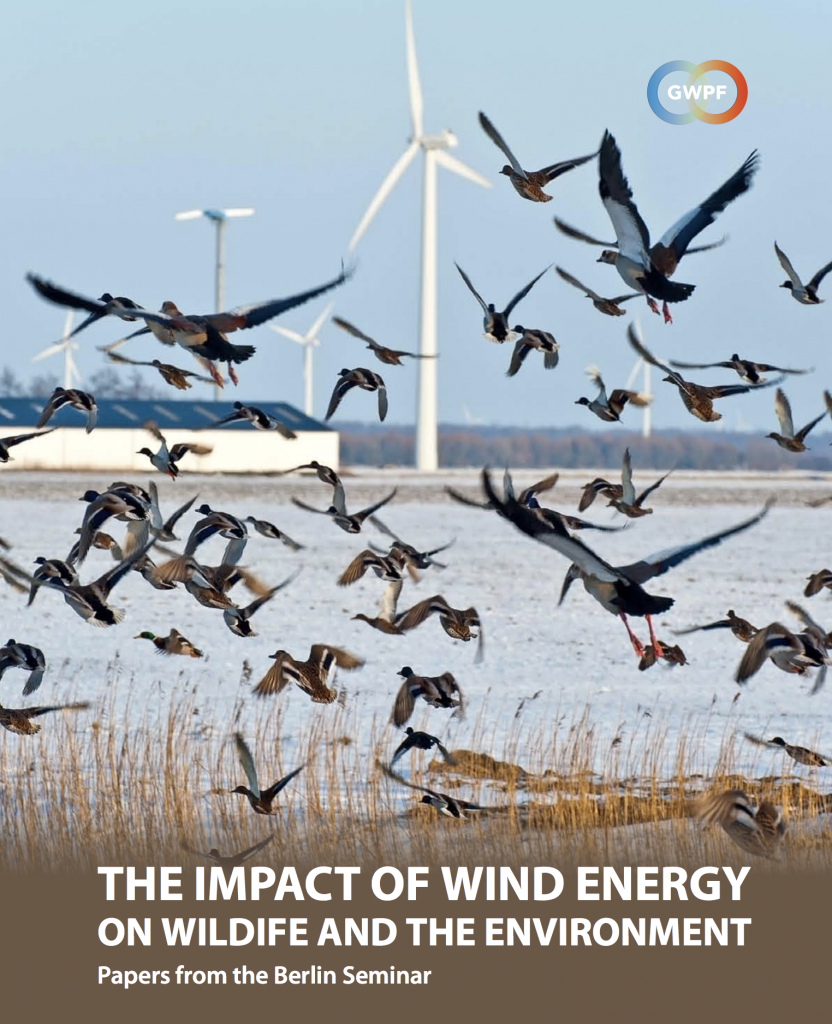
The Appalling Environmental Cost Of Wind Energy


The Global Warming Policy Foundation

A new publication from the Global Warming Policy Foundation reviews the impact of wind energy on the environment and finds that it is already doing great harm to wildlife.

“The Impact of Wind Energy on Wildlife and the Environment” contains contributions from both researchers and campaigners, with a focus on birdlife. 

Professor Oliver Krüger describes his cutting-edge research, which has shown how birds of prey and ducks are being killed in their thousands in Germany. The risk to these species is so great that there is a possibility of whole populations being wiped out. 

Klaus Richarz, the former head of a major bird reserve in Germany, describes how windfarm operators are evading strict compliance with the rules, to the detriment of both birds and bats.
Dr Peter Henderson, of the University of Oxford, reviews the effects of wind turbines on a wide variety of animals. He suggests that death toll on bats may already be ecologically significant:
“About 200,000 bats are annually killed at onshore wind turbines in Germany alone. These numbers are sufficient to produce concern for future populations, as bats are long-lived and reproduce slowly, so cannot quickly replace such losses.”
Lastly, Paula Byrne of WindAware Ireland describes how windfarms in her native country have desecrated landscapes, and have even threatened the endangered Nore Freshwater Pearl Mussel.
With an extraordinary expansion of renewable energy planned, there is potential for these serious environmental impacts to become catastrophic.

The Impact of Wind Energy on Wildlife and the Environment (PDF)

Throughout this week, GWPF will be releasing a series of publications and videos on the subject of renewable energy’s impact on the environment.

Monday, 10 June 2019

Claims Of Insect Collapse Rubbished By New Study

Paul Homewood
Not A Lot Of People Know That

Readers will recall this story from January:
Insect collapse: ‘We are destroying our life support systems’
According to the Lister paper:
“Over the past 30 years, forest temperatures have risen 2.0 °C, and our study indicates that climate warming is the driving force behind the collapse of the forest’s food web”
As I reported at the time, the supposed temperature increase was fake, an artifact of merging two sets of incompatible data. The El Verde Field Station, responsible for the meteorological data, clearly warned against combining these two sets of temperature data, because the first one up to 1992 was artificially higher because of faulty equipment.

Any competent scientist should have double checked the source of the data, but for some reason Lister did not.

Now PNAS, who ran the original study, have published a new paper which rubbishes Lister’s findings.

Not only does this new study confirm the incompatibility of the temperature data, it also questions Lister’s claims that insect populations are even declining at all.

Read more

Saturday, 8 June 2019

From Glyphosate to Front Groups: Fraud, Deception and Toxic Tactics

Colin Todhunter
Off Guardian

nvironmentalist Dr Rosemary Mason has just written to the Editor-in-Chief of the British Medical Journal and the British Medical Association Council Chairman, Chaand Nagpaul.

Her purpose is to not only draw attention to the impact of biocides, not least that of glyphosate, on health and the environment but also to bring attention to the corruption that allows this to continue.

Along with her letter, she enclosed a 13-page document. Readers can access the fully referenced document here: European Chemicals Agency classifies glyphosate as a substance that causes serious eye damage (or see the embedded version below).

It is worth reading in full to appreciate the conflicts of interest and the corruption that has led to the rise in certain illnesses and the destruction of the natural environment.

By way of a brief summary, the key points raised by Dr Mason and her claims include the following.
  • The European Chemicals Agency classifies glyphosate as a substance that causes serious eye damage. There has been a massive increase in the use of glyphosate in recent years. An increase in cataracts has been verified by epidemiological studies in England and by a 2016 WHO report.
  • There are shockingly high levels of weed killer in UK breakfast cereals. After testing these cereals at the Health Research Institute in Iowa, Dr Fagan, director of the centre, said: “These results are consistently concerning. The levels consumed in a single daily helping of any one of these cereals, even the one with the lowest level of contamination, is sufficient to put the person’s glyphosate levels above the levels that cause fatty liver disease in rats (and likely in people).”
  • The amount of glyphosate in tap water in South Wales has increased tenfold in a very short period.
  • Glyphosate is largely responsible for the destruction of biodiversity and an increase in the prevalence of many serious health conditions.
  • There are massive conflicts of interest throughout various agencies in the EU that ensure harmful agrochemicals like glyphosate come to market and remain there.
  • In fact, a global industry has emerged to give ‘advice’ on biocides regulation. This results in regulatory bodies effectively working to further the commercial interests of the pesticide industry.
  • The European Food Safety Authority sanctioned increased maximum pesticide residue levels (MRL) at the request of industry (Monsanto in this case, to 100 times the previously authorised MRL).
  • The Washington-based International Life Sciences Institute (ILSI) is used by corporate backers to counter public health policies. Its members have occupied key positions on EU and UN regulatory panels. It is, however, an industry lobby group that masquerades as a scientific health charity. The ILSI describes its mission as “pursuing objectivity, clarity and reproducibility” to “benefit the public good”. But researchers from the University of Cambridge, Bocconi University in Milan, and the US Right to Know campaign assessed over 17,000 pages of documents under US freedom of information laws to present evidence of influence peddling.
  • ILSI Vice-President, Prof Alan Boobis, is currently the Chairman of the UK Committee on Toxicity of Chemicals in Food, Consumer Products and the Environment (CoT) (2015-2021). He was directly responsible for authorising chemicals such as glyphosate, chlorothalonil, clothianidin and chlorpyrifos that are destroying human health and creating a crisis in biodiversity. His group and others have authorised glyphosate repeatedly. He and David Coggon, the previous Chairman of CoT (2008-2015), were appointed as experts on Science Advice for Policy by European Academies (SAPEA), a group allied with the agrochemical industry and is fighting for higher pesticide exposure.
  • Jean-Claude Juncker the President of the European Commission who, against a petition from more than 1.5 million European citizens, re-authorised glyphosate in December 2017 for a further five years. He set up the Science Advisory Mechanism, aiming to put industry-friendly personnel on various committees.

Read more

Tuesday, 4 June 2019

Do We Face a Global Food Disaster?

F. William Engdahl
NEO

No, this is not at all an endorsement of the apocalyptic scenarios of AOC or that famous young Swedish climate expert, Greta. It is, however, a look at unusual weather disasters in several key growing regions from the USA to Australia, the Philippines and beyond that could dramatically affect food availability and prices in the coming year. That in turn could have major political implications depending on how the rest of the growing season develops.

USA Midwest Waterlogged

According to the latest May 20 report of the National Agricultural Statistics Service (NASS) of the US Department of Agriculture, corn and soybean crops are well behind the planting growth levels normal this time of the planting season. They report that only 49% of all planned corn acreage in the US has been planted compared with 78% at this time a year ago. Of that only 19% has yet emerged from the ground compared to 47% in May 2018. In terms of soybeans, barely 19% of crops have yet been planted compared with 53% a year before. Rice acreage planted is down to 73% compared to 92% a year ago in the six US rice-growing states. Of course, should weather dramatically improve the final harvest numbers could improve. It is simply too early to predict.

The USA is by a wide margin the world largest soybean producer with 34 percent of the world’s soybean production and 42% of world exports prior to the China trade battles. The US is also the world largest corn or maize producer, almost double China, the number two. A serious harvest failure in these two crops could significantly affect world food prices, leaving aside the unfortunate fact that almost all US soybeans and corn are GMO crops. They are mainly used in animal feed. 

A major factor in the disruption of the US Midwest growing season is the fact that the past 12 months have seen the greatest precipitation levels since the US Government began keeping statistics in 1895, according to the US NOAA National Centers for Environmental Information. Record snowfall followed by abnormally heavy rains are the reason.

Read more

Tuesday, 28 May 2019

Antibiotics Found in Some of the World's Rivers Exceed 'Safe' Levels, Global Study Finds

Global Research 

Concentrations of antibiotics found in some of the world’s rivers exceed ‘safe’ levels by up to 300 times, the first ever global study has discovered.

Researchers looked for 14 commonly used antibiotics in rivers in 72 countries across six continents and found antibiotics at 65% of the sites monitored.

Metronidazole, which is used to treat bacterial infections including skin and mouth infections, exceeded safe levels by the biggest margin, with concentrations at one site in Bangladesh 300 times greater than the ‘safe’ level.

In the River Thames and one of its tributaries in London, the researchers detected a maximum total antibiotic concentration of 233 nanograms per litre (ng/l), whereas in Bangladesh the concentration was 170 times higher.

The most prevalent antibiotic was trimethoprim, which was detected at 307 of the 711 sites tested and is primarily used to treat .

The research team compared the monitoring data with ‘safe’ levels recently established by the AMR Industry Alliance which, depending on the antibiotic, range from 20-32,000 ng/l.

Ciproflaxacin, which is used to treat a number of bacterial infections, was the compound that most frequently exceeded safe levels, surpassing the safety threshold in 51 places.

The team said that the ‘safe’ limits were most frequently exceeded in Asia and Africa, but sites in Europe, North America and South America also had levels of concern showing that antibiotic contamination was a “global problem.”

Read more

Saturday, 11 May 2019

Hyperactive Comets Hint at Origins of Earth’s Oceans

Nola Taylor
Scientific American

A new study suggests primordial seawater may lurk hidden at the hearts of many comets

The mysterious source of Earth’s water has intrigued generations of scientists. Learning how this liquid—the cornerstone of life as we know it—made its way to our planet has sweeping implications, for the possibility of alien biospheres not only elsewhere in the solar system but also on worlds orbiting other stars. But understanding how water arrived on Earth has proven surprisingly difficult.

After the sun formed from a cloud of dust and gas, the remaining protoplanetary disk of material was probably rich in water’s raw ingredients, hydrogen and oxygen. But conventional wisdom holds that the newborn star’s radiance boiled away much of those volatile gases from the inner solar system, leaving mostly dry material from which to build Earth and the other rocky planets. The majority of Earth’s moisture must have arrived later, by some other means.

For decades, scientists considered icy comets of the outer solar system as the most likely suspects, until observations revealed that most comets’ compositions did not quite match that of Earth’s oceans. And so consensus shifted toward asteroids as the source of Earth’s seas, since these rocky bodies also contain nontrivial amounts of water and are conveniently located close by, where they could have easily rained down on the young Earth. Now, however, an investigation of comet 46P/Wirtanen suggests that the bulk of Earth’s water may have come from comets after all, even though asteroids likely still played an important role.

Read more

Thursday, 9 May 2019

Another Elected Official Asks The FCC To Provide Documentation That 5G Is Safe

B.N. Frank
Activist Post
 
Thanks to Environmental Health Trust for reporting about New York congressman Thomas Suozzi’s request to the Federal Communications Commission (FCC):
Congressman Thomas Suozzi, representing New York’s 3rd Congressional District sent a letter to the FCC asking for safety data on 5G. He joins Rep. Peter A. DeFazio  House Transportation and Infrastructure Committee Chairman, who wrote a letter to FCC Chairman Pai and acting FDA Commissioner Sharpless and Senator Blumenthal and U.S. Representative Anna G. Eshoo sent a letter to FCC Commissioner Brendan Carr seeking answers the safety data on 5G wireless technology.
Read the Letter by Suozzi asking for safety data on 5G by Congressman Thomas Suozzi here.
EHTrust also recently reported about the same request made by Representative Peter A. DeFazio of Oregon. 

In February the Telecom Industry told a congressional committee that they knew of no scientific studies that prove 5G technology is safe. 


There is already research that has proven 5G is harmful and that all other sources of wireless radiation are harmful too. 

Read more

Monday, 6 May 2019

Planting the Seeds of Regime Change: How GMO Seeds and Monsanto/Bayer’s “RoundUp” are Driving US Policy in Venezuela

Mint Press News

CARACAS, VENEZUELA — As the political crisis in Venezuela has unfolded, much has been said about the Trump administration’s clear interest in the privatization and exploitation of Venezuela’s oil reserves, the largest in the world, by American oil giants like Chevron and ExxonMobil.
 
Yet the influence of another notorious American company, Monsanto — now a subsidiary of Bayer — has gone largely unmentioned.

While numerous other Latin American nations have become a “free for all” for the biotech company and its affiliates, Venezuela has been one of the few countries to fight Monsanto and other international agrochemical giants and win. However, since that victory — which was won under Chavista rule — the U.S.-backed Venezuelan opposition has been working to undo it.

Now, with Juan Guaidó’s parallel government attempting to take power with the backing of the U.S., it is telling that the top political donors of those in the U.S. most fervently pushing regime change in Venezuela have close ties to Monsanto and major financial stakes in Bayer.

In recent months, Monsanto’s most controversial and notorious product — the pesticide glyphosate, branded as Roundup, and linked to cancer in recent U.S. court rulings — has threatened Bayer’s financial future as never before, with a litany of new court cases barking at Bayer’s door. It appears that many of the forces in the U.S. now seeking to overthrow the Venezuelan government are hoping that a new Guaidó-led government will provide Bayer with a fresh, much-needed market for its agrochemicals and transgenic seeds, particularly those products that now face bans in countries all over the world, including once-defoliated and still-poisoned Vietnam.

Read more

Friday, 3 May 2019

‘Global Warming’ Not Scary Enough, Alarmists Rebrand ‘Climate Crisis

Thomas D. Williams, PhD
Breitbart


Since the expressions "global warming" and "climate change" do not frighten people enough, activists are proposing a shift in language to "climate crisis" or "environmental collapse," with the help of advertising consultants.

Neuroscience research suggests that "global warming" and "climate change" do not produce a powerful enough reaction in people, whereas "climate crisis" got "a 60 percent greater emotional response from listeners" according to a recent study.

Environmental lobbying has reportedly yielded a 15-point increase in the share of Americans who believe that climate change is a serious problem, but activists are looking for ways to boost that number still further by using more explosive language.

Enter SPARK Neuro, an advertising consulting firm that measures physiological data such as brain activity and palm sweat to quantify people's emotional reactions to stimuli.

SPARK Neuro fixed electroencephalography (EEG) devices to the heads of 120 volunteers to gauge the electrical activity coming from their brains. At the same time, a webcam monitored their facial expressions and sensors on their fingers recorded the sweat produced by heightened emotions.

The group, which was evenly divided among Republicans, Democrats, and Independents, listened to audio recordings of six different climate phrases. "Global warming" and "climate change" performed the worst, beaten hands down by "climate crisis," "environmental destruction," "weather destabilization," and "environmental collapse." 


Read more

Saturday, 27 April 2019

New Lifelike Biomaterial Self-Reproduces and Has a Metabolism

Singularity Hub

Life demands flux.

Every living organism is constantly changing: cells divide and die, proteins build and disintegrate, DNA breaks and heals. Life demands metabolism—the simultaneous builder and destroyer of living materials—to continuously upgrade our bodies. That’s how we heal and grow, how we propagate and survive.

What if we could endow cold, static, lifeless robots with the gift of metabolism?

In a study published this month in Science Robotics, an international team developed a DNA-based method that gives raw biomaterials an artificial metabolism. Dubbed DASH—DNA-based assembly and synthesis of hierarchical materials—the method automatically generates “slime”-like nanobots that dynamically move and navigate their environments.


Read more

Wednesday, 17 April 2019

William Lind looks beneath the global warming narrative

Watts Up With That?

Summary: William Lind takes a sharp and accurate look at the politics of climate change. In modern America, always look beneath the glossy surface of narratives in the news.

A March 15 article by Larry Kummer at the Fabius Maximus website discusses how global warming advocates have misused a worst-case scenario to generate panic. Titled “About the corruption of climate science”, Kummer’s article details how politicians are misrepresenting climate projections, especially one called RCP 8.5. That their goal is to create fear should not surprise us: from the government’s perspective, fear is a growth industry.

Russell Kirk called conservatism “Politics Of Prudence" and prudence suggests we should pay some attention to climate change, or, to be more precise, increasing volatility in weather. That is something we can observe happening. Conservatives’ belief in stewardship means we owe it to future generations to hand them a planet in at least as good condition as we received from our forefathers. Reducing our own consumption, including of fossil fuels, is desirable.

But the Left seeks far more. In fact, its goal is nothing less than total control of every aspect of human life, which we call “totalitarianism”, justified by fear of climate change. Since everything a person does, including breathing, affects the climate, if climate change is a huge threat, someone needs to control everything. That “someone” should obviously be whoever is most concerned about the climate, i.e., the extreme environmentalists and the larger coalition of which they are part, the culturally Marxist Left.

Read more

Saturday, 13 April 2019

Baseline of a Desecrated Land I: Food Supply

If Americans Knew

Part 1 of a 12 part series examining the ecological impacts of Israel’s occupation of Palestine.


A synopsis of the findings is here.


by Dick Callahan, reposted from DickCallahan.net


How Israel’s water and agricultural technologies don’t even work for Israel


California I hear has a big water problem. We in Israel don’t have a water problem. We use technology to solve it…” -- Israeli Prime Minister Benjamin Netanyahu to California Governor Jerry Brown in March 2014.


“If you were planning to grow a new strain of tomato—don’t do it, because there is no water. Stop planting. Stop sowing new seedlings. There’s no water.”  -- Giora Shacham, Chairman of the Israeli Water Authority, to Jewish farmers at a December, 27, 2017 Israeli agriculture conference.

Introduction

A new mythology has it that Israel can save American agriculture and cities from drought. To accept this is to ignore the wilderness instructor’s maxim: “In a survival situation the first thing you need is recognition.” Our situation is that we in America have 324 million people and our country exports more food every year than any country in the history of the planet. Israel has eight and a half million people, exports almost no food, is entirely dependent on imported food, and every indicator is screaming that the Jewish state ecosystem is a dying patient on the gurney.

We will mostly bypass what suffering Israeli water colonization has caused Palestinians.  Instead, this piece looks at what fisheries biologist Daniel Pauly calls ‘Shifting Baselines,’ where some good thing is degraded over time and each successive generation adopts what is in front of them as their baseline reality. At some point an environment emerges that would terrify our ancestors. We Americans should look hard and honestly at Mother Earth groaning under Zionism in today’s Israel and ask, ‘Does America, or any country desiring a good future, want to follow that road?’

Before we start, it helps to know that Israel is 1,600 square miles smaller than the state of Vermont, the West Bank is smaller than St. Lawrence county in New York state, and the entire Gaza Strip is about the size of Bakersfield, California.

To evaluate Israeli land and water use technologies, these twelve recognitions might serve as jumping off points for discussion.

1) Israel cannot feed itself.
2) Israel pretends desalination impacts don’t exist.
3) Israel takes Syrian, Lebanese, Palestinian, and Jordanian water.
4) Israel’s one and only large, natural water body may be gone within twenty years.
5) Over half of the Jordan river valley’s biodiversity is already gone.
6) Israel and the Occupied Territories are awash in human sewage.
7) West Bank/Israeli streams and groundwater are over exploited and drying up so completely that centuries old trees in the nature reserves are dying of thirst.
8) Israel’s water, forestry, agricultural and military technologies have compromised agricultural land to the point where half of it is depleted and at risk, pesticide use is highest in the OECD, the land is absorbing more heat, and, in the long run, drip irrigation may do more harm than good.
9) Israel is the Flint, Michigan of the Middle East with a history of spectacular toxic spills, dumped military/industrial carcinogens, hundreds of contaminated wells, hundreds of millions of tons of contaminated ground water, millions of tons of oil stored right on the beach, massive unregulated hazardous waste sites built above aquifers, and the world’s oldest nuclear reactor, sitting 18 miles from the Syria-African fault line—with 1,537 documented defects in its aluminum core.
10) Wine, war, industrial tourism, and an unwinnable competition with the faster growing Arab population are the water marks on Israel’s self-portrait.
11) Israel is stuck with being the love-child of 1950’s American water engineers and 1800’s ‘make the desert bloom’ fundamentalism.
12) Israel is a cautionary tale.


Read more

Wednesday, 10 April 2019

Scientists Found an Edible Mushroom That Eats Plastic, and It Could Clean Our Landfills

Elias Marat
The Mind Unleashed


Whether we like it or not, our society has become completely reliant on plastic. From food preservation to water transportation, computer technology to healthcare and medicine, plastic can be found in nearly every facet of the human experience.

But as we well know, plastic is a double-edged sword, with massive amounts of plastic waste not only piling up in landfills, but floating in the most remote depths of our oceans and water supplies. And despite our knowledge of plastic's harmful effects on the environment, we've become so reliant on plastic that there seems to be no end in sight. In fact, plastic production is growing on a yearly basis - and posing a potentially mortal threat to us all. 


However, a newly-discovered type of mushroom could not only play a crucial role in slashing plastic pollution, but could have myriad other uses in addressing the environmental crises the planet faces.
  Discovered in 2012 by Yale University students, Pestalotiopsis microspora is a rare species of mushroom from the Amazon rainforest that's capable of subsisting on a diet of pure plastic, or more accurately, the main ingredient in plastic - polyurethane-before converting the human-made ingredient into purely organic matter.

And not only can Pestalotiopsis microspora live off of our plastic waste, it can also live without oxygen-meaning that the rare breed of mushroom would make an ideal agent for landfill clean-up, literally from the bottom-up.

While the idea sounds fantastic, some scientists have expressed hope that the plastic-consuming fungi can form the basis of the community waste treatment centers of the future - replacing our current practice of dumping our trash into centralized, massive landfills with small, mushroom-centered community composting centers or even home recycling kits, according to Epoch Times.

And as it turns out, Pestalotiopsis microspora isn't alone in the world of plastic-eating mushrooms - and some of its plastic-consuming kin are even perfectly safe for us humans to consume.

In a study led by Katharina Unger for Utrecht University in the Netherlands, oyster mushrooms and other types of mushrooms were placed in agar cups with plastic waste and held in a climate-controlled dome-shaped environment. After about a month, the roots of the mushroom consumed and transformed the plastic into an edible biomass - or food - that was completely free of any toxicity from the polyurethane.


Read more

Sunday, 7 April 2019

When Government Lies to You

No Frakking Consensus


Carbon dioxide is not pollution. Our planet would be a wasteland without it. 


click to enlarge

Fake news is everywhere, and governments can be a rich source. For example, a flyer distributed in the mail last week by Canada’s Revenue Agency – aka the taxman – tells us a pack of lies.

Against the will of elected leaders in four provinces, our federal government has just imposed a carbon tax. The price of gasoline has jumped at the pumps. Home heating costs have risen. This is just stage one, since the tax bite will increase every year.
The flyer begins by declaring:
Pollution has a cost. It impacts the air we breathe, our children’s health, and our economy. That’s why the Government of Canada has put a price on carbon pollution.
What nonsense. Carbon taxes are supposed to discourage people from burning fossil fuels not because of dirty black soot (sophisticated, anti-pollution technologies already exist), but because an invisible, odourless gas gets emitted whenever fossil fuels are used.

The entire climate scare rests on the idea that humanity is adding too much carbon dioxide – CO2 – to the atmosphere, and that this will hypothetically destabilize the climate.

Now is a good time to point out that the Canadian government admits this country is responsible for a mere 1.6 percent of global CO2 emissions. Between them, China (26 percent), America (14 percent), and India (6.4) are responsible for nearly half of all human-produced CO2 (46 percent).

It’s also a good time to remember that, over the past 50 years, experts have predicted one environmental catastrophe after another, none of which materialized. Even smart scientists with powerful computers are terrible at forecasting the future.

Read more

Wednesday, 27 March 2019

Bayer Ordered To Pay $80 Million After Losing Second Roundup Glyphosate Trial

Zero Hedge

Bayer AG has lost a second trial over claims that its Roundup weed killer causes cancer - and has been ordered by a San Fancisco jury to pay compensatory damages of $5.3 million and punitive damages of $75 million to a 70-year-old California man, Edwin Hardeman, who was diagnosed with cancer after spraying the herbicide on his property for decades. 

The plaintiff's attorneys said he developed non-Hodgkin's lymphoma after 26 years of regularly using Roundup to tackle weeds and poison oak, according to the Wall Street Journal. The active ingredient in Roundup and Ranger Pro is glyphosate, a herbicide.

Wednesday's verdict follows a similar decision last August in which a former school groundskeeper was awarded $289 million after claiming that Roundup gave him non-Hodgkin's lymphoma. 

German Bayer AG acquired the Roundup brand of glyphosate weed killers in its $66 billion purchase of Monsanto in June of last year. 

Responding to the verdict, Bayer said in a statement "We are disappointed with the jury's decision, but this verdict does not change the weight of over four decades of extensive science and the conclusions of regulators worldwide that support the safety of our glyphosate-based herbicides and that they are not carcinogenic."

Read more

Friday, 15 March 2019

Designer Creates Algae-Based Alternative For Plastic Packaging That Could Save Our Environment

Truth Theory

It seems like people are becoming more and more aware of plastic products and the threat that they pose to the environment. Plastic is used in and for almost everything as of now, and food packaging is one area where lots of plastic is used. While you might not have noticed it, but if you ever go down the aisle of a supermarket, then you will realize the amount of plastic that is used. It is quite clear that we need to tackle this problem.

A few engineers and scientists, as well as Margarita Talep, a designer, have come to our rescue in this situation. Margarita Talep has been successful in developing an algae-based product which can be a great substitute for plastic food packaging. Packaging, generally, has a short lifecycle. So, Talep planned to develop a kind of material that would be capable of holding food items or any other product but when discarded, it can breakdown easily without accumulating as waste.

Talep uses a gel-like substance called agar, which is sourced from seaweed. This is not a new product. It is quite commonly used as a kind of food thickener. When Talep understood the potential of this gel-like substance, she heated it up to develop a polymer and then she added water to it to act as a plasticizer. For colors, she used natural dyes that were developed from vegetables and fruits like carrots, beets, purple cabbage, and blueberries.

Read more

Thursday, 14 March 2019

Oil slick threatens French coast after cargo ship sinks

france24.com


An oil slick was heading towards the French coastline on Thursday after an Italian cargo ship sank in the Atlantic carrying 45 containers of "dangerous materials", authorities said.

The sheet of oil, 10 kilometres (six miles) long and one km wide, could hit parts of the country's southwest region near the port city of Bordeaux this weekend.

"According to our forecasts, fragments could reach some areas of the coast in Nouvelle-Aquitaine by Sunday or Monday owing to bad weather, which also risks making the anti-pollution operation more difficult," environment minister Francois de Rugy said Wednesday.

France will deploy four ships to help battle the oil slick at sea and will prepare for a clean-up operation on land, he added.

The Grande America was en route from Hamburg in Germany to Casablanca in Morocco when a fire broke out late on Sunday.

All 27 people on board were evacuated the following day as the fire worsened, before the ship sank some 300 km west of the town of La Rochelle on Tuesday.

"For now the possible pollution risk consists mainly of the 2,200 tonnes of heavy fuel oil on board," Jean-Louis Lozier, head of the regional maritime authority, told reporters in Brest on France's Brittany coast.

Lozier said the hybrid ship's Italian owner Grimaldi had indicated that 365 shipping containers were onboard, "of which 45 are carrying dangerous materials", as well as around 2,000 vehicles.

Read More

Friday, 8 March 2019

Microplastic pollution revealed ‘absolutely everywhere’ by new research

The Guardian


Microplastic pollution spans the world, according to new studies showing contamination in the UK’s lake and rivers, in groundwater in the US and along the Yangtze river in China and the coast of Spain.

Humans are known to consume the tiny plastic particles via food and water, but the possible health effects on people and ecosystems have yet to be determined. One study, in Singapore, has found that microplastics can harbour harmful microbes.

The new analysis in the UK found microplastic pollution in all 10 lakes, rivers and reservoirs sampled. More than 1,000 small pieces of plastic per litre were found in the River Tame, near Manchester, which was revealed last year as the most contaminated place yet tested worldwide. Even in relatively remote places such as the Falls of Dochart and Loch Lomond in Scotland, two or three pieces per litre were found.

“It was startling. I wasn’t expecting to find as much as we did,” said Christian Dunn at Bangor University, Wales, who led the work. “It is quite depressing they were there in some of our country’s most iconic locations. I’m sure Wordsworth would not be happy to discover his beloved Ullswater in the Lake District was polluted with plastic.

“Microplastics are being found absolutely everywhere [but] we do not know the dangers they could be posing. It’s no use looking back in 20 years time and saying: ‘If only we’d realised just how bad it was.’ We need to be monitoring our waters now and we need to think, as a country and a world, how we can be reducing our reliance on plastic.”

The River Thames in London was found to have about 80 microplastic particles per litre, as was the River Cegin in North Wales. The Blackwater River in Essex had 15. Ullswater has 30 and the Llyn Cefni reservoir on Anglesey 40.

Read More

Tuesday, 5 March 2019

AOC's 'Green New Deal': Ideology Masquerading as Realism

Beau Christensen and Shane LaChance
Sott.net


News and social media platforms have been abuzz over Ivanka Trump's interview with Fox News on Tuesday where she commented on the 'Green New Deal' (GND) proposed by new congresswoman Alexandria Ocasio-Cortez (AOC). Here's what she said:
STEVE HILTON, FOX NEWS: You've got people who will see that offer from the Democrats, from the progressive Democrats, Alexandria Ocasio-Cortez: 'Here's the Green New Deal, here's the guarantee of a job,' and think, 'yeah, that's what I want, it's that simple.' What do you say to those people?

IVANKA TRUMP: I don't think most Americans, in their heart, want to be given something.

I've spent a lot of time traveling around this country over the last four years. People want to work for what they get. So, I think that this idea of a guaranteed minimum is not something most people want. They want the ability to be able to secure a job.

They want the ability to live in a country where there's the potential for upward mobility.
Ivanka Trump was largely blasted throughout the media as an out-of-touch privileged hypocrite who has had everything handed to her. This underscores a commonly held view by those on the Left that see the conservative 'work-for-what-you-get' sentiment as a fundamental manipulation that the elite use on the blue-collar worker to maintain their wealth.

The common worker is, on the one hand, compassionately regarded by the 'left' as a victim of capitalism, and on the other callously portrayed as a simple-minded redneck whose unlimited gullibility leads him to believe that one day he too might be 'one of them mighty fine rich folk'. Perhaps there might be something to this, but perhaps that is not all there is. There is something about this 'work for what you get' mentality that is deeply rooted within the American mindset, and exploring AOC's proposal within this context might help explain the strong response to it.

Initial reactions to the 'Green New Deal' from both the Left and Right - within the population generally and politicians particularly - has involved mostly ridicule, exasperation, scorn and dramatic condemnation (complete with hamburgers). At least one of the reasons for this was the fact that a summary of the GND (that has since been deleted from AOC's website after it was widely mocked on social media) called for economic security for everyone (even those "unwilling to work") and said air travel should be eliminated along with "farting cows." These depictions are, of course, not representative of the whole resolution, and it's possible that the outrageous summary was the work of a 'saboteur' or written up by an ideologically possessed devotee. But even after the full 'official' text was released, the response was, let's say, underwhelming, and while the proposal has its steadfast supporters (primarily among those who sponsored it), it seems that the vast majority of Americans are against it, and for good reason.

While the text does detail a few theoretically good ideas, like supporting family farms, clean water, respecting indigenous lands and treaties and reducing fossil fuel consumption to mitigate the health hazards from environmental pollution, the fine print contains all manner of objectively implausible, unrealistic or unnecessary ideas that tarnish the entire document. Basically, any 'good' is vastly outweighed by the very much ideologically-driven bad ideas. Some examples include the creation of high-speed railways, updating every building in the US within 10 years to meet new 'green' energy standards, ensuring that 100% of power comes from zero-emission energy sources, and so on. Perhaps worst of all is the fact that, underpinning the proposal is the creation of a new economy through massive government expansion


Read more
Related Posts Plugin for WordPress, Blogger...