Search This Blog

Showing posts with label Nature. Show all posts

Tuesday, 9 July 2019

The Appalling Environmental Cost Of Wind Energy


The Global Warming Policy Foundation

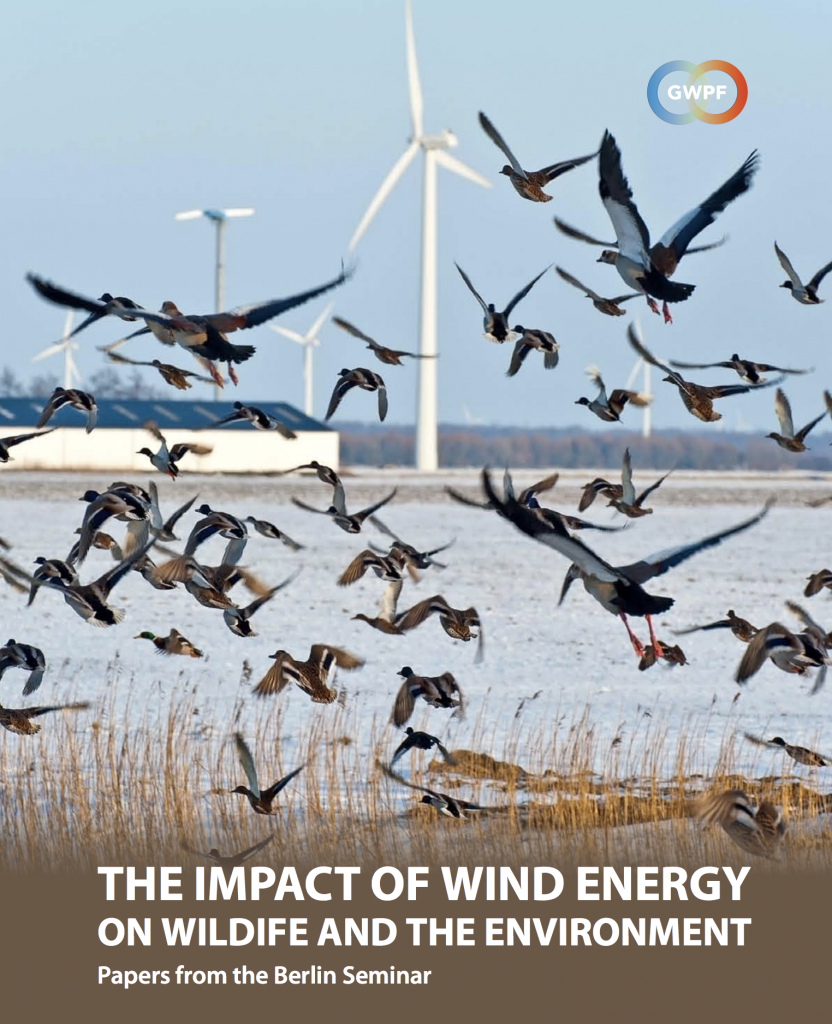
A new publication from the Global Warming Policy Foundation reviews the impact of wind energy on the environment and finds that it is already doing great harm to wildlife.

“The Impact of Wind Energy on Wildlife and the Environment” contains contributions from both researchers and campaigners, with a focus on birdlife. 

Professor Oliver Krüger describes his cutting-edge research, which has shown how birds of prey and ducks are being killed in their thousands in Germany. The risk to these species is so great that there is a possibility of whole populations being wiped out. 

Klaus Richarz, the former head of a major bird reserve in Germany, describes how windfarm operators are evading strict compliance with the rules, to the detriment of both birds and bats.
Dr Peter Henderson, of the University of Oxford, reviews the effects of wind turbines on a wide variety of animals. He suggests that death toll on bats may already be ecologically significant:
“About 200,000 bats are annually killed at onshore wind turbines in Germany alone. These numbers are sufficient to produce concern for future populations, as bats are long-lived and reproduce slowly, so cannot quickly replace such losses.”
Lastly, Paula Byrne of WindAware Ireland describes how windfarms in her native country have desecrated landscapes, and have even threatened the endangered Nore Freshwater Pearl Mussel.
With an extraordinary expansion of renewable energy planned, there is potential for these serious environmental impacts to become catastrophic.

The Impact of Wind Energy on Wildlife and the Environment (PDF)

Throughout this week, GWPF will be releasing a series of publications and videos on the subject of renewable energy’s impact on the environment.

Monday, 10 June 2019

Claims Of Insect Collapse Rubbished By New Study

Paul Homewood
Not A Lot Of People Know That

Readers will recall this story from January:
Insect collapse: ‘We are destroying our life support systems’
According to the Lister paper:
“Over the past 30 years, forest temperatures have risen 2.0 °C, and our study indicates that climate warming is the driving force behind the collapse of the forest’s food web”
As I reported at the time, the supposed temperature increase was fake, an artifact of merging two sets of incompatible data. The El Verde Field Station, responsible for the meteorological data, clearly warned against combining these two sets of temperature data, because the first one up to 1992 was artificially higher because of faulty equipment.

Any competent scientist should have double checked the source of the data, but for some reason Lister did not.

Now PNAS, who ran the original study, have published a new paper which rubbishes Lister’s findings.

Not only does this new study confirm the incompatibility of the temperature data, it also questions Lister’s claims that insect populations are even declining at all.

Read more

Sunday, 21 April 2019

Stressed Out? New Study Suggests You Need a 20-Minute 'Nature Pill’


Amanda Froelich
The Mind Unleashed


The idea of retreating to nature when life gets too hectic is nothing new. For instance, this study suggests that negative ions in natural environments benefit those suffering from depression and anxiety and contribute to feelings of mental-wellbeing. But, for the first time ever researchers have deduced a specific dose of an urban nature experience to counteract the effects of stress. The researchers concluded that a 20-minute “nature pill” is sufficient to significantly reduce stress hormone levels. 

“We know that spending time in nature reduces stress, but until now it was unclear how much is enough, how often to do it, or even what kind of nature experience will benefit us,” says Dr. MaryCarol Hunter, an Associate Professor at the University of Michigan and lead author of the research. “Our study shows that for the greatest payoff, in terms of efficiently lowering levels of the stress hormone cortisol, you should spend 20 to 30 minutes sitting or walking in a place that provides you with a sense of nature.” 

The study was published in Frontiers in Psychology. The researchers hope the finding encourages health practitioners to consider prescribing a “nature pill” before conventional treatments. 

Read more

Tuesday, 29 January 2019

Benefits of garden-based learning for children

Tim Moore
Foundation for Economic Education


The time you spend in the garden with your children is invaluable.

If you have children or work with children, then you probably have noticed that hands-on experiences help them make connections to the lessons they are learning. This is especially true when the lesson involves something you enjoy or have made a hobby out of, such as gardening. Hands-on learning experiences surround us if we take the time to look, and educational opportunities abound with a little ingenuity to turn daily tasks into lessons.

Help your children establish a sense of responsibility surrounding planning, caring for, and harvesting their own gardens. Older children can even get in on the spacial awareness, science, and finances behind it all. These lessons easily transfer to a larger picture: namely, how their own responsibilities and care of something living is integral to their attention to personal moral values as they grow.
Benefits of Children in the Garden

The benefits of children working in the garden have been studied for decades, with connections to independent learning and emotional growth identified as key potential effects. This could be due to the chores and tasks placed on young children early on in their development, which helps them gain a sense of importance and self-esteem, or even because of the confidence fostered by watching a plant grow and come to fruition under their close watch. No matter the study, the outcomes have reflected positively on children, which has led many educators to use gardens as part of their educational toolbox-a lesson that can be mimicked at home, as well.  


Read more

Wednesday, 4 July 2018

The Mysterious Microbes in the Sky

The Atlantic

It’s well known that the human gut is a thriving bacterial ecosystem—not to mention the skin, lungs, and various other parts of the body. But the breadth and depth of microbes’ participation in many systems on the planet are still not widely understood. For instance, there is evidence that there are microbes in the clouds, hitching thousand-mile rides through the atmosphere and helping to cause rain or snow along the way.

Some of these cloud microbes seem to come from the soil, but others are likely rising up out of the ocean, a riotous soup of bacteria and viruses. In a new study in Nature Communications, researchers used a 13,000-liter tank of seawater to observe what microbial species are in the water and which manage to become airborne in sea spray, thus launching themselves into the atmosphere.

Read more

Monday, 18 June 2018

Where have all our insects gone?

Robin Mckie
The Guardian UK

When Simon Leather was a student in the 1970s, he took a summer job as a postman and delivered mail to the villages of Kirk Hammerton and Green Hammerton in North Yorkshire. He recalls his early morning walks through its lanes, past the porches of houses on his round. At virtually every home, he saw the same picture: windows plastered with tiger moths that had been attracted by lights the previous night and were still clinging to the glass. “It was quite a sight,” says Leather, who is now a professor of entomology at Harper Adams University in Shropshire.

But it is not a vision that he has experienced in recent years. Those tiger moths have almost disappeared. “You hardly see any, although there used to be thousands in summer and that was just a couple of villages.”

It is an intriguing story and it is likely to be repeated over the next few weeks. The start of summer is the time of year when the nation’s insects should make their presence known by coating countryside windows with their fluttering presence, and splattering themselves on car windscreens. But they are spectacularly failing to do so. Instead they are making themselves newsworthy through their absence. Britain’s insects, it seems, are disappearing.

This point was underlined last week when tweets from the naturalist and TV presenter Chris Packham went viral after he commented on the absence of insects during a weekend at his home in the New Forest. Packham said he had not seen a single butterfly in his garden, and added that he sleeps with his windows open but rarely finds craneflies or moths in his room in the morning. By contrast, they were commonplace when he was a boy. “Our generation is presiding over an ecological apocalypse and we’ve somehow or other normalised it,” he later said. 

Read more

Thursday, 24 May 2018

Robotic bee could help pollinate crops as real bees decline

Comment: Well, what could possibly go wrong? Er. Everything?

You know something is really amiss when Walmart starts to get involved...

https://futurism.com/robot-bees-drones-walmart/
 
This is going to make a bad situation worse for so many reasons. a) It's the same reductionist mindset that creates such problems in the first place. In other words, mimicking nature in a bid to replace complex biodiversity dynamics doesn't work. b) It will be expensive as well as potentially harmful not just to other insects, making it more likely that it will further reduce the bee population not assist it. (Drone bees have rotor blades and are mechanical, ergo... c) This is a bid to make a big bucks not to solve the problem.

---------------------

New Scientist


A drone that can pollinate flowers may one day work side by side with bees to improve crop yields.

About three-quarters of global crop species, from apples to almonds, rely on pollination by bees and other insects. But pesticides, land clearing and climate change have caused declines in many of these creatures, creating problems for farmers.

Pollination is needed for reproduction in flowering plants. Male flower parts, or stamens, produce pollen that fertilises female parts, known as pistils, to make seeds. In self-pollinating flowers, the stamen sheds pollen directly onto the pistil.

Cross-pollination, however, requires the transfer of pollen from one plant to another. This mostly relies on pollen becoming stuck to the bodies of bees and other insects when they feed on flowers, and then being deposited on the next plant they visit. It has advantages over self-pollination, in that it increases genetic diversity and improves the quantity and quality of crops.

Eijiro Miyako at Japan’s National Institute of Advanced Industrial Science and Technology, and his colleagues have used the principle of cross-pollination in bees to make a drone that transports pollen between flowers.

Read more (+video) 

See also:  'Drone Bees' Are Comically Inept, Expensive and Dangerous to Real Bees

Sunday, 20 May 2018

Electromagnetic radiation from power lines and phone masts poses 'credible' threat to wildlife, report finds

Comment: 5G could "impact significantly on wildlife..." Sure. But what about humans? Anyone asking about that?  Some people apparently...

-------------------- 


Telegraph UK 


Electromagnetic radiation from power lines, wi-fi, phone masts and broadcast transmitters poses a ‘credible’ threat to wildlife, a new report suggests, as environmentalists warned the 5G roll out could cause greater harm. 


An analysis of 97 studies by the EU-funded review body EKLIPSE concluded that radiation is a potential risk to insect and bird orientation and plant health. 


However the charity Buglife warned that despite good evidence of the harms there was little research ongoing to assess the impact, or apply pollution limits. 


The charity said ‘serious impacts on the environment could not be ruled out’ and called for 5G transmitters to be placed away from street lights, which attract insects, or areas where they could harm wildlife. 


Matt Shardlow, CEO of Buglife said: “We apply limits to all types of pollution to protect the habitability of our environment, but as yet, even in Europe, the safe limits of electromagnetic radiation have not been determined, let alone applied. 


“There is a credible risk that 5G could impact significantly on wildlife, and that placing transmitters on LED street lamps, which attract nocturnal insects such as moths increases exposure and thereby risk. 


“Therefore we call for all 5G pilots to include detailed studies of their influence and impacts on wildlife, and for the results of those studies to be made public.” 


Read More

Sunday, 29 April 2018

EU To 'Completely Ban' Outdoor Use Of Pesticides Blamed For Devastating Bees

NPR

Citing concerns for food production, the environment and biodiversity, the European Union is set to "completely ban" the outdoor use of neonicotinoid insecticides that have been blamed for killing bees, and for keeping other bees from laying eggs.

"All outdoor use of the three substances will be banned and the neonicotinoids in question will only be allowed in permanent greenhouses where no contact with bees is expected," the EU announced on Friday.

An EU committee approved the plan to tightly restrict use of the insecticides, acting upon scientific advice from the European Food Safety Authority to tighten existing restrictions and protect bees, crucial pollinators.

The EFSA said in February that it had confirmed risks to both honeybees and to wild bees such as bumblebees posed by neonicotinoid pesticides. 

Read more

Monday, 23 May 2016

Dr. Vandana Shiva: Seeds of suicide

Dr. Vandana Shiva
deccanchronicle.com


May 22 has been declared International Biodiversity Day by the UN. It gives us an opportunity to become aware of the rich biodiversity that has been evolved by our farmers. It also provides an opportunity to acknowledge the threats to our biodiversity from IPR monopolies.

Just as our Vedas and Upanishads have no individual authors, our rich biodiversity, including seeds, have been evolved cumulatively. I recently joined tribals who evolved thousands of rice varieties for their festival of "Akti". Akti is a celebration of the relationship of the seed and the soil, and the community.

In addition to learning about seeds from women and peasants, I had the honour to participate and contribute to international and national laws on biodiversity. I worked closely with our government in the run-up to the 1992 Rio Earth Summit, when the UN Convention on Biodiversity (CBD) was adopted. Three key commitments in the CBD are protection of the sovereign rights of countries to their biodiversity, the traditional knowledge of communities and biosafety in the context of genetically-modified foods.

The UN appointed me on the expert panel for the framework for the biosafety protocol, now adopted as the Cartagena Protocol on biosafety. I was appointed a member of the expert group to draft the National Biodiversity Act, as well as the Plant Variety and Farmers Rights Act. We ensured that farmers rights are recognized in our laws. It says:

"A farmer shall be deemed to be entitled to save, use, sow, resow, exchange, share or sell his farm produce, including seed of a variety protected under this act, in the same manner as he was entitled before the coming into force of this act"
Patents on seeds are unjust. A patent or any intellectual property right is a monopoly granted by society in exchange for benefits. But society has no benefit in toxic, non-renewable seeds. We are losing biodiversity, we are losing nutrition, and quality of our food. Above all, we are losing our fundamental freedom to decide what seeds we will sow.

Seed as a common good has become a commodity of private companies. Unless protected and put back in the hands of our farmers, it is at risk of being lost forever. 


Read more

Monday, 16 May 2016

Isn't nature awesome? Humans flip out over lion eating unborn buffalo - no wonder they're clueless about Syria

Joe Quinn
Sott.net


Are humans schizophrenic? This is a serious question. In general terms, a schizophrenic is defined as someone who engages in abnormal social behavior and fails to understand reality. You could argue that those two criteria are more or less the same, or at least that one leads to the other. If you fail to grasp reality, you can't have normal social interactions, and if your interactions with others are faulty, there's something you're missing when it comes to understanding the reality around you.

But 'failure to understand reality', now that one really describes the average human being (and in particular some of the above average ones). Granted, there are degrees of such faulty comprehension, and true schizophrenics are obviously on the extreme end of the spectrum, but it's all the same condition. So it's not surprising that a more rational and objective analysis of schizophrenia defines it as social illness rather than strictly genetic or physical, i.e. it is the result of the toxic influence of our wonderful, modern social mores and 'norms' on a person's mind, body and soul. Schizophrenics may be extreme cases, but we're all affected.

Is there any essential difference between a schizophrenic who believes something because voices told them to, and an entire nation of people believing that the US invaded Iraq to bring freedom and democracy because their government told them to? In both cases, the person/people are being manipulated by a bogus, manipulative authority. The only important distinction I can think of is that in the first case a single person's life is negatively affected, in the second, millions of lives are not only negatively affected, but destroyed.

So I'd argue that everyone is 'schizophrenic' to one degree or another, and anyone who disagrees should go see a shrink. But a specific example of people's maladaptation to truth or reality was brought to my attention when reading a story on RT.com about a wonderful recent event at Kruger national park: a lion ate a buffalo. Not impressed? Well the 'highlight' of this event for observers (and half the internet) is the fact that the lion tore open the (female) buffalo's stomach and pulled out its unborn fetus and carried it off to a few other lions who all ate it.

As it burrows its head in the bloody cavities of the dead animal it can be seen pulling out a fleshy object.

'What is it?' the man watching wonders, 'It looks like a bit of stomach.'

Then suddenly, as the big cat makes off with its find, the woman gasps in shock, 'It's a baby!' she cries.

'That was pregnant, it got the baby out,' she says in disgust, 'Oh my goodness, gross.'
Presumably, people go on safari to places like Kruger national park to see the 'wonders' of nature in all its awesome (usually censored) 'glory'. But is nature really awesome? Most people think it is, but it really depends on what you mean by the word and how much of nature you actually look at. The problem is that most people mean it in a good way: lots of the reverential, admiring wonder and awe, and none of the revulsion or fear. The brochures that offer such holiday experiences tend not to advertise the chance to see a baby buffalo untimely ripped from its mother's womb. And I wouldn't be surprised if many of the viewers of such an act are totally unprepared for it, expecting a taste of sanitized nature: lion and buffalo getting along like some Disney cartoon. 

But such acts are the nature of nature (at this level anyway). Look under any rock in your back garden, and you'll see something eating something else. Lift the roof on any human dwelling, and you'll see the same thing, and I don't just mean breakfast, lunch or dinner. There are more ways to 'eat' or 'consume' than via our digestive tracts. And that should be enough to inspire real awe. After all, the word comes from the Old English ege, meaning "terror and dread". 

Read more

Monday, 22 June 2015

Here's More Proof Earth Is in Its 6th Mass Extinction

Comment: Nothing like being prepared...

------------------------

Live Science

Diverse animals across the globe are slipping away and dying as Earth enters its sixth mass extinction, a new study finds.

Over the last century, species of vertebrates are dying out up to 114 times faster than they would have without human activity, said the researchers, who used the most conservative estimates to assess extinction rates. That means the number of species that went extinct in the past 100 years would have taken 11,400 years to go extinct under natural extinction rates, the researchers said.

Much of the extinction is due to human activities that lead to pollution, habitat loss, the introduction of invasive species and increased carbon emissions that drive climate change and ocean acidification, the researchers said. [7 Iconic Animals Humans Are Driving to Extinction


"Our activities are causing a massive loss of species that has no precedent in the history of humanity and few precedents in the history of life on Earth," said lead researcher Gerardo Ceballos, a professor of conservation ecology at the National Autonomous University of Mexico and a visiting professor at Stanford University.


Read more 

See also: Reality Change I: 16 Ignition Points


Friday, 15 August 2014

Biological Effects of Fukushima Radiation on Plants, Insects, and Animals

PhysOrg
 
Following the 1986 Chernobyl nuclear power plant meltdown, biological samples were obtained only after extensive delays, limiting the information that could be gained about the impacts of that historic disaster. Determined not to repeat the shortcomings of the Chernobyl studies, scientists began gathering biological information only a few months after the disastrous meltdown of the Fukushima Daiichi power plant in Japan in 2011.

Results of these studies are now beginning to reveal serious biological effects of the Fukushima radiation on non-human organisms ranging from plants to butterflies to birds.

A series of articles summarizing these studies has now been published in the Journal of Heredity.

These describe widespread impacts, ranging from population declines to genetic damage to responses by the repair mechanisms that help organisms cope with radiation exposure.

Read more

Sunday, 11 May 2014

Link between insecticides and collapse of honey bee colonies strengthened

Science Daily

Two widely used neonicotinoids -- a class of insecticide -- appear to significantly harm honey bee colonies over the winter, particularly during colder winters, according to a new study from Harvard School of Public Health (HSPH). The study replicated a 2012 finding from the same research group that found a link between low doses of imidacloprid and Colony Collapse Disorder (CCD), in which bees abandon their hives over the winter and eventually die. The new study also found that low doses of a second neonicotinoid, clothianidin, had the same negative effect.

Further, although other studies have suggested that CCD-related mortality in honey bee colonies may come from bees' reduced resistance to mites or parasites as a result of exposure to pesticides, the new study found that bees in the hives exhibiting CCD had almost identical levels of pathogen infestation as a group of control hives, most of which survived the winter. This finding suggests that the neonicotinoids are causing some other kind of biological mechanism in bees that in turn leads to CCD.

Read more

Wednesday, 7 May 2014

Robot Bees Will Be Better Than The Real Thing Says Greenpeace

Heather Callaghan
Activist Post

This is an update to the original post on April 17, 2013. 

No, this is not a tabloid - it's real. According to several videos, which are posted below, robotic insects have made their first controlled flight. According to the creators of Robobee:
The demonstration of the first controlled flight of an insect-sized robot is the culmination of more than a decade's work . . . Half the size of a paperclip, weighing less than a tenth of a gram, the robot was inspired by the biology of a fly, with submillimeter-scale anatomy and two wafer-thin wings that flap almost invisibly, 120 times per second.
In addition to the recent suggestion from insecticide producers that we should "plant more flowers" to aid the declining bee population, Harvard's School of Engineering and Applied Sciences has been working with staff from the Department of Organismic and Evolutionary Biology and Northeastern University's Department of Biology to develop robot bees. These insectoid automatons would be capable of a multitude of tasks: autonomous pollination, search and rescue, hazardous exploration, military surveillance, climate mapping, and traffic monitoring - to name a few.

Greenpeace has issued a disturbing new PSA which postulates on what such a world would potentially look like as these robot bees gain autonomy and begin fully populating the natural world.

Saturday, 1 February 2014

Wildly Detailed Drawings That Combine Math and Butterflies

Comment: Exquisite work! 

-----------------------


Wired

Rafael Araujo’s illustrations are bafflingly complex—so complex that you might assume the artist uses a computer to render the exacting angles and three-dimensional illusions. And true, if you were to recreate his intricate mathematical illustrations using software, it probably wouldn’t take you long at all. But the craziest part of all is that Araujo doesn’t use modern technology to create his intricately drawn Calculations series—unless, of course, you count a ruler and protractor.

The Venezuelan artist crafts his illustrations using same skills you and I learned in our 10th grade geometry class. Only instead of stashing those homework assignments deep into the locker of his brain, Araujo uses these concepts to create his da Vinci-esque drawings. In Araujo’s work, butterflies take flight amidst a web of lines and helixes, a shell is born from a conical spiral, and the mathematical complexity of nature begins to make sense.

He says perspective and angles have always come naturally to him. “When I was young I began drawing perspective almost out of the blue,” he recalls. “I loved three-dimensional drawings and liked to find out ways to locate dots in the space.” Before computer-assisted drawing, there were artists like M.C. Escher, who Araujo counts among his biggest influences. “When I first saw M.C. Escher, I was speechless,” he says. “His artwork was so akin to my geometrical taste.”

Read more

Sunday, 22 May 2011

Corporate Pathology: Redesigning Nature and Humanity Part 2


Nature ‘ain’t good enough

The simple maxim of “You are what you eat” may have more layers of meaning than we suppose. The body/mind matrix is under attack. The corporate doctrine has staked its claim on the human being with the goal of turning us all into walking coronaries, where the capacity to think is eroded by an excess of sugar, salt and array of potent chemicals. The mass production of food is intimately linked to our environment and the sensitive ecosystems of flora and fauna which are presently being vacuumed up into the vast processing plant known as Western economics.

Our extraordinarily unhealthy diets are tied to an agriculture system that is designed to generate profit at any cost, despite what the “green” corporations will tell you. Chemical intensive and mechanized production; migrant labourers paid subsistence wages; massive wastage; long distance shipping; producers caught in “hostage” contracts that they cannot escape from and large government subsidies allowing corporations to do as they please and to stay above the law. The cycle of exorbitant profits at the expense of the world at large is not showing any signs of improvement. 
 
From the shopping mall lights to the candle-lit Vatican, the corporate ethos is re-designing the world. Standardized food production is depleting diversity by ruining soils and aquifers and contaminating endless stretches of land and water sources. Meantime, rural communities are driven out, forcing them to submit to the centralisation of city life, where more often than not, displaced families find themselves forced slum dwellings, a low income bracket or debt bondage and eventually poverty.

Meanwhile, the majority of us are living in Ronald MacDonald’s worldview where not just our body is being placed between two calorie saturated baps but our perceptions. We are accepting the deliberate assault on the taste and appearance of our highly processed food as supermarkets spill over with largely unnecessary products while attaching themselves to towns and villages thereby bankrupting local community shops. The coming of the huge supermarkets has sounded the death knell for community and family cohesion. For most of us, the urban infrastructure and work place has left us very little choice but to shop at such places. This adds to the erosion of the idea of civil society and local clusters of self-sustaining systems. They are already disappearing under the barrage of dehumanizing and downsizing measures that technology is inevitably increasing. 
 
Corporations hold tenaciously to their credo of “efficiency” or rather, what is good for their profits. In fact, the system of corporate control is largely immoral and value-less except in terms of profit margins on balance sheets. Now that fresh, natural foods have been pushed to the periphery, we are forced to eat unnatural foods. Most of us who cannot afford natural or organic goods ingest daily quantities of foods that have been produced with insecticides, synthetic hormones and wasteful packaging. Indeed, 80% of anti-biotics are currently used in processing of cattle and livestock which ultimately ends up on the dinner table. With the new innovation of bioengineering, Nature herself can be patented and sold to the highest bidder – all in the name of eradicating poverty and feeding the world, while in reality delivering the exact opposite. 
 
Knowledge is also being redefined towards strict protocols of consumption. Intellectual Property Rights are recognised only when knowledge and “creativity” generate profits – usually for a tiny percentage of the planet’s population. The shift from common rights to private rights is one of the primary tenets of “globalism” and is perfectly aligned to the new colonialism of multinationals. 19 The patents so enamoured of agri-chemical and bio-tech companies are now being used to not only define which direction the market should go but to block other firms’’ entry. Rather than being essential components in the monopoly of the seed business to extend invention and creativity, they are only required to increase market leverage and control, acting as an enforcer of IPR protection. Patents are deeply connected to universities and all manner of institutions with bribes and pay packets fixed accordingly. Creative enterprises and inventions are systematically co-opted and redirected to the same centralized market commodity. 
 
Science too is working for government and corporations where true discovery, research and innovation is sucked into commercialisation where knowledge is exploited for profit and where specialisations and studies that could benefit humankind are slowly forgotten in favour of commercial spin. One example of this is genetic engineering.


The merging of the computer revolution and the biotechnology revolution into a single technological complex foreshadows a new era of food production – one divorced from land, climate and changing seasons, long the conditioning agents of agricultural output. In the coming half century, traditional agriculture is likely to wane, a victim of technological forces that are fast replacing outdoor farming with a manipulation of molecules in the laboratory. – Jeremy Rifkin


The capacity to adapt and evolve is lost through human tinkering that is born from both ignorance and hubris. If we create ever more “advanced” herbicides nature will create “super weeds” that quickly adapt so that stronger and stronger chemicals are needed. 
 
The agri-chemcial and bio-tech giant Monsanto has genetically engineered its patented soya-bean to increase its herbicide sale while charging farmers a technology fee for buying more chemicals to fend off the adaptation capacity of diseases the chemicals themselves produce. With increasing problems arising from enormous fields suffering fromdepleted top soils and with synthetic copies of crops that cannot sustain themselves long-term, serious questions regarding the long-term health and economic viability of such farming has yet to rise above the push for short-term profits.

The economic fantasy that Monsanto so often relies upon before getting away with easy gains from its customary exploitation is beginning to be seen for what it is. 20 While Monsanto pushes its hybrid “Round-Up” soya bean on unsuspecting countries such as Argentina, the “miracle” is already disappearing from several studies suggesting serious health concerns. What is especially worrying are the repeating patterns of research showing growth reduction and serious atrophying across a broad range of bodily functions in animals. One study found that:

55.6percent of the offspring of female rats fed genetically engineered soy flour died within three weeks. The female rats had received 5-7 grams of the Roundup Ready variety of soybeans, beginning two weeks before conception and continuing through nursing. By comparison, only 9percent of the offspring of rats fed non-GM soy died. Furthermore, offspring from the GM-fed group were significantly stunted—36percent weighed less than 20 grams after 2 weeks, compared to only 6.7percent from the non-GM soy control group.21

After only 10 days the rats showed significant health problems including “smaller brains, livers, and testicles, damaged immune systems and digestive function, partial atrophy of the liver and potentially pre-cancerous cell growth in the intestines.”22 The understandable concern is more than justified when we know that children are more likely to be at risk from the potential dangers of GM foods. This is due to their fast-developing bodies which are more susceptible to allergies, nutritional problems and the danger from antibiotic resistant diseases. 23 As one author states: “Mice avoid eating GM foods when they have the chance, as do rats, cows, pigs, geese, elk, squirrels, and others. What do these animals know that we don't?” 24

Genetic engineering primarily involves the introduction of genes containing DNA (dioxyribonucleic acid) procured from humans or animals into the cells of bacteria, yeast or other animals. One of the outcomes is termed a “transgenic” animal. Other delightful experiments include chicken or toad genes introduced into potatoes for disease resistance and to increase shelf-life and size, 25 or inserting mouse genes into tobacco plants or genes from fire-flies which make the leaves glow at night.26 Cancer research scientists in the US bred a creature called the “oncomouse”, which was genetically engineered to develop cancer yet since its introduction in 1981 and copious amounts of money, the cure for cancer remains elusive. There is always the potentially lucrative market of animal organ transplants. Mice have been specially created to lack an immune system so that they can grow human organs, such as ears, externally and even internally.

Through this ecological roulette we have already been exposed directly to large amounts of genetically engineered organisms (plants, microorganisms, viruses) and are thus subject to an extremely high level of risk. The particular quality of risk inherent in genetic engineering is due to the fact that the source of the risk is creatively alive, it can reproduce and cannot be retrieved in case of damage. What is more, horizontal transfer of genes can and does take place, where spontaneous hybridization occurs much more often than expected after genetic manipulation. The use of herbicides is effectively useless after a few years. 
 
When transfer of transgenic plants to other plants, even from a range of a few kilometres by pollen, it is inevitable that the advantages of such a science - aside from the ethical issues - are founded on ignorance and will result in terminal harm to the ecosystem through plants foreign to the natural environment. Nature, like humans are involved in experiments that are preventing any kind of long-term sustainability but creating enormous short-term profits for the few at the probable expense of our bodies and minds. In other words, genetic engineering has long since been proven not to work and indeed acts as a highly dangerous genetic pollution into the food chain with significant health risks.27

If we are to believe that the earth’s ecology of which we appear to be part, is a complex expression of self-organizing systems that grow from within and are geared towards self-renewal, then man-made mechanistic, and exclusively reductionist applications defined by their lack of creative adaptation pose a threat to the finely tuned and delicately balanced equilibrium of our ecosystems. Genetic engineering views nature as a vast machine from which more dollars can be extracted while herbicides, insecticides and false promises to alleviate world poverty gradually reduce the natural equilibrium dependent on the natural functioning and growth of crops. To be in favour of quantity will always equal a decrease in quality. Those that think like machines and act like machines are determined to view nature as a machine are at the forefront of colonizing nature. 
 
“We manipulate nature as if we were stuffing an Alsatian goose. We create new forms of energy; we make new elements; we kill crops; we wash brains. I can hear them in the dark sharpening their lasers.” – Erwin Chargaff

What’s a Cow Mum?

Animals are also still in the firing line when it comes to genetic modification, standard factory food production, vivisection and a whole set of contradictory values about their place in man’s self-imposed pyramid of consumption. Regardless of our opinions on vegetarianism or the perfect diet to suit each of our body types and regimens, everyone would probably agree that the treatment of animals in each country around the world is usually a reasonably good indication of how well we treat the human population. 
 
This is not saying much of course, for if our human rights are rock bottom then the ethical treatment of animals is not going to up for discussion anytime soon. As such, it remains a problem of education and perception that cannot be separated from our social and cultural beliefs which are now just as entrenched as the factory farming process that spans the globe. It is an interesting mirror that is still largely hidden behind the convenience of market processes. Animals are clinically vacuum-packed and processed to be deposited in the vast freezers amid canned Muzak and the latest special offers. Customers need not even know that is was ever a living being at all. Cows, sheep, pigs, ducks and all kinds of “grain consuming animal-units” can now be safely deconstructed and sanitised for our dinner table.28

The treatment of animals is one aspect of the global Pathocracy that is more than a visceral symbol of our times. Indeed, the processing of beef from the bovine is a direct historical path of pathocratic rule: a symbol of psychopathology normalised for the dinner table. It is not a question of “is meat murder?” Nor if animals should be eaten but the intensity of suffering this system needlessly inflicts on beings that are denied that sentiency. 
 
Animals now reflect the reality of ourselves as slaves in more ways than one. At this stage, it is placing the cart before the horse to repair a facet of a system that would produce large gains. We brutalize animals while we anthropomorphosize them, an ironic dichotomy that is a product of societies wholly out of touch with nature and basic animal husbandry.

Take the life of a pack of cheap supermarket beef (i.e. a calf) that begins its life from the “teaser bulls” 29 or “sidewinders,” so called, because they have had the penis surgically re-routed so that it comes out through the side. Unable to penetrate the cow’s vagina it does however leave a mark on the female from a coloured dye marker hung around his neck. The cows are then identified and artificially inseminated. Once born the males are castrated for docility and to improve the quality of the beef. This can be done with an emasculator which crushes the testicle cord or it can be done with a knife stuck through the scrotum and the testicles pulled out. Then comes the de-horning achieved through a chemical paste that burns out the roots of their horns.  Electric dehorners are used on older steers or even saws, all without the use of anaesthetics. 30
 
After having a few months to be with their mothers they are transported to huge mechanized feeding lots for fattening up and slaughtering. (One can imagine the conditions of concrete feeding areas with thousands of cattle packed in for profit). Then come the drugs and a major source of income for the pharmaceutical companies. Growth stimulating hormones, feed additives, including antibiotics, anabolic steroids are implanted in the animals’ ears for slow release. Estradiol, testosterone and progesterone are also given, artificially adding muscle and fat in order to obtain the optimum weight gain in the minimum time. Most of the American beef market consistently uses growth hormones in meat and milk.31 32

Diseases are a persistent problem in conditions where production and profit is of primary concern. Therefore more drugs are needed which the pharmaceuticals are overjoyed to research and produce for their feedlot managers. While the drugged cows stand for hours on end at the trough they consume corn, soya and grains which are full of herbicides. And if we remember soya is the number one genetically modified crop already saturated with herbicides and pesticides before they even get to the cows and with over 80 percent of these chemicals being sprayed on corn and soya - it become a potent cocktail. 33 As if this is not enough, factory farms are busy using manure from chicken houses and pig pens, some factory farms and slaughter houses are mixing cement dust, industrial sewage and oils in order to reduce costs and fatten cattle more rapidly. 34 Antibiotics, hormones and herbicides as well as the possibility of new strains of disease-causing bacteria 35 produced from a number of unnatural practices in feeding and husbandry are posing a serious health risk to the human population. We do not need to do the maths to see that all these toxins are ending up in our own bodies with unknown effects on health and behaviour.

After the steers have reached the required weight they are packed into trucks and transported across often unbearably hot US states where many die through being trampled to death or through lack of water. Those that are incapacitated by broken legs or pelvises are dragged out at the end of the journey (no anaesthetic of course) and left for slaughter. The rest are lined up at the processing plant, stunned with a pneumatic gun, frequently still alive and quickly hoisted by a rear hoof over the slaughter house floor while their throats are cut. The animal is then only a few hours away from being transformed into plastic and polystyrene packing – clean as a whistle and ready for the family table. 
 
The man-made chemicals released into the environment combined with the toxicity of our food may already be seriously disrupting the endocrine systems and sexual development of both humans and animals which countless laboratory studies have already confirmed. 36 With a uniform mentality that is now discussing torture as legitimate to extract truth in favour of freedom (there’s an oxymoron) 37 perhaps it is no surprise that our Earth has become both a slaughterhouse for the soul which by default, must hang the vulnerable and innocent on hooks for it’s own consumption. After all, the financial and economic system demands it. Remember Kissinger’s quote which gave a chilling glimpse into his long held game-plan: “Who controls the food controls the people.” This was given an eerie ring of truth when Catherine Bertini the director of the UN World Food Program announced at the Beijing Woman's Conference in September 1995: “Food is power. We use it to change behavior. Some may call that bribery. We do not apologize”. As a former Confidential Assistant to New York State Governor Nelson Rockefeller perhaps these statements should not come as a surprise. 
 
By now, our toxic food now represents a vast experiment on the human population, the results of which are unknown. From the present state of the collective mind it is not hard to see that we are losing the battle to take back our own destiny and thus our mental, emotional and physical health. Our creative potential is in part, born from our own self-initiated activities and interactions with people. If our interaction with animals is solely based upon destructive dynamics of unnecessary consumption and cruelty, then we cannot be surprised when those same habits are repeated and projected towards ourselves and others. Nature may take on the task of purging some of the instigators of this global war against her in ways more creative than we can presently imagine. 


Notes
 

19 TRIPS - [ trade-related aspects of intellectual property rights ] Instigated as part of the GATT agreement of 1994. [GATT is now the World Trade Organisation (WTO)] This is no more than a blueprint for control of intellectual creativity as part of the US patenting of knowledge where strict adherence to monopolistic control can continue to function as part of the global Union drives to enforce US economic and trade policies abroad.
20 ‘GM soya 'miracle' turns sour in Argentina’ by Paul Brown, The Guardian, April 16, 2004.
21 Seeds of Deception - Is Your Food Safe? What the biotech industry doesn't want you to know by Jeffrey M.Smith, Chapter 2: What Could Go Wrong-A Partial List. p.47: “The study was conducted by Dr. Irina Ermakova, a leading scientist at the Institute of Higher Nervous Activity and Neurophysiology of the Russian Academy of Sciences (RAS). It was originally presented on October 10, 2005 to the symposium on genetic modification in Russia, organized by the National Association for Genetic Security (NAGS).” www.seedsofdeception.com/Institute of Responsible Technology.
22 Ibid.
23 ‘Genetically Engineered Foods Pose Higher Risk for Children’ by Jeffrey M. Smith www.seedsofdeception.com
24 Ibid. ‘Between the Chapters: The Wisdom of Animals’p.289.
25 Report on horizontal gene transfer - Department of Public Prosecution versus Gavin Harte and others, New Ross, Ireland Mae-Wan Ho, March 22, 1999., Institute of Science in Society. Paragraph 2.13 .
26 Gene Trapping with Firefly Luciferase in Arabidopsis. Tagging of Stress-Responsive Genes1, Martha C. Alvarado, Laura M. Zsigmond, Izabella Kovács, Ágnes Cséplö, Csaba Koncz and László M. Szabados Institute of Plant Biology, Biological Research Center, Temesvári krt. 62, 6726-Szeged, Hungary.
27 One example from a plethora of cases includes this article: ‘Experiment fuels modified food concern’ BBC News, August 10, 1998.
28 ‘Double-speak Awards Don’t Mince Words’ Dallas Morning News, November 20, 1988.
29 Modern Meat by Orville Schell p.78, published by Vintage Books USA (1985) ISBN: 0394729196.
30 Although there are animal welfare “painful husbandry” procedures in most European countries that advocate an minimum age before de-horning and castration) can take place with the presence of a vet. In the commercial meat industry these guidelines are seldom observed. In America, “farm animals used for food and fiber or for food and fiber research are not regulated under the Animal Welfare Act.” The Animal Welfare Information Center (AWIC) which is part of the US Department of Agriculture (USDA) National Agricultural Library (NAL) in Beltsville, Maryland.
31 Most of the American beef market consistently use growth hormones in meat and milk with the US Food and Drug Administration happily ignoring European data that suggest Growth promoting hormones pose health risk to consumers: See: ‘Growth promoting hormones pose health risk to consumers, confirms EU Scientific Committee’ - “The EU Scientific Committee on Veterinary Measures relating to Public Health (SCVPH) confirmed today that the use of hormones as growth promoters for cattle poses a potential health risk to consumers, following a review of 17 studies and other recent scientific data. Publishing its third opinion on the risks to human health from hormone residues in beef products, the SCVPH found no reason to change its previous opinions of 1999 and 2000.” April 23 2002, “In 1988, the EU prohibited of the use of oestradiol 17, testosterone, progesterone, zeranol, trenbolone acetate and melengestrol acetate (MGA) for growth promotion in farm animals. This prohibition applies to Member States and imports from third countries alike. […] The United States and Canada contested the prohibition in 1997 under a World Trade organization panel.” Contestation was reversed but the US still rejected the human health concerns. EUROPA– Gateway to the European Union, www.europa.eu.
32 ‘Monsanto Cranks Up Production of Controversial Bovine Growth Hormone’ - Monsanto takes over production of milk hormone By Rachel Melcer St.Louis Post-Dispatch April 20, 2006. “Monsanto Co. said Monday it is beginning in-house production of Posilac, which should ease a two-year-old shortage of the hormone used to boost milk production in cows. The Creve Coeur company received approval from the US Food and Drug Administration to begin formulating and packaging Posilac bovine somatotropin at its plant in Augusta, Ga.”
33 The National Research Council of the Academy of Sciences, board on Agriculture, Alternative Agriculture, 49.
34 p.13. Beyond Beef – The Rise and Fall of the Cattle Culture by Jeremy Rifkin, published by Viking/ Penguin Books.(1992)
35 Mad cow disease is one of several fatal brain diseases called transmissible spongiform encephalopathies, or TSEs. The variant Creutzfeldt-Jakob disease has also had cases in Europe. The awkward name reflects the similarity to Creutzfeldt-Jakob disease (CJD), a deadly brain illness that strikes about one person per million per year, due to genetic or unknown causes.
36 Our Stolen FutureAre we threatening our Fertility, Intelligence and Survival? By Theo Colborn, Dianne Dumanoski & John Petersen Myers. Published by Abacus (1996). ISBN 0-349-10878-1.
37 ‘Make torture legal, say two academics’ By Liz Minchin, The Age, May 17, 2005.


Corporate Pathology: Redesigning Nature and Humanity Part 1


The goal of life is living in agreement with nature.” - Zeno
One of the questions that comes up periodically is to what extent could a corporation be considered to be psychopathic. And if we look at a corporation as a legal person, that it maynot be that difficult to actually draw the transition between psychopathy in the individual to psychopathy in the corporation. We could go through the characteristics that define this disorder, one by one, to how they might apply to corporations. They would have all the characteristics, and, in fact, in many respects, the corporation of that sort is the proto-typical psychopath. - Dr Robert Hare

Economics is extremely useful as a form of employment for economists.”
John Kenneth Calbraith


Dead-locked economics

Sexual slavery, slavery of our beliefs, the bonded slave and our slavery to countless desires are held in place by the global financial and economic system that was always inherently unjust and inequitable.

This system is founded on the enslavement of older cultures which informs the new with psychopathological dispositions remaining hidden behind its inception. This archaic and grossly inadequate financial system has overseen the decline in job opportunities due to the inevitable investment in a hi-tech global economy. The result is a continuing surplus of goods and services with an ever smaller work force, while the US fiat currency and systems of credit and debt continue to ravage populations. Poverty is rising out of control with tiny pockets of jealously guarded affluence. This is leading to greater destabilisation, as various sub-cultures of youth crime emerge under well established mafia-led economies, in turn acting as corporate cannon fodder. 
 
Global financial debt and wage dependence are maintained and regulated by the IMF and the World Bank. These bastions of financial brokering are seen as the epitome of free trade ethic, yet rather than being the facilitator of all things financially rosy, they are in fact the gatekeepers of debt slavery and economic disparity. The IMF has engineered these controls with the collusion of commercial banks preventing individual nations from managing their own economic affairs, while increasing the centralisation of power under the auspices of a destined “Global Union” as a the ultimate economic ideal.1 For each nation to control its own destiny, including the inflow and outflow of capital, this would take away the dependence on the resources that provide a rich and imbalanced bounty for wealthy countries. Occasional financial warfare between bankers, hedge funders and asset management conglomerates ensure the increasing march towards greater centralization coupled with nationalisation when deemed necessary. 
 
Despite the theoretical and abstract perceptions of neo-imperialistic Free Trade Worshippers, it remains the primary base for exploitation. The manipulations of inherent vulnerabilities and cyclic fluctuations that make up such a patently unworkable system offer an abundance of capital resources for those at the top of the pyramid. The debt based financial system, is energised by “borrowing” which affirms the future of developing nations assets (i.e. its people) which will then be held in bondage and ransomed out to whoever is buying. 
 
American hegemony has ensured that the extraordinarily damaging forces of economic globalisation continue unabated. Behind this monopolisation are highly influential institutions, some of which include: the World Economic Forum (or the Davos Group) International Chamber of Commerce, The Business Industry Advisory Committee, World Business Council on Sustainable Development, The US Council on International Business, The Business Roundtable Europe and The European Round Table of Industrialists. 
 
The most noted of these global steerage organisations are The Council on Foreign Relations,2 The Bilderberg Group 3 and the Trilateral Commission 4 which, admittedly have a legendary conspiratorial mythos, not without due cause. These three organizations offer a cultivated and refined air of respectability and economic savoir-faire, yet the reality of their global manoeuvres offer important reasons as to why developing countries continue to drown in varying degrees of corruption, famine and poverty. These steering groups bring together CEOs of global corporations, leaders of national political parties and a general mix of “movers and shakers” to enjoy some consensus-building in how to mould and shape the global economy. Needless to say, the public is never privy to these inside negotiations. Members include most of the rich and famous in the political and financial arena since before the Second World War. (The Trilateral Commission is a more recent arrival). Its members write scholarly pieces which are then used in the decision-making process where the academic discourse often reaches dizzying heights of rhetoric, extolling the virtues of a borderless and united (i.e. monopolised “free” market) world which then the media happily disseminates. No matter how these accusations may be repudiated in the rare addresses to the press in public and via their respective websites, the overriding theme that connects all three groups is the historical and unquestioned ideology and belief that national boundaries should be obliterated and a one-world government, one world currency, one world religion and one world military force should be established. 
 
These meetings are about an old boy’s network of Caucasian males, from Northern industrial backgrounds of the wealthy Elite primarily concerned with maintaining the prosperity of a US style economy. Though many of the more naive participants believe they are inaugurating the seeds of prosperity tied up in a nice blue bow of international relations, the reality is somewhat different. The members are involved in an exclusive process that is wholly directed towards the corporate libertarian ethos of economic integration and that sickly sweet euphemism of “harmonization.” An elite agenda for power ensures that alternative visions of the financial and economic systems are never, but never, up for discussion. In fact, this is none other than a potent mix of both corporate fascism and state socialism i.e. National Socialism- the direct descendent of Nazi ideology.

Most policy directives can be traced back to these closed meetings between leaders that are effectively arranged to preclude alternatives and to sustain and enforce prevailing beliefs. 5 Without any elected, democratic process involved they are able to influence governments, financiers and corporations, NGOs and the entertainment world with absolute impunity.

Corporate Predators

Their “Globalisation”, “New World International Order” or “Global Union” has rendered the traditional role of government virtually obsolete. Global corporations are able to ignore outdated governmental restrictions concerning national economies and foreign policy. In fact, they increasingly make policy decisions across both national and international boundaries. The trans-nationalisation of business is concerned with eliminating any and every aspect of diversity. Whatever proves a hindrance towards a centralised system of “vertical supply networks” must be removed. And with it, the social, cultural and ultimately, the individual identity of nations caught up in this colonisation.

Whatever the quality of benevolence existing within the internal personnel of the corporation (i.e. ordinary citizens like you and I) the structures and directives that spur corporations on are the precise embodiments of the predator. No matter how hard these leviathans may try, they cannot go beyond their conspiratorial desire to implant a strictly one dimensional action of capitalist efficiency. True values of society are merely inconveniences on the road to consumption; they are obstacles to absorption where old cultures and ancient wisdoms are impediments to the pyramid of economic growth. 
 
A coalition of government and business interests have decided what is good for their profits by deciding what is good for you. Their only priority - at least at the executive level - is to their board members and shareholders to maximize profits. Anything that gets in the way of this drive is expendable. The list of 100 top corporate criminals from the 1990s is testament to what they can get away with without being caught. In reality, laws promote the multinational agenda rather than the basic rights for the men and women in the street. As such, these crimes are merely normal business practice for 90 percent of the listed companies. 
 
The Swiss pharmaceutical giant, F. Hoffmann-La Roche Ltd., that paid “a record $500 million criminal fine for leading a worldwide conspiracy to raise and fix prices and allocate market shares for certain vitamins sold in the United States and elsewhere” 6 is just one of a long line of companies which consider it a part of their yearly activities, as normal in fact as Exxon diddling the books and MacDonald’s lying about it’s so called nutritional meals. 
 
Or how about Daiwa Bank Ltd. that was charged with 16 federal felonies and who paid the largest criminal fine ever imposed in the United States at $340 million? Or Bankers Trust that was “fined $60 million for its role in a scheme by high-ranking bank officials to enhance the bank’s financial performance by falsely recording approximately $19.1 million in unclaimed customer funds as the bank’s income and reserves.” 7 Then of course, there is Damon Clinical Laboratories, Inc. that was fined $32.2 million for submitting false claims to the Medicare program and defrauding the American public. 8 And we mustn’t forget that tried and tested formula of giving away billions of dollars to Israel in the form of tax free benefits and corporate handouts including a $26.5 million in the sale of military equipment to Israel. General Electric was fined a paltry 9.5 million for persistent counts of fraud. 9 We can also mention the sorry tale of Unisys which conspired to defraud the US, including “bribery, conversion of government property, filing a false statement and filing false claims…” but we will not go down a road that is already so much a part of the Capitalist machinery the world over. 10

The so called fines inflicted on these companies are used as a sop for both the public and the Department of Justice. They are immediately swallowed up in the vast mega-profits that these monoliths create, or as one resident commented on the Eastman Kodak criminal fine for a chemical spill: “It’s equivalent to you or I getting a jaywalking ticket.” 11

Price-fixing, corporate fraud, pollution, or public corruption - the effects of corporate dynamics far out weigh the oft mentioned benefits to society where jobs and the push for economic growth are deemed as the only viable options for a desperate global population. Yet some of the biggest trans-national corporations have mutated into such monsters of consumption that the dehumanization takes more tangible and immediate forms, Coca-Cola being but one example. Union leaders at Coca-Cola’s Colombian bottling plants have been murdered while hundreds of other Coke workers have been tortured, kidnapped and/or illegally detained by violent paramilitaries, often working closely with plant managements. 12 While providing for all our needs large trans-nationals have excelled in the realm of human rights abuses right along with criminal fines and lawsuits.

The Dow Chemical Co. made its name by destroying the health of millions of Vietnamese and enormous tracts of rainforest during the Vietnam war with its lethal War defoliant, Agent Orange. Not content with the profits from Agent Orange they put their creative minds together to produce Napalm which burned many thousands of innocent people to death and which was still used, albeit illegally in the present invasion of Iraq. 13
 
In 1988, with the sticky fingered handshake from Donald Rumsfeld, Dow chemical sold $1.5 million in pesticides to Saddam Hussein despite knowledge that these would be used in chemical weapons.14 When it acquired Union Carbide Corporation (UCC) and its outstanding liabilities in for the Bhopal disaster in India, these were summarily ignored at great emotional and financial cost to Bhopal’s civilians. 15 The company continues to be involved in human rights abuses: environmental destruction, water and ground contamination, health violations, chemical poisoning, and chemical warfare.

The petrochemical company Chevron and its Texaco subsidiary felt it necessary from 1972 to 1992 to leave more than 600 unlined oil pits in the pristine northern Amazon rainforest while dumping 18 billion gallons of toxic production water into rivers used for bathing. It destroyed the ecosystems, displaced indigenous Indians and caused countless health problems. 16 Chevron continues to exacerbate and ferment violent repression of nonviolent opposition to its oil extraction ventures in both Nigeria and the Niger Delta. The company has used any tactics it sees fit, including collaboration with Nigerian police and military for whom human rights simply do not feature.

The notorious Caterpillar Company provided the Israeli military with the bulldozers used to destroy Palestinian homes and often innocent civilians (such as Rachel Corrie) and continues to do so despite worldwide condemnation. How about the persistent corruption, cronyism, worker exploitation, war profiteering and contractor fraud of the Halliburton Co.? (Dick Cheney’s past helmsman ship of the company seems particularly fitting). Then there are the predations of the Monsanto corporation that displaces and destroys communities, causes serious health violations and employs child labor for its $5.4 billion yearly profits. 17
 
Many such hastily create new “human rights teams” in much the same way companies created “environmental focus teams” green consumer products and “sustainability department groups” which are doomed to failure due to the core dynamics of the companies themselves. It amounts to wolves wearing sheep’s clothing. They can’t be anything other than what they are: mega-consumers with huge ecological footprints, driven by their shareholder’s need for profits. Despite the push for green credentials and at the executive level, they know perfectly well that this is merely good PR. The daily list of actions that fly in the face of any notion of human dignity and respect continue daily according to the nature of the beast. If intimidation and bribery on the ground do not work then they can always rely on the bias of criminal law to ease the wheels of progress. One example of such loop-holing is known as “deferred prosecution agreements” 18 where the prosecutor charges the corporation with a crime, but agrees to drop the charges if the corporation fulfils its promises to the prosecutor. These promises include fines, cooperation – including the highly controversial waiver of attorney-client privilege – and monitors. The elimination of corporate liability is the goal and many advocate its preferential treatment for business.

Technology, governments, finances and the markets are controlled by global trans-nationals who are then free to pursue their goals of profitability without regard to national or local consequences and where relationships are defined entirely by market forces. With decentralised, community based, local and regional economies having no place in the consensus of an elite superclass, like marauding locusts we are taken up in their winds of change that leaves nothing and no sentient being with a long-term future. Of course, this is how their evolution of economics facilitated the perfect breeding ground for excess and disparity. The control of market power depends on the “invisible hand” of economic pathology.


Notes

1 While the carte blanche exploitation of Africa was signed for in 2000 the American Union has stalled somewhat, thanks largely to the efforts of Victor Chavez the President of Venezuela and Evo Morales of Bolivia who will not play ball. The Global Union is an entirely elitist plan for an “New International Order” that neo-conservative, corporate and Zionist elites wish to suck in all nations of North, Central and South America as well as the Caribbean Islands, and which would function just like the present European Union, which was completed in the year 2000. Like the European Union, there will be one monetary system, one central bank, one unelected governing body, one military force, one judicial system, no borders, and no Constitution and Bill of Rights. NAFTA, has now become the FTAA, (Free Trade Area of the Americas). 
2 Further reading: ‘Kinder capitalists in Armani specs’ by Will Hutton, The Observer, 1st February 1998, p22; ‘Goldwater Sees Elitist Sentiments Threatening Liberties’, By US Senator Barry M. Goldwater, 1979. See also: The Shadows of Power: The Council on Foreign Relations and the American Decline by James Perloff. (1988) ISBN: 0882791346.
3 Further reading: American Hegemony and the Trilateral Commission by Stephen Gill, Cambridge University Press; Reprint edition (1991) ISBN: 052142433X; Trilateralism: The Trilateral Commission and Elite Planning for World Management, Published by South End Press, (1980) ISBN: 0896081036.
4 Further reading: ‘The Bilderberg Group and the project of European unification’ by Mike Peters, The Lobster, Issue 32, 1996; Bilderberg Group, The Global Manipulators, by Robert Eringer, Pentacle Books, (1980); ‘European Parliament examining Bilderbergers -Bilderberg questions tabled at European Parliament by Patricia McKenna MEP’ - November 1998 to February 1999 by Tony Gosling., www.Bilderberg.org.
5 pp.133-140 - ‘Building Elite Consensus.’ When Corporations Rule the World, by David C. Korten, Published by Earthscan (1995) ISBN 1-85383-434-3.
6 ‘The Top 100 Corporate Criminals of the 1990s’www.corporatecrimereporter.com.
7 F. Hoffmann-La Roche Ltd. Type of Crime: Antitrust Criminal Fine: $500 million 12 Corporate Crime Reporter 21(1), May 24, 1999.
8 Daiwa Bank Ltd. Type of Crime: Fraud Criminal Fine: $340 million 10 Corporate Crime Reporter 9(3), March 4, 1996
9 General Electric Type of Crime: Fraud Criminal Fine: $9.5 million 6 Corporate Crime Reporter 30(7), July 27, 1992.
10 Unisys Type of Crime: Bribery Criminal Fine: $5 million 5 Corporate Crime Reporter 35(11), September 16, 1991.
11 Eastman Kodak Type of Crime: Environmental Criminal Fine: $1 million 4 Corporate Crime Reporter 14(1), April 9, 1990.
12 ‘Chicago Protest Against Coca-Cola Death Squads in Colombia’ By Fightback News Service, May 17, 2003.
13 ‘US admits it used napalm bombs in Iraq’ By Andrew Buncombe, The Independent, August 10, 2003.
14 ‘Rumsfeld 'offered help to Saddam'’- Declassified papers leave the White House hawk exposed over his role during the Iran-Iraq war, by Julian Borger, December 31, 2002.
15 Members of Congress tell Dow – Face up to your Bhopal responsibilities, US Congressional Letter to Dow Chemical July 18, 2003.
16 ‘Amazon Indians want court to speed up Chevron case’ by Alonso Soto, Reuters, 25 Jul 2006. “Lawyers for Amazon Indians embroiled in a $6.1 billion pollution case against Chevron Corp. in Ecuador asked a local court on Monday to move faster, a month after the country's government filed its latest accusation against the oil giant in the United States.”
17 ‘Child Labour and Trans-National Seed Companies in Hybrid Cotton Seed Production in Andhra Pradesh’ Dr. Davuluri Venkateswarlu Director, Glocal Research and Consultancy Services, Hyderabad. India Committee of the Netherlands / Landelijke India Werkgroep - April 24, 2003.
18 ‘Crime Without Conviction: The Rise of Deferred and Non Prosecution Agreements.’ A Report Released by Corporate Crime Reporter Wednesday, December 28, 2005.

Related Posts Plugin for WordPress, Blogger...