Search This Blog

Showing posts with label Genetics. Show all posts

Wednesday, 10 July 2019

What the ban on gene-edited babies means for family planning

Marie Menke
The Conversation

Technology surrounding the human embryo has moved out of the realm of science fiction and into the reality of difficult decisions. Clinical embryologists fertilize human eggs for the purpose of helping couples conceive. The genetic makeup of these embryos are tested on a routine basis. And today, we no longer ask “can we,” but rather, “should we” edit human embryos with the goal of implantation and delivery of a baby?

As a reproductive endocrinologist, I frequently encounter couples grappling with complicated reproductive issues. If one or both parents are affected by single gene disorders, these couples have the opportunity to first test their embryos and then decide whether to transfer an embryo carrying a mutation rather than finding out the genetic risk of their baby while pregnant. In some cases they may decide not to transfer an embryo that carries the mutation as part of the in vitro fertilization procedure. 

These issues seem simple, but carry large consequences for patients. “Should we transfer an embryo affected with our genetic disorder?” “What should we do with our affected embryos if we do not transfer them?” Some patients will opt to skip testing altogether. 

Clinical trials of GM embryos banned in the US


House Democrats this year considered, then backed away from, lifting a ban written into the budget of the U.S. Food and Drug Administration that bars the approval of any clinical trial or research “in which a human embryo is intentionally created or modified to include a heritable genetic modification.” The current gene-editing ban prohibits editing the genes inside the cell’s nucleus, as Chinese scientist He Jiankui did. He used the gene-editing tool CRISPR to modify the CCR5 gene in twin girls to give them immunity from HIV. 

The current ban also prohibits so-called mitochondrial replacement therapy, or three-parent babies. 

Read more

Monday, 29 April 2019

Genetically Modified Babies. The Genetic Editing of Human Life is “Big Business”

Prof Michel Chossudovsky
Global Research

Last November, He Jiankui, a Chinese biology professor at Southern University of Science and Technology (SUST) in Shenzhen (Guangdong Province) announced that he and his team had created the World’s first “genetically edited babies”: twin babies Lula and Nana. 

Dr. He Jiankui, used the CRISPR technology “to alter the embryos of seven couples [allegedly] to make them resistant to HIV”.  He Jiankui made his announcement at the Second International Summit on Human Genome Editing held at the University of Hong Kong.  

Dr. He claims to have used CRISP “to tweak the DNA of human embryos during in vitro fertilization”.

The broad implications of this experiment are far-reaching. The genetic editing of human life forms including embryos has a bearing on the future of humanity.

It opens up the pandora’s box of genetic engineering applied to human beings.
It undermines the “reproduction of real life”. Potentially, it destroys humanity.


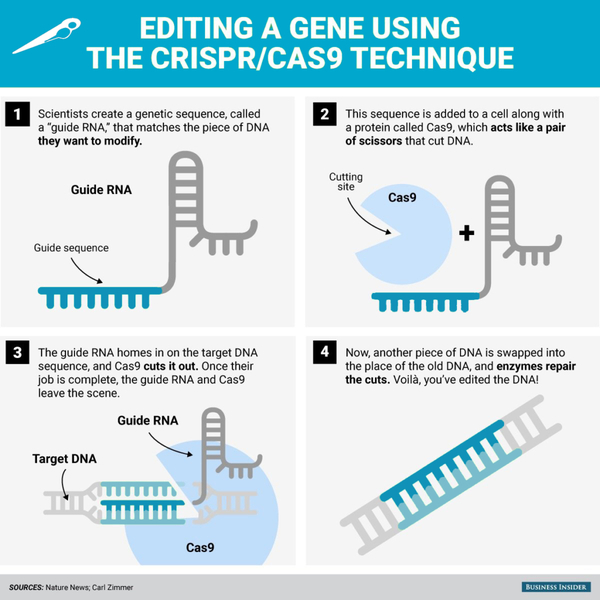
 Screenshot Source Nature News Carl Zimmer, Click image to enlarge


The experiment raises important scientific and ethical issues. Human embryos are not commodities.

The Chinese government immediately opened an investigation, Dr He Jiankui was fired by his University in January 2019.

Corporate Interests: Genetic Editing is “Big Business”

Despite government regulations and ethical issues, there are powerful corporate interests involved in the development and patenting of genetic editing of life forms including Dr. He’s findings on “genetically modified babies”.

Read more

Saturday, 23 March 2019

Scientists From Around the World Call for Immediate Halt to ‘Genetically Altered Children’

Derrick Broze
The Mind Unleashed 

Scientists and ethicists from around the world are warning of the consequences of failing to implement a temporary global halt on gene editing of human eggs, embryos, and sperm. 

In a letter to the journal Nature, 18 scientists and ethicists from seven countries called for a global moratorium on the type of gene editing that can result in genetically altered babies. The letter was prompted by a 2018 announcement by a Chinese scientist declaring the birth of the world’s first gene-edited twin babies.

“The 18 signatories of this call include scientists and ethicists who are citizens of 7 countries. Many of us have been involved in the gene-editing field by developing and applying the technology, organizing and speaking at international summits, serving on national advisory committees and studying the ethical issues raised.”
Fears of “designer babies” have been on the rise in the last decade as scientists move closer to producing embryos which have been genetically modified to produce children with specific, desirable characteristics. This vision was once the exclusive domain of Hollywood movies like Gattaca, but now, a future where parents are able to pick and choose exactly how their child’s genes express themselves is eerily close.

Specifically, the group is calling for a moratorium on germline cells—in this case egg or sperm cells—that can then be inherited and “could have permanent and possibly harmful effects on the species.”

“To begin with, there should be a fixed period during which no clinical uses of germline editing whatsoever are allowed,” the scientists write. “As well as allowing for discussions about the technical, scientific, medical, societal, ethical and moral issues that must be considered before germline editing is permitted, this period would provide time to establish an international framework.”

From that point on, individual nations will choose their own paths. The scientists predict that some nations may choose to continue a moratorium indefinitely or a permanent ban. They also call on any nation that chooses to allow specific applications of germline editing to first give public notice and engage in an “international consideration about the wisdom of doing so.” The group also calls for a “transparent evaluation” to determine if germline editing is justified and for a nation to gain a “broad societal consensus” over the appropriateness of the editing.

Read more

Wednesday, 6 February 2019

Talking with Jean François Gariépy - The Revolutionary Phenotype


JF's channel: youtube.jfg.world 

"The Revolutionary Phenotype is a science book that brings us four billion years into the past, when the first living molecules showed up on Planet Earth. Unlike what was previously thought, we learn that DNA-based life did not emerge from random events in a primordial soup. Indeed, the first molecules of DNA were fabricated by a previous life form. By describing the fascinating events referred to as Phenotypic Revolutions, this book provides a dire warning to humanity: if humans continue to play with their own genes, we will be the next life form to fall to our own creation."


Monday, 4 February 2019

One Of The Biggest At-Home DNA Testing Companies Is Secretly Sharing Data With The FBI

Zero Hedge

Just one week ago, we warned that the government — helped by Congress (which adopted legislation allowing police to collect and test DNA immediately following arrests), President Trump (who signed the Rapid DNA Act into law), the courts (which have ruled that police can routinely take DNA samples from people who are arrested but not yet convicted of a crime), and local police agencies (which are chomping at the bit to acquire this new crime-fighting gadget) — was embarking on a diabolical campaign to create a nation of suspects predicated on a massive national DNA database.

As it turns out we were right, but we forgot one key spoke of the government's campaign to collect genetic information from as many individuals as possible: "innocent", commercial companies, who not only collect DNA from willing clients, but are also paid for it.

FamilyTreeDNA, one of the pioneers of the growing market for "at home", consumer genetic testing, confirmed a report from BuzzFeed that it has quietly granted the Federal Bureau of Investigation access to its vast trove of nearly 2 million genetic profiles.

While concerns about unrestricted access to genetic information gathered by testing companies had swelled since April, when police used a genealogy website to ensnare a suspect in the decades-old case of the Golden State Killer, that site, GEDmatch, was open-source, meaning police were able to upload crime-scene DNA data to the site without permission. However, the latest arrangement marks the first time a commercial testing company has voluntarily given law enforcement access to user data.

Worse, it did so secretly, without obtaining prior permission from its users.

The move is of significant concern to much more than just privacy-minded FamilyTreeDNA customers. As Bloomberg notes, one person sharing genetic information also exposes those to whom they are closely related. That’s how police caught the alleged Golden State Killer. And here is a stunning statistics - according to a 2018 study, only 2% of the population needs to have done a DNA test for virtually everyone’s genetic information to be represented in that data.

Read more

Friday, 4 August 2017

Whatever you know about how bad Big Pharma is, what they're wanting to do with revolutionary gene therapy is worse

Tony Cartalucci
Land Destroyer


A literal cure for cancer has been funded by charity, stolen by big-pharma, to be dangled over the head of the dying for profit.

Impropriety among big-pharmaceutical corporations has ranged from multi-billion dollar bribery rackets, to marketing drugs to patients for uses they were never approved for by regulators, to covering up known dangerous side-effects of medications they produce and sell.

More recently, big-pharma has been embroiled in a series of price-gouging controversies over equipment and treatments. This includes the hijacking of and profiteering from a revolutionary new treatment called gene therapy.

Gene therapy, the process of re-engineering human cells to either include missing DNA to cure genetic conditions or to arm the immune system to seek and destroy disease, has been the latest hopeful technology scooped up and plundered by big-pharma.


 Gene therapy promises a single shot cure to many of the diseases that have confounded humanity the most - everything from diabetes to cancer, to blindness, deafness, and even various effects of aging.

At least two treatments using gene therapy have been approved for European markets.

A third that has proven in clinical trials to provide permanent remission for leukemia patients who were unresponsive to chemotherapy, appears to be close to FDA approval. 


 The Literal Cure for Cancer, Dangled Over the Dying

While the treatment - even under experimental conditions - costs approximately $20,000 to produce, pharmaceutical giant Novartis has swooped in and industry experts anticipate a markup leaving the price tag between $300,000-600,000.

Read more

Wednesday, 1 April 2015

Beware of Organ Removal for "Cancer Prevention": Jolie's Precautionary Tale

Sayer Ji
Green Med Info

Angelina Jolie has just announced she has removed her ovaries and fallopian tubes to "prevent cancer," following her decision last year to remove her breasts for the same reason. Is this medically justified, sane behavior? 

With Angelina Jolie's recent announcement that she had her ovaries and fallopian tubes removed because of both a BRCA 'gene defect' and a history of breast and ovarian cancer in her family, the idea that genes play a dominant role in determining biological destiny and cancer risk is proliferating in the mainstream media and popular consciousness uncontrollably like a cancer.

Back in 2014, in a New York Times Op-Ed titled, "My Medical Choice," Angelina Jolie explained why she chose to have a double mastectomy, recounting what her doctors told her was the extreme health risk associated with her BRCA1 'gene mutation':
"My doctors estimated that I had an 87 percent risk of breast cancer and a 50 percent risk of ovarian cancer, although the risk is different in the case of each." 
At first glance, these estimates are frightening. Who, given such a bleak prognosis, wouldn't also feel compelled towards aggressive intervention when doing nothing (watchful waiting) would result in a 50% increased risk of developing the most lethal gynecological cancer known to exist. [1]

But where do these numbers come from? How did her caretakers arrive with any certainty at this figure?

Read more

Wednesday, 20 August 2014

Scientists Find Chemical Toxins in Utero Unmistakably Linked to Autism

Natural Society

Researchers at the University of Chicago have just revealed the smoking gun at the root of autism in a new study published in the journal PLOS Computational Biology. Without a doubt, autism and intellectual disability (ID) are linked to toxin exposure while a baby is still being formed in the mother’s womb.

Andrey Rzhetsky, professor of genetic medicine and human genetics at the University of Chicago, says:
“Essentially what happens is during pregnancy… there are certain sensitive periods where the fetus is very vulnerable to a range of small molecules – from things like plasticisers, prescription drugs, environmental pesticides and other things. Some of these small molecules essentially alter normal development.
Autism appears to be strongly correlated with rate of congenital malformations of the genitals in males across the country, this gives an indicator of environmental load and the effect is surprisingly strong. The strongest predictors for autism were associated with the environment; congenital malformations on the reproductive system in males.” 
 

Sunday, 10 August 2014

Stress during pregnancy can be passed down through generations, rat study shows


Science Daily

To better understand problems during pregnancies today, we should look to the experiences of our ancestors, research published in the open access journal BMC Medicine suggests. Scientists investigating pregnancies in four generations of rats show that inherited epigenetic effects of stress could affect pregnancies for generations.

Researchers from the University of Lethbridge in Canada wanted to investigate how preterm births are influenced by stress. Preterm birth is one of the leading causes of neonatal death and can lead to health problems later in life. They examined the length of pregnancies in rats because in general there is very little variation between them.

A first generation of rats were subjected to stress late in pregnancy. The following two generations were then split into two groups that were either stressed or not stressed. The daughters of stressed rats had shorter pregnancies than the daughters of those who had not been. Remarkably, the grand-daughters of stressed rats had shorter pregnancies, even if their mothers had not been stressed. 

As well as shorter pregnancies, the rats whose grandmothers and mothers experienced stress displayed higher glucose levels than the control group. In addition, rats whose grandmothers or mothers who were stressed weighed less.

Gerlinde Metz, senior author of the article, says: "We show that stress across generations becomes powerful enough to shorten pregnancy length in rats and induce hallmark features of human preterm birth. A surprising finding was that mild to moderate stress during pregnancy had a compounding effect across generations. Thus, the effects of stress grew larger with each generation." 

The researchers believe that these changes are due to epigenetics -- the arrangement and expression of our genes. In most cases this refers to DNA methylation of the nucleotide base pairs. In this study the researchers believe the epigenetic changes are due to microRNA (miRNA) -- non-coding RNA molecules that play a role in regulating gene expression.

Gerlinde Metz says: "Previous epigenetic studies have mainly focused on inheritance of DNA methylation signatures. What we didn't know was whether microRNAs, which are important biomarkers of human disease, can be generated by experiences and inherited across generations. We have now shown that maternal stress can generate miRNA modifications with effects across several generations. I think this is an interesting feature of our manuscript."

Further work needs to be done to understand the mechanisms that generate these epigenetic signatures and how they are passed down from generation to generation. With more knowledge of these mechanisms it may be possible to predict and prevent preterm pregnancy but also other diseases.

Gerlinde Metz says: "Preterm births can be caused by many factors, in our study we provide new insights into how stress in our mothers, grandmothers and beyond could influence our risk for pregnancy and childbirth complications. The findings have implications outside of pregnancy, in that they suggest that the causes of many complex diseases could be rooted in the experiences of our ancestors. When we better understand the mechanisms of inherited epigenetic signatures, we can predict disease risk and potentially reduce the future risk of illness."


Related Posts Plugin for WordPress, Blogger...