Search This Blog

Showing posts with label Arms trade. Show all posts

Tuesday, 30 December 2025

How Israel's Iron Dome Works (And Why It Doesn't Intercept Every Missile)

MSN

If you have watched any news coverage of Israel's conflicts against Hamas, Hezbollah, or Iran, you have likely seen Israel's "Iron Dome" airborne threat defense system in action. Raytheon, one of the developers of the defense system, claims that it's the "world's most used system" of its kind. Rafael, an Italian defense company that also develops the Iron Dome, says that it has made more than 5,000 successful interceptions over 14 years since it was first deployed in Israel.

So what is the Iron Dome? How does it work? And what are its shortcomings? First, Iron Dome is the brand name given to its tailor-made missile defense system. It was developed jointly by both Raytheon and Rafael in 2011 and, in basic terms, uses missiles to intercept other missiles. Additionally, it can be used to intercept smaller targets like individual mortars, short range rockets, and artillery shells. It has also proved effective in the ever-changing battle against drones. For threats at a higher altitude, the David's Sling defense system takes over.

How It Protects Against Threats

The Iron Dome doesn't describe a single missile or missile launcher. It's a system of different components that work together to make a "net" of sorts over Israel's cities or otherwise populated areas. Raytheon notes that, all told, there are 10 individual Iron Dome batteries located around Israel.

Each battery consists of missile launchers (either three or four launchers), a radar installation, and the actual missiles. Israel uses its own "Tamir" missile, supplying 20 per battery. The Tamir has the advantage of being comparatively inexpensive, reportedly between $40,000 and $50,000 for each missile. For reference, a Patriot surface-to-air missile can cost well over $3 million each.

Once a threat is detected by the Iron Dome's radar, it launches a Tamir missile to intercept. The missile is guided via not only a datalink to the radar system and Israel's missile operators, but also an onboard radar system. That means that once the missile is launched, if it loses connection with forces on the ground, it can still intercept.

Friday, 31 October 2025

Lavrov talks Russia-NATO relations, arms control and dialogue with US: Key takeaways from the foreign minister’s speech — RT Russia & Former Soviet Union

RT

Moscow has no intention of attacking the US-led military bloc and is prepared to give official guarantees to that effect, the top diplomat has said.

Russian Foreign Minister Sergey Lavrov has outlined Moscow's vision of relations with an increasingly belligerent NATO, US President Donald Trump's administration, and the security architecture in Eurasia.

Lavrov touched on these and other topics at an international security conference in Minsk, Belarus on Tuesday. Here are the key takeaways from his address:

Russia-NATO relations

Moscow "has repeatedly said that we have had no intention of attacking any of the current NATO and European Union member states," Lavrov stressed. He added that Russia is prepared to give official guarantees to this effect as part of a future security architecture in Eurasia.

According to the foreign minister, EU leaders are studiously avoiding these discussions, aiming instead for "security guarantees against Russia, as opposed to with Russia."

Lavrov claimed that the West is openly preparing for a "new big European war" against Russia and key ally Belarus. He said there is ongoing militarization across most European NATO member states.

"NATO's expansion has not stopped for a single minute, despite assurances not to move eastward by an inch given to Soviet leaders," he said, accusing the West of seeking to preserve its "global dominance" despite the dawn of a new era.

The Western military bloc is attempting to establish a foothold as far afield as the Asia-Pacific, with a view to containing China, North Korea, and Russia, Lavrov stated.

Russia-US dialogue

Russia needs "guarantees" that a potential summit between President Vladimir Putin and his US counterpart, Donald Trump, "will yield a concrete result," the foreign minister explained.

Tentative discussions on a meeting in Budapest, Hungary began after the two presidents spoke by phone earlier this month. Last week, Trump clarified there are no plans for talks in the near future, as he wants to make sure it would not be "wasted time" in terms of resolving the Ukraine conflict. On Sunday, Kremlin spokesperson Dmitry Peskov similarly said that both Moscow and Washington have to do a substantial amount of "preparatory work before top-level negotiations can take place."

Moscow hopes that the US president "really wants a stable peace," Lavrov said. He expressed incredulity at the apparent change in Trump's rhetoric in recent days, as the US president called for an immediate ceasefire along the current front lines. Moscow has rejected this scenario, insisting that the root causes of the Ukraine conflict should be addressed first. 

Read more

UK defence chiefs made 12 trips to Israel during Gaza war

Ian Overton | Declassified UK

Arms control expert calls the scale of visits “a moral failing of massive proportions”. 

Britain’s most senior military personnel made at least a dozen official visits to Israel during the Gaza war, newly published government data reveals. 

The trips, largely unpublicised, almost entirely took place as Israeli forces barraged Gaza and international calls for an arms embargo intensified. 

The scale of these visits is revealed in recent Ministry of Defence (MoD) expense records and senior staff travel disclosures covering November 2023 to March 2025. 

They detail the costs of visits by officers ranked two-star and above and senior MoD civil servants, including Admiral Sir Tony Radakin, Air Chief Marshal Sir Richard Knighton and General Sir James Hockenhull.

Together, the trips cost more than £18,000, excluding several Royal Air Force (RAF) flights recorded as “nil return.”

Action on Armed Violence (AOAV), the London-based research charity which analysed the material, found that Britain’s defence establishment maintained regular contact with Israel’s armed forces throughout the conflict. 

Read more

Monday, 20 October 2025

INVESTIGATION: Major NATO Corruption Case Derailed by US Political Intervention

21st Century Wire

The procurement agency of NATO has been facing scrutiny regarding its arms and munitions deals. In May 2025, revelations regarding an ongoing corruption investigation involving current and former staff at the NATO Support and Procurement Agency (NSPA) surfaced, with five detentions reported, including two in Belgium and three in the Netherlands. At the heart of the purported corruption lies a plan to award NATO contracts for military supplies and services in return for bribes. 

This NATO corruption scandal captured global attention when multiple suspects were apprehended throughout Europe in May, including a US national. Months later, the U.S. dismissed charges against four of these individuals – one of whom is a prominent Turkish defense tycoon close to Erdogan.

In  May 2025, the Belgian public prosecutor announced that multiple arrests had been conducted, indicating they were related to “possible irregularities” in contracts for purchasing ammunition and drones through NATO. Shortly after, Dutch authorities revealed they had made three arrests, including a 58-year-old former Defense Ministry official whose prior role involved international procurement contracts. In Luxembourg, the public prosecutor’s office confirmed that documents had been confiscated in the Grand Duchy and noted that the investigation had also extended to Italy, Spain, and the US, with coordination from the EU justice agency Eurojust. 

On the morning of May 13, Scott Willason, an American who had resigned from his position as the head of the Ammunition and Support Branch at the NATO Support and Procurement Agency (NSPA) to pursue a career in the private sector, was taken into custody in Lugano, Switzerland. Willason found himself entangled in a broad police operation that extended across multiple European nations, aimed at five current and former NATO officials, who are now consultants, attempting to sway bids for Alliance arms contracts in return for substantial commissions. Willason’s apprehension came after a collaborative investigation conducted by the US Department of Justice’s (DOJ) Federal Bureau of Investigation (FBI) alongside the Pentagon’s Defense Criminal Investigative Service. In the United States, these two agencies uncovered several questionable transactions associated with a significant contract for supplying TNT to the US Army.

Read more

Friday, 10 October 2025

US gave Israel $21.7 billion in military aid to perpetrate genocide in Gaza

RT

 The Pentagon has also spent more than $10 million on operations across the Middle East since October 7, 2023, according to the document

The US has provided Israel with $21.7 billion in military assistance during the two years of the conflict in Gaza, a new report has said.

The paper by the Costs of War project at Brown University's Watson School of International and Public Affairs was released on Tuesday, the second anniversary of the October 7, 2023 incursion into Israel by Palestinian armed group Hamas, in which 1,200 people were killed and 250 others taken hostage.

Israeli airstrikes and a ground offensive in Gaza, launched in response to the attack, have left more than 67,000 people dead and almost 170,000 injured, according to the Palestinian health authorities. Last month, a UN commission described West Jerusalem's actions as "genocide."

Together with an additional $9.65 to $12.07 billion spent by the Pentagon on military operations in support of Israel in Yemen and elsewhere in the Middle East, the overall US investment in the Gaza conflict amounts to between $31.35 and $33.77 billion, the report stated.

The figure, which was based on open source data, did not include tens of billions of dollars worth of arms to be paid for and delivered in the coming years in line with deals earlier agreed between Washington and West Jerusalem, it added.

The US weapons, including combat aircraft, helicopters, missiles and bombs, "have been central to the Israel Defense Forces (IDF) and Israel Police operations in Gaza, the West Bank, and beyond," the report said.

Read more

Wednesday, 1 October 2025

Exposing JFK Airport’s hidden arms pipeline to Israel

Shaniyat Turani-Chodhury | Mondoweiss
 
Shipping records obtained by Mondoweiss show New York's JFK Airport is a key transit hub for U.S. weapons parts headed to Israel's genocide in Gaza.

On July 16, 2025, a Boeing 747 operated by Challenge Airlines lifted off from JFK Airport in New York. The cargo manifest listed a 347-kilogram shipment from Lockheed Martin. Inside was a BRU-68 bomb release unit, a mechanism that allows an F-35 fighter jet to drop 2,000-pound bombs.

The flight's final stop was Nevatim Air Base in southern Israel, home to the F-35I fleet bombing Gaza.

This was not an isolated transfer. Internal shipping records shared by the Palestinian Youth Movement, and cross-referenced with public flight-tracking data, reveal a steady flow of U.S.-made weapons components moving from New York to Israel. Parts for fighter jets, missile launchers, and ammunition have routinely left JFK on commercial cargo flights while Israel's air campaign destroys homes, schools, and hospitals.

These shipments started before the current genocide, but have increased greatly since October 7, 2023. They continue now despite mounting evidence of war crimes and calls for an arms embargo. What they reveal is that New York City is a crucial logistical hub in the supply chain arming Israel's assault.

Between July 2 and July 23, at least six arms shipments from JFK to Israel were verified through waybills, flight data, and internal records provided to Mondoweiss. These findings add new depth to earlier reporting in The Intercept and The Ditch, showing how JFK Airport has become a critical link in Israel's military supply chain.

"What these records show is that the genocide in Gaza isn't only manufactured in Washington — it's facilitated right here in New York," said Kaleem Hawa of the Palestinian Youth Movement. "JFK has become a gateway for the weapons that are killing our people."

These flights and their deadly cargo reveal the logistics networks arming Israel's genocide in Gaza that, for many in the U.S., is hiding in plain sight. 
 

Sunday, 21 September 2025

Imagine There Was A Violent Cult Committing Atrocities with Impunity

Caitlin Johnstone

Imagine there was a violent cult that used scriptures from an ancient religion to convince its followers to do evil things.

Imagine the cult was given its own state.

Imagine the cult was given machine guns, tanks and war planes.

Imagine the cult obtained nuclear weapons.

Imagine the cult started committing genocide against the indigenous people who’d been living in the area where the cult’s state was established.

Imagine the cult had huge branches in the most powerful nation on earth, and the powerful nation defended the cult no matter what it did.

Imagine the cult flipped out and started relentlessly attacking and invading the surrounding nations.

Imagine the cult had so much influence and support in western society that western governments and institutions would censor, silence, fire, marginalize and deport anyone who criticized the cult’s actions.

Imagine the western media sympathized highly with the cult and spent the entire time framing its atrocities as entirely reasonable defensive actions, and framing critics of the cult as malicious bigots.

Imagine the cult kept getting crazier and crazier and more and more violent, but nobody could find a way to stop it because its actions were backed by this giant western power structure.

That’d suck, huh? 

Read more

Wednesday, 3 September 2025

In defiance of voter base, DNC rejects resolution calling for Israel arms embargo

Mondoweiss

On Tuesday, Democratic National Committee (DNC) members at the party’s summer meetings rejected Resolution 18, which called for the recognition of a Palestinian state, a ceasefire in Gaza, an arms embargo, and a suspension of military aid to Israel.

Instead, members backed a status quo resolution introduced by DNC Chair Ken Martin, which simply called for more aid to be allowed into Gaza and a two-state solution. Despite the support, Martin went on to withdraw the resolution.

“I know that there are some who are interested in making changes today, but as we’ve seen, there’s divide in our party on this issue,” said Martin. “This is a moment that calls for shared dialog. It calls for shared advocacy, and that’s why I’ve decided today, at this moment, listening to the testimony and listening to people in our party, to withdraw my amendment and resolution.”

Martin says he will establish a task force “comprised of stakeholders on all sides of this” so that they can “bring solutions back to our party.”

Resolution 18 had faced opposition from lobby groups like Democratic Majority for Israel (DMFI).

“Should it advance, it will further divide our Party, provide a gift to Republicans, and send a signal that will embolden Israel’s adversaries,” claimed DMFI president and CEO Brian Romick. “As we get closer to the midterms, Democrats need to be united, not continuing intra-party fights that don’t get us closer to taking back Congress.”

Polling has consistently shown that Democratic voters are, in fact, united on Israel. A majority of them oppose the genocide in Gaza and want the Israeli government held accountable for its actions in the region.

Tuesday, 23 July 2019

War Profiteers And The Demise Of The US Military-Industrial Complex

Dymitri Orlov
Club Orlov

Within the vast bureaucratic sprawl of the Pentagon there is a group in charge of monitoring the general state of the military-industrial complex and its continued ability to fulfill the requirements of the national defense strategy. Office for acquisition and sustainment and office for industrial policy spends some $100,000 a year producing an Annual Report to Congress. It is available to the general public. It is even available to the general public in Russia, and Russian experts had a really good time poring over it.

In fact, it filled them with optimism. You see, Russia wants peace but the US seems to want war and keeps making threatening gestures against a longish list of countries that refuse to do its bidding or simply don’t share its “universal values.” But now it turns out that threats (and the increasingly toothless economic sanctions) are pretty much all that the US is still capable of dishing out—this in spite of absolutely astronomical levels of defense spending.
 
Let’s see what the US military-industrial complex looks like through a Russian lens.

It is important to note that the report’s authors were not aiming to force legislators to finance some specific project. This makes it more valuable than numerous other sources, whose authors’ main objective was to belly up to the federal feeding trough, and which therefore tend to be light on facts and heavy on hype. No doubt, politics still played a part in how various details are portrayed, but there seems to be a limit to the number of problems its authors can airbrush out of the picture and still do a reasonable job in analyzing the situation and in formulating their recommendations.

What knocked Russian analysis over with a feather is the fact that these INDPOL experts (who, like the rest of the US DOD, love acronyms) evaluate the US military-industrial complex from a… market-based perspective! You see, the Russian military-industrial complex is fully owned by the Russian government and works exclusively in its interests; anything else would be considered treason. But the US military-industrial complex is evaluated based on its… profitability! According to INDPOL, it must not only produce products for the military but also acquire market share in the global weapons trade and, perhaps most importantly, maximize profitability for private investors. By this standard, it is doing well: for 2017 the gross margin (EBITDA) for US defense contractors ranged from 15 to 17%, and some subcontractors - Transdigm, for example - managed to deliver no less than 42-45%. “Ah!” cry the Russian experts, “We’ve found the problem! The Americans have legalized war profiteering!” (This, by the way, is but one of many instances of something called systemic corruption, which is rife in the US.) 

Read more

Monday, 24 June 2019

Raytheon Technologies merger, power-hogging industry trends and the racket of war

Christian Sorensen
Dissident Voice


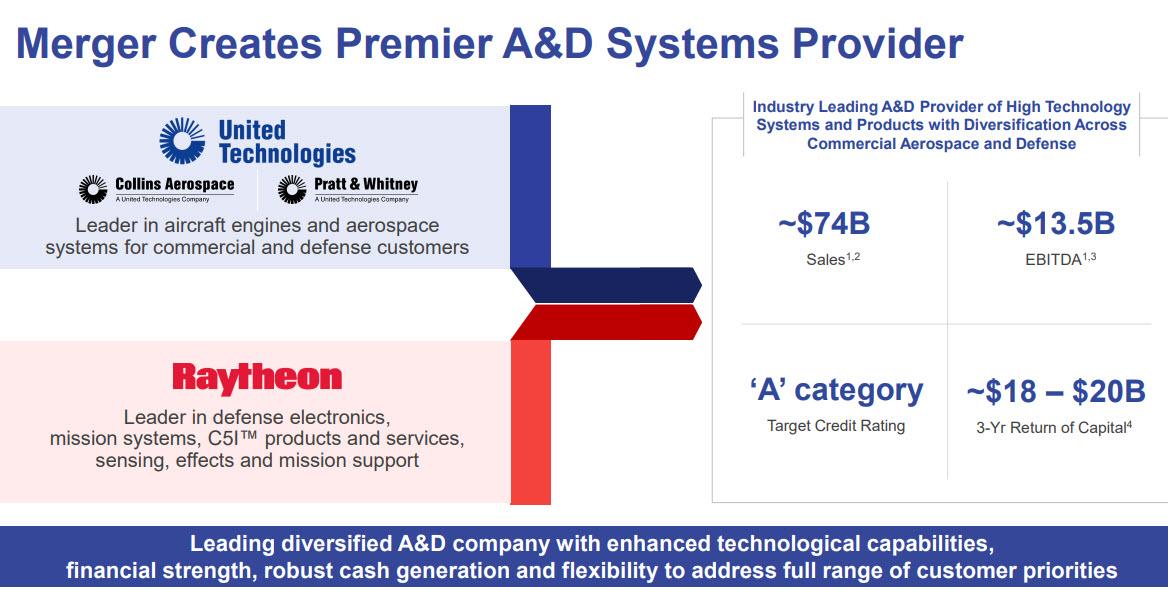
 Last week two giant war corporations, Raytheon and United Technologies, announced they would merge in early 2020. The new behemoth, to be known as Raytheon Technologies, is expected to have a combined value of over $100 billion in capitalist markets. Recent history provides context to understand today's war industry and the nature of this merger.

The nineteen-nineties witnessed a lot of mergers and acquisitions in the U.S. war industry. Some of the bigger moves were Boeing merging with McDonnell Douglas, Lockheed acquiring Martin Marietta, and Raytheon gobbling up Hughes Aircraft. These moves occurred in parallel to another phenomenon: Home and abroad, the Pentagon effectively doubled down on the corporatization of military functions. Jobs that once were carried out by the troops (e.g. mowing the lawn, serving chow, logistics, eavesdropping on governments, transportation, combat) were increasingly in the private domain, up for grabs to the shrewdest corporation.
The Clinton White House, a country club of neoliberal ideology, was fully onboard. It encouraged the corporatization of the War Department. This aligned well with President Clinton's other accomplishments in office: attacking sovereign nations (e.g. expanding sanctions against Iran's oil sector in 1995, and launching industry ordnance at Afghanistan, the Balkans, Iraq, and Sudan); brutalizing the destitute, working poor, and caged (via the 1996 Illegal Immigration Reform & Immigrant Responsibility Act, the 1996 Prison Litigation Reform Act, the 1996 Personal Responsibility & Work Opportunity Act, and the 1994 Violent Crime Control & Law Enforcement Act); and aiding corporate greed (by passing NAFTA and the 1999 Financial Services Modernization Act and boosting spending on war). One of Clinton's most damaging achievements, the Telecommunications Act of 1996, complemented these activities by deregulating the telecoms and allowing cross-ownership in corporate media, clogging the information space with info-tainment and permitting corporate ideology to further dominate our perception of the world around us. Support for neoliberal economic polices, including the corporatization of war, is one of many traits that both parties in the D.C. regime share.

When the dust settled at the end of the 1990s, three beasts hogged about two-thirds of the power in the U.S. war industry: Boeing, Lockheed Martin, and Raytheon. These corporations set out to please shareholders and insatiable Wall Street investment firms. The Pentagon had less leverage over the war industry at this time, because, in part, these three beasts were nearly the only game in town. War corporations soon stepped up their game, influencing Capitol Hill with greater ferocity and creativity. Campaign contributions and lobbying expenditures increased. And more titans of capital cycled from war corporations through the Pentagon's leadership ranks. The war industry also pursued more foreign military sales, including increased sales to brutal regimes like Mubarak's Egypt, the House of Saud, and the Zionist Entity known as Israel. Enter 9.11. With Muslims to bomb and Asian countries to occupy, the Department of War acceded to full corporatization.


Read more

Thursday, 20 June 2019

‘Irrational & unlawful’: UK govt dealt landmark defeat over arms sales to Saudi Arabia

RT

In a legal challenge brought by anti-arms trade campaigners, three of the UK’s top judges concluded that it was “irrational and unlawful” of the government to allow arms sales to Saudi Arabia without making proper checks. 

The UK Court of Appeal has ruled that the British government has “made no attempt” to assess whether Riyadh had breached international humanitarian law in the Yemen war.
… the process of decision-making by the Government was wrong in law in one significant respect.
However, the judges said that their ruling does not mean that UK arms export licences to Saudi Arabia have to be suspended immediately.

See also: UK report on ‘human rights’ forgets to mention Saudi Arabia in section on Yemen war

Monday, 10 June 2019

Military-Industrial Blockbuster: United Technologies To Buy Raytheon, Creating One Of World's Largest Defense Firms

Zero Hedge

United Technologies has agreed to buy Raytheon in an all stock deal, forming one of the world's largest aerospace and defense companies with more than $74 billion in revenue and $13.5 billion in EBITDA, through one of the industry’s biggest deals ever.


With $69 billion in pure A&D sales, the new company will be the third largest Aerospace and Defense company in the world after Boeing and Airbus.


Looking ahead, the combined company is expected to generate tremendous cash flow growth...

Read more

Tuesday, 30 April 2019

U.S. Responsible for 36 Percent of Total Global Military Expenditure

trust.org

Global military expenditure reached its highest level last year since the end of the Cold War, fueled by increased spending in the United States and China, the world's two biggest economies, a leading defence think-tank said on Monday.

In its annual report, the Stockholm International Peace Research Institute (SIPRI) said overall global military spending in 2018 hit $1.82 trillion, up 2.6 percent on the previous year.

That is the highest figure since 1988, when such data first became available as the Cold War began winding down.

U.S. military spending rose 4.6 percent last year to reach $649 billion, leaving it still by far the world's biggest spender. It accounted for 36 percent of total global military expenditure, nearly equal to the following eight biggest-spending countries combined, SIPRI said.

China, the second biggest spender, saw military expenditure rise 5.0 percent to $250 billion last year, the 24th consecutive annual increase.

Read more

Thursday, 25 April 2019

Jeremy Hunt is lying about Britain’s role in Yemen


In a recent Politico article Jeremy Hunt, foreign secretary, has defended the sale of arms to Saudi Arabia and The UAE. Arms that are often used in perpetuating Yemen’s civil war. Hunt claims the UK-Saudi relationship ‘Helps us influence their leaders’ toward peaceful resolution. In reality, Britain’s supply of arms only feeds the world’s worst humanitarian crisis.

The multi Billion pound Al Yamamah (The Dove) arms deal provides Saudi Arabia with 25% of its arms imports for use fighting Houthi forces in Yemen. As the second largest arms supplier to the Saudi led coalition Britain is culpable in its infamous war crimes. Such atrocities have included bombing a wedding party killing 20 civilians; bombing a funeral killing 140 civilians and wounding 600 more; and even an air attack on a school bus leaving 40 Yemeni children dead. British firm BAE systems provides the typhoon jets used for this type of air to surface attacks. No wonder that the UK wouldn’t back a UN investigation into Saudi war crimes.

Tens of thousands of Yemenis have been killed in the conflict, and millions more displaced. Combined with mass starvation and a cholera epidemic Yemen is now the site of the worst humanitarian crisis in the world. 


Read more

Thursday, 28 March 2019

Ukraine: US arms sales making big business money while ordinary people pay the price

The Conversation

Selling lethal weapons to Ukraine is the equivalent of pouring kerosene onto a flame. But ongoing hostilities between Ukraine and Russia – including the Kerch strait crisis, which began late last year when Russia intercepted three Ukrainian vessels and took 24 crew members captive – are also a major business opportunity for the world’s largest defence contractors. Despite the risk of serious escalation, these companies continue to provide Ukraine with lethal aid so it can defend itself against Russia – for a price, of course.

The US special representative for Ukraine negotiations, Kurt Volker, stated recently that Washington remains committed to providing support to Ukraine and its military, including anti-tank systems. He even hinted that the US is considering expanding the types of lethal aid that it could begin selling to Ukraine, saying: “We also need to be looking at things like air defence and coastal defence.”

This is a troubling prospect. In March, US army general Curtis Scaparrotti said that the US could also bolster the Ukrainian military’s sniper capabilities. Speaking to the Senate Armed Services Committee, he said:
There are other systems, sniper systems, ammunition and, perhaps looking at the Kerch Strait, perhaps consideration for naval systems, as well, here in the future as we move forward.
Read more

Monday, 11 March 2019

Saudi Arabia Has Become the World’s Top Arms Buyer

ANTIWAR.COM 

Most reports on international arms sales focus on the biggest sellers. That inevitably means the United States, the largest exporter by far in the growing market. You can’t have sales without buyers, however, and that side of the equation centers heavily on the Middle East.

Middle Eastern countries now buy more than a third of all global arms. The biggest customer not just in the Middle East but in the world, is Saudi Arabia, whose purchases have soared 192% over a five year period.

Locked in an endless war in Yemen, and always looking toward a war with Iran, Saudi Arabia has seen its military spending soar in recent years. Recent estimates have put Saudi Arabia at the third costliest military on Earth, behind on the US and China, and ahead of Russia.

Unlike the US, China, or Russia, however, Saudi Arabia lacks a huge decades-old military-industrial complex to make all their weapons of war. Instead, the Saudis are pouring into overseas contracts, buying vast amounts of arms from the US and Britain.

The Saudis show no sign of slowing down on this, but it isn’t clear how sustainable this is either. Already, Saudi war crimes are fueling a lot of calls to rethink arms sales to them. 

Read more

Thursday, 7 March 2019

Robert Fisk Exposes Israel’s Hidden Role in the Brewing India-Pakistan Conflict


Israel’s export of Zionist nationalism and neocolonialism — and the accompanying oppression that in practice actually helps to create many of the very terrorist groups they fight against — is just as dangerous as its export of arms.

LONDON — Well-known British journalist Robert Fisk recently wrote a very telling and troubling article in The Independent regarding the outsized role of the state of Israel in the burgeoning tensions between India and Pakistan, two nuclear powers. The story — despite its importance, given the looming threat of nuclear war between the two countries — was largely overlooked by the international media.

The tit-for-tat attacks exchanged between India and Pakistan last week have seen long-standing tensions between the two countries escalate to dangerous proportions, though Pakistan helped to deescalate the situation somewhat by returning and “saving” an Indian pilot whose plane had been shot down in retaliation for India’s bombing of targets in a disputed area administered by Pakistan.

That bombing was retaliation for a car bomb attack launched by Jaish-e-Mohammed (JeM) militants, a group that both India and Pakistan recognize as a terrorist organization, against Indian forces. Some analysts have speculatedthat India’s decision to bomb this area was made by Indian President Narendra Modi, a Hindu ethno-nationalist, in order to rally his base ahead of upcoming Indian elections in May.

et, whatever the reason, the bombing has revealed the close ties that have formed between Modi’s India and Israel, particularly between their militaries. As Fisk notes, following the bombing, Indian media heavily promoted the fact that Israeli-made bombs — specifically, Rafael Spice-2000 “smart bombs” — had been used in the attack. Fisk writes:

Like many Israeli boasts of hitting similar targets, the Indian adventure into Pakistan might owe more to the imagination than military success. The ‘300-400 terrorists’ supposedly eliminated by the Israeli-manufactured and Israeli-supplied GPS-guided bombs may turn out to be little more than rocks and trees.”
Read more

Friday, 8 February 2019

School of War: The Arms Industry and Education in the UK

Lucy Nichols
Stop The War Coalition

By allowing the arms trade into schools and colleges we are teaching children that innovation for the sake of destruction is acceptable

Private arms companies and government-owned military organisations have wormed their way into the British education system. Global arms companies have links with many UK Universities; investing in research programmes, poaching recent graduates and funding new buildings.

But these links stretch further than this into our education system, as weapons manufacturers also invest their time and money into schools across the country. Raytheon, an American weapons and cyber security company with multiple UK sites, holds an annual ‘Quadcopter Challenge’ in which children are encouraged to design the best drone they can. Billed as a means for the company to ‘invest in its future workforce’ by promoting STEM (science, technology, engineering and mathematics) subjects, this programme reached over 1,000 14-15 year-olds nationwide in 2018 and has the backing of the government; last year Baroness Sugg CBE helped judge the contest.

Pushing STEM subjects is common amongst private arms manufacturers and government-funded military organisations; QinetiQ and BAE Systems each boast various outreach programmes. In 2017, BAE partnered up with the Royal Navy and the RAF to visit 420 schools with a workshop designed to encourage the uptake of science and maths amongst 10-13 year olds. That year, BAE Systems also joined forces with the Royal Navy, QinetiQ and the University of Portsmouth to open a college.

Read more

Saturday, 12 January 2019

UK councils invest £566m in arms firms linked to Yemen war

theguardian.com


More than half a billion pounds of council workers’ pension money has been directly invested by local authorities in arms companies implicated in Saudi Arabia’s military campaign in Yemen, in which thousands of civilians have been killed.

Council pension funds have sizeable shareholdings in BAE Systems, Airbus, Lockheed Martin, Raytheon and Northrop Grumman, according to nearly 100 freedom of information requests.

Between them, 43 pension funds directly hold shares worth £566m in the five companies and earned more than £18.5m in dividends in 2018, a period in which civilian deaths reportedly surged and a punishing famine took hold.

The councils also hold hundreds of millions of pounds in shares in the five companies via pooled investments, which they do not control directly.

The holdings mean thousands of local authority staff will have their retirement payouts part-funded by the companies, some of which manufacture arms linked to incidents in which civilians and children were killed.

The Guardian gathered the data through the freedom of information website 
WhatDoTheyKnow.com.

Read More

Wednesday, 13 June 2018

UK seeks no assurances from Israel over use of British arms in killing of Palestinians

RT

The UK is conducting a “business as usual” relationship with Israel, seeking no assurances from the country regarding the use of British arms in the recent ‘massacre’ of Palestinians in Gaza, according to a UK historian.

Mark Curtis, the Middle East Eye journalist and historian, has taken to social media to highlight three major issues with the support that the UK government is currently giving the Israeli state, each of which demonstrate the UK’s “complicity” with a country facing numerous accusations of human rights abuses.


Read more
Related Posts Plugin for WordPress, Blogger...