Search This Blog

Showing posts with label Biology. Show all posts

Monday, 19 August 2019

Newly discovered organ that senses pain may be lurking under your skin

Catherine Zuckerman
National Geographic


Most people who’ve been jabbed by a needle know the drill: First the pierce, then the sharp, searing pain and an urge to pull away, or at least wince. While the exact circuitry behind this nearly universal reaction is not fully understood, scientists may have just found an important piece of the puzzle: a previously unknown sensory organ inside the skin.

Dubbed the nociceptive glio-neural complex, this structure is not quite like the typical picture of a complex organ like the heart or the spleen. Instead, it’s a simple organ made up of a network of cells called glial cells, which are already known to surround and support the body’s nerve cells. In this case, the glial cells form a mesh-like structure between the skin’s outer and inner layers, with filament-like protrusions that extend into the skin’s outer layer. (Also find out about a type of simple organ recently found in humans, called the interstitium). 

Read more

Sunday, 14 July 2019

The Pentagon’s New Laser-Based Tool Uses Your Heartbeat to Track You

Singularity Hub

The government’s hefty arsenal of surveillance tools just welcomed a powerful new member. Rather than monitoring an external device—a bug or a smartphone—or even the exterior features of your face, the new tech aims straight for your heart. Literally.

First reported by MIT Technology Review, the US Pentagon is developing an infrared laser that captures a person’s unique “cardiac signature” from as far as 200 meters—the length of just over two football fields—away, as long as you’re still. According to Steward Remaly of the Pentagon’s Combating Terrorism Technical Support Office (CTTSO), even longer ranges may be possible with higher intensity lasers.

Although chilling, the tech builds on previous ideas.

Contact infrared sensors have long been used to monitor a person’s pulse, in a clinical setting or when traversing high altitudes. Here, the devices shoot infrared light into a finger and measure how much blood flow alters the refraction. Unlike this classic setup, the Pentagon’s new tech—dubbed Jetson—uses laser doppler vibrometry that detects minute movements on the skin caused by heartbeat.

Currently under development by Ideal Innovations, Inc., a veteran-owned biometrics, forensics, and scientific company based in Arlington, Virginia, the goal of Jetson is to positively identify an individual within five seconds using a “heartprint.”

“Existing long-range biometric methods that rely on facial recognition suffer from acquiring enough pixels at a distance to use the face matching algorithms and require high performance optics to acquire visual signatures at significant distances,” explained the CTTSO. “The Jetson effort…is a ruggedized biometric system that will capture cardiac signatures to aid in the positive identification of an individual” from a distance with little lag time.

Jetson is just the latest attempt at surveillance from a distance. Rather than old-school technologies such as fingerprinting or retinal scans, this new generation of surveillance technologies uses biometrics to monitor your every move—be it face, speech, heartbeat, or even brain activity—from a distance.

The tech may sound extreme, but Jetson is using the same playbook as biometrics for security. And to project where surveillance is going, it pays to look at biometrics research as the canary in the coal mine. Using your finger or face to unlock your phone is just the convenient side of things—what makes your biometric signature secure as a passcode is also what makes you identifiable as an individual. 

Read more

Monday, 13 May 2019

Darwinism, Creationism... How About Neither?

"My point is to show to people who passively believe Darwinism is true but have never done any serious research to confirm or deny this, that Darwinism has massive flaws and identifying them doesn't have to lead us towards Creationism." 

------------------- 

Mandatory Intellectomy
Sott.net


Is Creationism true? Or is Darwinism true? And why would it have to be one or the other? It seems it hasn't occurred to many people that both might be wrong. Since both of them, despite what they might claim, are more about ideology than science, it shouldn't really be too surprising that science doesn't really support either, at least not in the form they're presented.

Most people who believe in Creationism do so because they were raised Christians, and they believe in the Bible (a bit too literally at that). On the other hand, there seem to be three main reasons why people believe in Darwinism: they've been taught it at school, they only have a vague sense of the underlying science (or the lack thereof, as we'll see), and/or they're convinced Creationism is nonsense and believe their only other option is Darwinism. There are, however, some serious problems with all three of these justifications.

First, the way Darwinism is taught in schools is extremely deceptive and would require an article of its own, but I will outline what's wrong with Darwinism in general and with the way it is presented to us.

Second, the vague knowledge of the science and facts relevant to evolution that most people have actually prevents them from seeing the countless problems of Darwinism. The notion that organisms evolved step by step is easy to swallow when you have no clear idea what exactly these steps would have to be and how exactly the mechanism of evolution is supposed to work. Without a clear sense of what the cell looks like, what it contains, how complex it is, how it works, and what DNA does, you're only left with the talking points that affirm that it all really does work and that science has proved it (and that only ignorant people question it.) You rarely get to hear how flimsy this science actually is, how elusive the proofs are, and how many scientists disagree with the mainstream narrative. Anti-Darwinian ideas are often literally banned from schools, usually on the false premise that they're not scientific. True scientific reasoning is sorely lacking in Darwinism itself however.

Third, Darwinism and Creationism aren't our only choices. This is not an election where you have to choose between two candidates. Just like with a choice between two presidential candidates, if you allow yourself to be convinced that those are your only options, you've already lost. The assumptions that anyone who isn't a Darwinist must be a Creationist and that if you're not a Creationist, you have to be a Darwinist, are false. 


There's Creationism, there's Darwinism, and then there's the truth. This rarely noticed third option is what I want to focus on in this article. And to find the truth, we must identify the lies. I won't talk about Creationism, because it's based on a fictional book and it's about trying to fit facts into the book's narrative. Besides, no amount of proof will move Creationists from their beliefs. My point is to show to people who passively believe Darwinism is true but have never done any serious research to confirm or deny this, that Darwinism has massive flaws and identifying them doesn't have to lead us towards Creationism. 

Read more

Monday, 29 April 2019

Genetically Modified Babies. The Genetic Editing of Human Life is “Big Business”

Prof Michel Chossudovsky
Global Research

Last November, He Jiankui, a Chinese biology professor at Southern University of Science and Technology (SUST) in Shenzhen (Guangdong Province) announced that he and his team had created the World’s first “genetically edited babies”: twin babies Lula and Nana. 

Dr. He Jiankui, used the CRISPR technology “to alter the embryos of seven couples [allegedly] to make them resistant to HIV”.  He Jiankui made his announcement at the Second International Summit on Human Genome Editing held at the University of Hong Kong.  

Dr. He claims to have used CRISP “to tweak the DNA of human embryos during in vitro fertilization”.

The broad implications of this experiment are far-reaching. The genetic editing of human life forms including embryos has a bearing on the future of humanity.

It opens up the pandora’s box of genetic engineering applied to human beings.
It undermines the “reproduction of real life”. Potentially, it destroys humanity.


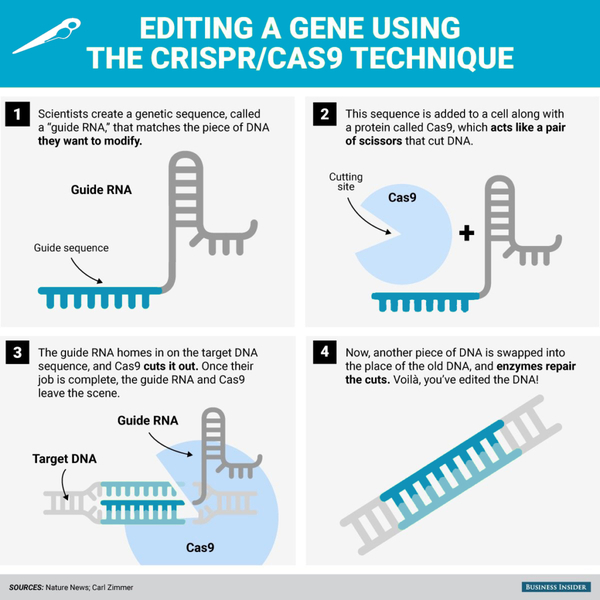
 Screenshot Source Nature News Carl Zimmer, Click image to enlarge


The experiment raises important scientific and ethical issues. Human embryos are not commodities.

The Chinese government immediately opened an investigation, Dr He Jiankui was fired by his University in January 2019.

Corporate Interests: Genetic Editing is “Big Business”

Despite government regulations and ethical issues, there are powerful corporate interests involved in the development and patenting of genetic editing of life forms including Dr. He’s findings on “genetically modified babies”.

Read more

Saturday, 27 April 2019

New Lifelike Biomaterial Self-Reproduces and Has a Metabolism

Singularity Hub

Life demands flux.

Every living organism is constantly changing: cells divide and die, proteins build and disintegrate, DNA breaks and heals. Life demands metabolism—the simultaneous builder and destroyer of living materials—to continuously upgrade our bodies. That’s how we heal and grow, how we propagate and survive.

What if we could endow cold, static, lifeless robots with the gift of metabolism?

In a study published this month in Science Robotics, an international team developed a DNA-based method that gives raw biomaterials an artificial metabolism. Dubbed DASH—DNA-based assembly and synthesis of hierarchical materials—the method automatically generates “slime”-like nanobots that dynamically move and navigate their environments.


Read more

The Foreskin: Why Is It Such A Secret In North America?

Spoony Quinn  

The male prepuce, or foreskin, is a highly mobile and extraordinarily sensitive double fold of tissue that is the end of the penis.  Why do Americans go out of their way to remove this part of human anatomy, when the rest of the world does not?


Note: Never have I gotten so many comments and emails in response to a blog post, much less rumors that I'm a man. I'll keep that in mind. And for the record, it wasn't until 2014 that I had the opportunity to put a man's intact penis in my very much female vagina. This frictionless appendage made me realize that sex doesn't have to be painful or cause hazardous inflammation. And with that image in your mind...

I was nineteen or twenty years old when a male friend of mine, we'll call him Bill, let me in on a most shocking fact: He was missing part of his penis, and so were almost all boys and men that I had ever seen in my entire life, as well as all the anatomical diagrams that I had ever seen. Ever.


Sure, I had heard of circumcision as a Jewish religious practice, but thought myself unlikely to ever see its results. Little did I know, all the male genitalia I had seen both in real life and as depicted in American anatomy books, had been edited in exactly the same way.  The shock from this revelation overwhelmed me for weeks, especially since I considered myself to be fairly knowledgeable about anatomy. (My interests included biology and drawing biological structures).


Why would anyone selectively remove foreskins, not just from real people but from scientific anatomical texts, which I had thought were meant to represent the natural human form? And why did no one ever tell me about this? It was as though a basic feature that males (of all mammals) are normally born with was not to be understood or even acknowledged.


I spent the next few weeks at the local library, immersing myself in primary and secondary source materials on the relevant anatomy, medicine and history, before I was satisfied that I had an accurate understanding of what was going on. To summarize what I had found:
  • The foreskin (or prepuce) is a man's most sensitive erogenous zone, more well-developed in humans than in other species of mammal. It has unique sexual functions (more on that later), which circumcision effectively destroys -- and this is intentional:
  • Although foreskin-chopping was once a purely religious or cultural practice, it was introduced to American medicine in the late 1800s, as a 'cure-all', thanks to the trend of pathologizing (treating as illness) normal human sexuality and healthy genitalia.
Read more

Wednesday, 3 April 2019

A Birth Control Pill for Men Is One Step Closer

Comment: What could possibly go wrong?

------------------

Singularity Hub

Women have long borne the brunt of contraception responsibilities, but this may be shifting in coming years. A new trial published in the Journal of Clinical Endocrinology and Metabolism details strides made by researchers in developing a male version of the birth control pill, bringing it within reach of the long-sought-after FDA approval.

Like the female equivalent, a male oral contraceptive works by tweaking the body’s hormones to temporarily suppress fertility. In women, this involves introducing synthetic estrogen and/or progestin, which mimics progesterone, a hormone released in large amounts during pregnancy. When introduced into the female body, the pill stops ovulation, prevents sperm from entering the cervix, and thins the uterine lining, making implantation of a fertilized egg far less likely.

In men, the idea is to stop the production of sperm, which relies on both progesterone and androgens like testosterone.

The researchers developed 11-beta-MNTDC, a chemical cocktail that can mimic specific androgens and progesterone. These synthetic versions are agonists, meaning they can bind to the same receptors as natural chemicals, but they produce a different response from the body.

When introduced into men, 11-beta-MNTDC fills cells’ androgen and progesterone receptors, blocking the natural versions from being used and suppressing production of hormones necessary for sperm production, while allowing for the rest of the body to function normally.

In March the researchers presented the results of a 28-day trial during which they tested 11-beta-MNTDC on 40 healthy men. 10 of these men were given a placebo, while the other 30 were given varying doses of the drug. They found that the participants’ androgen levels fell more the higher the dose, with the average non-placebo participant levels falling below the limits of fertility.

Read more

Saturday, 23 March 2019

Scientists From Around the World Call for Immediate Halt to ‘Genetically Altered Children’

Derrick Broze
The Mind Unleashed 

Scientists and ethicists from around the world are warning of the consequences of failing to implement a temporary global halt on gene editing of human eggs, embryos, and sperm. 

In a letter to the journal Nature, 18 scientists and ethicists from seven countries called for a global moratorium on the type of gene editing that can result in genetically altered babies. The letter was prompted by a 2018 announcement by a Chinese scientist declaring the birth of the world’s first gene-edited twin babies.

The 18 signatories of this call include scientists and ethicists who are citizens of 7 countries. Many of us have been involved in the gene-editing field by developing and applying the technology, organizing and speaking at international summits, serving on national advisory committees and studying the ethical issues raised.”
Fears of “designer babies” have been on the rise in the last decade as scientists move closer to producing embryos which have been genetically modified to produce children with specific, desirable characteristics. This vision was once the exclusive domain of Hollywood movies like Gattaca, but now, a future where parents are able to pick and choose exactly how their child’s genes express themselves is eerily close.

Specifically, the group is calling for a moratorium on germline cells—in this case egg or sperm cells—that can then be inherited and “could have permanent and possibly harmful effects on the species.”

To begin with, there should be a fixed period during which no clinical uses of germline editing whatsoever are allowed,” the scientists write. “As well as allowing for discussions about the technical, scientific, medical, societal, ethical and moral issues that must be considered before germline editing is permitted, this period would provide time to establish an international framework.”

From that point on, individual nations will choose their own paths. The scientists predict that some nations may choose to continue a moratorium indefinitely or a permanent ban. They also call on any nation that chooses to allow specific applications of germline editing to first give public notice and engage in an “international consideration about the wisdom of doing so.” The group also calls for a “transparent evaluation” to determine if germline editing is justified and for a nation to gain a “broad societal consensus” over the appropriateness of the editing.

Read more

Monday, 18 March 2019

Vaccines Are Pushing Pathogens to Evolve

Quanta Magazine


If you don’t have these pathogens evolving in response to vaccines, then we really don’t understand natural selection.

Just as antibiotics breed resistance in bacteria, vaccines can incite changes that enable diseases to escape their control. Researchers are working to head off the evolution of new threats.
...

Researchers at the U.S. Department of Agriculture posit that the virus that causes Marek’s has been changing over time in ways that helped it evade its previous vaccines. The big question is whether the vaccines directly incited these changes or the evolution happened, coincidentally, for other reasons, but Read is pretty sure the vaccines have played a role. In a 2015 paper in PLOS Biology, Read and his colleagues vaccinated 100 chickens, leaving 100 others unvaccinated. They then infected all the birds with strains of Marek’s that varied in how virulent — as in how dangerous and infectious — they were. The team found that, over the course of their lives, the unvaccinated birds shed far more of the least virulent strains into the environment, whereas the vaccinated birds shed far more of the most virulent strains. The findings suggest that the Marek’s vaccine encourages more dangerous viruses to proliferate. This increased virulence might then give the viruses the means to overcome birds’ vaccine-primed immune responses and sicken vaccinated flocks.

Most people have heard of antibiotic resistance. Vaccine resistance, not so much. That’s because drug resistance is a huge global problem that annually kills nearly 25,000 people in the United States and in Europe, and more than twice that many in India. Microbes resistant to vaccines, on the other hand, aren’t a major menace. Perhaps they never will be: Vaccine programs around the globe have been and continue to be immensely successful at preventing infections and saving lives.

Recent research suggests, however, that some pathogen populations are adapting in ways that help them survive in a vaccinated world, and that these changes come about in a variety of ways. Just as the mammal population exploded after dinosaurs went extinct because a big niche opened up for them, some microbes have swept in to take the place of competitors eliminated by vaccines. 

Read More

Sunday, 20 January 2019

Researchers develop smart micro-robots that can adapt to their surroundings

phys.org

A group of scientists led by Selman Sakar at EPFL and Bradley Nelson at ETH Zurich drew inspiration from bacteria to design smart, highly flexible biocompatible micro-robots. Because these devices are able to swim through fluids and modify their shape when needed, they can pass through narrow blood vessels and intricate systems without compromising on speed or maneuverability. They are made of hydrogel nanocomposites that contain magnetic , allowing them to be controlled via an .

In an article appearing in Science Advances, the scientists describe a method for programming the robot's shape so that it can easily travel through fluids that are dense, viscous or moving at rapid speeds

Read more

Friday, 22 June 2018

Thousands of Swedes are inserting microchips into themselves – here's why

Phys.org

Thousands of people in Sweden have inserted microchips, which can function as contactless credit cards, key cards and even rail cards, into their bodies. Once the chip is underneath your skin, there is no longer any need to worry about misplacing a card or carrying a heavy wallet. But for many people, the idea of carrying a microchip in their body feels more dystopian than practical.

Some have suggested that Sweden's strong welfare state may be the cause of this recent trend. But actually, the factors behind why roughly 3,500 Swedes have had microchips implanted in them are more complex than you might expect. This phenomenon reflects Sweden's unique biohacking scene. If you look underneath the surface, Sweden's love affair with all things digital goes much deeper than these microchips. 

The term biohackers refers to those amateur biologists who conduct experiments in biomedicine, but do so outside of traditional institutions – such as universities, medical companies and other scientifically controlled environments. Just as computer hackers hack computers, biohackers hack anything biological. 

Biohacking is also a culture and a diverse one, with many different subgroups – all with different types of interests, goals and ideologies. But within this diversity there are two main groups: "wetware hackers" and transhumanists.

Wetware hackers are citizen science hobby biologists who build laboratory equipment from household utensils. They conduct so called "frugal science", where they find inexpensive solutions that will improve the living standards for people in developing countries. But they also do more playful experiments where plants are genetically modified to become fluorescent, or algae is used to make new types of beer.

The other group are the transhumanists, who focus on enhancing and improving the human body – with the aim, in the long run, of improving the human race. Only through bettering ourselves – and escaping biological boundaries – will humans be able to compete with AI in the future. 

Often, different biohacking scenes reflect the different societies and cultures in which they develop. So, for example, European biohackers generally differ from their North American counterparts. North American groups are concerned with developing alternatives to the established healthcare practices. European groups, meanwhile, are more focused on finding ways of helping people in developing countries or engaging in artistic bio-projects.

Read more (+ video)

US military wants to know what synthetic-biology weapons could look like

Comment: US military telegraphing what they already know and what they are already experimenting with. Their "concerns" and curiosity are merely a way to suggest Russia is at fault or a legion of terrorists (most of which have been created and funded by the same minds). It's an interesting article when seen as a snapshot of their objectives. 

-------------------------

Antonio Regalado
MIT Tech Review

A study ordered by the US Department of Defense has concluded that new genetic-engineering tools are expanding the range of malicious uses of biology and decreasing the amount of time needed to carry them out.
The new tools aren’t in themselves a danger and are widely employed to create disease-resistant plants and new types of medicine. However, rapid progress by companies and university labs raises the specter of “synthetic-biology-enabled weapons,” according to the 221-page report.

The report, issued by the National Academies of Sciences, is among the first to try to rank national security threats made possible by recent advances in gene engineering such as the gene-editing technology CRISPR.

“Synthetic biology does expand the risk. That is not a good-news story,” says Gigi Gronvall, a public health researcher at Johns Hopkins and one of the report’s 13 authors. “This report provides a framework to systematically evaluate the threat of misuse.”

Experts are divided on the perils posed by synthetic biology, a term used to describe a wide set of techniques for speeding genetic engineering. In 2016, the US intelligence community placed gene editing on its list of potential weapons of mass destruction.

“Many different groups have written and spoken about the topic, with a wide spread of opinion,” says D. Christian Hassell, deputy assistant secretary of defense for chemical and biological defense, who commissioned the report in order to obtain a “consensus opinion from among the top leaders and thinkers” in the field.

Hassell says the military’s current view is that “synbio is not a major threat issue at the moment” but bears preparing for, in part because defenses like vaccines can take years to develop.

The current report attempted to weigh potential threats by considering factors such as the technical barriers to implementation, the scope of casualties, and the chance of detecting an attack. It found that while “some malicious applications of synthetic biology may not seem plausible right now, they could become achievable with future advances.”

Among the risks the authors termed of “high concern” is the possibility that terrorists or a nation-state could re-create a virus such as smallpox. That is a present danger because a technology for synthesizing a virus from its DNA instructions has previously been demonstrated.

Read more

Sunday, 10 June 2018

Wireless system can power devices inside the body

Comment: What could go wrong?

----------------------


MIT News

MIT researchers, working with scientists from Brigham and Women’s Hospital, have developed a new way to power and communicate with devices implanted deep within the human body. Such devices could be used to deliver drugs, monitor conditions inside the body, or treat disease by stimulating the brain with electricity or light.

The implants are powered by radio frequency waves, which can safely pass through human tissues. In tests in animals, the researchers showed that the waves can power devices located 10 centimeters deep in tissue, from a distance of 1 meter.

“Even though these tiny implantable devices have no batteries, we can now communicate with them from a distance outside the body. This opens up entirely new types of medical applications,” says Fadel Adib, an assistant professor in MIT’s Media Lab and a senior author of the paper, which will be presented at the Association for Computing Machinery Special Interest Group on Data Communication (SIGCOMM) conference in August.

Read more

Friday, 17 November 2017

World’s first human head transplant successfully carried out

Telegraph


The world’s first human head transplant has been carried out on a corpse in China in an 18-hour operation that showed it was possible to successfully reconnect the spine, nerves and blood vessels. 

At a press conference in Vienna on Friday morning, Italian Professor Sergio Canavero, director of the Turin Advanced Neuromodulation Group, announced that a team at Harbin Medical University had “realised the first human head transplant” and said an operation on a live human will take place “imminently”.

The operation was carried out by a team led by Dr Xiaoping Ren, who last year successfully grafted a head onto the body of a monkey.

Prof Canavero, said: “The first human transplant on human cadavers has been done. A full head swap between brain dead organ donors is the next stage.

Saturday, 11 February 2017

Salk Vaccine Institute creates human-pig GMO

Dr. Mercola
Mercola


In Greek mythology, a chimera is a fire-breathing monster created from different species, most often portrayed as a creature with a lion's head, a goat's body and a serpent's tail.

Chimeras have long been regarded as mythical creatures, to the extent that the word "chimera" also means "an illusion or fabrication of the mind" or "an unrealizable dream."1 Among humans, chimeras, or people who have two genetically distinct types of cells, do exist, however.

Most often this occurs among non-identical twins who shared a blood supply in the uterus and end up having more than one blood type (they're known as blood chimeras). The idea of a human-animal chimera has remained confined largely to mythology, however — until now. 


First Human-Pig Hybrid Created
 
Researchers from the Salk Institute for Biological Studies in La Jolla, California, have made history by creating a human-pig hybrid, a task achieved by injecting days-old pig embryos with human pluripotent stem cells.2 Such cells, like embryonic stem cells, are able to divide indefinitely and become any type of cell in the body.

The human-pig embryos were then transferred into adult pigs and allowed to grow for up to four weeks, before they were "removed and analyzed."3

The study noted that more than 2,000 hybrid embryos were transferred into surrogate sows, but only 186 later-stage chimeric embryos survived the process, each with about 1 in 100,000 human cells.
The long-term goal of such research is to figure out if it's possible to grow human organs inside other species, like pigs. Human embryo development, drug development and disease processes could also be studied using chimeras.

Animal chimeras have been developed in the past. For instance, researchers genetically engineered (GE) rat embryos to not produce a pancreas (which controls blood sugar levels), then injected mouse stem cells into them, which resulted in the growth of pancreatic tissue.

They were then able to treat diabetes by transplanting parts of the healthy organs into diseased mice.4

The development of human-animal chimeras has, however, remained in the realm of science fiction until now. Aside from the glaring ethical considerations, these types of experiments have been ineligible for public funding in the U.S., which is why the Salk Institute has had to rely on private funding for the study.5
 

Read more

Friday, 2 December 2016

Researchers Incorporate Silicon into a Living Organism: is this the Building of a Bridge between Man and Machine?

Unknown Country


Silicon is the second most common element in the Earth's crust, after oxygen. However, aside from its non-organic use by certain sea sponges and microorganisms, very little silicon is used by Earth's biology, despite making heavy use of other common elements, such as carbon, hydrogen, iron, magnesium and oxygen. This has presented a long-standing puzzle for scientists: why would nature ignore such an otherwise useful substance? While artificial methods of binding carbon and silicon have been available for some time, researchers with the California Institute of Technology were curious to see if they could get an organism to produce the same result, as a product of its metabolism. They selected the gene for producing an enzyme that could accomplish this from a bacterium, Rhodothermus marinus, that lives in Iceland's hot springs, and introduced the involved DNA into a strain of ordinary E. coli bacteria. When fed a particular type of silicon-containing precursors, the enzyme produced by the modified bacteria began catalyzing the silicon-carbon bonding process. After tweaking the bacteria with specialized mutations, the team was able to produce microbes that showed an increased efficiency in producing the silicon-organic compounds, to the point where they could out-produce artificial production methods. 

“It’s remarkable that nature is poised to do all sorts of wild things in the presence of this new manmade food,” exclaims study lead and CalTech chemical engineer Frances Arnold. Arnold hopes that this development will help researchers understand if there was a reason as to why Earth biology evolved to exclude silicon, or if it was just a matter of luck. “We can start to explore what are the costs and benefits of incorporating silicon into life.”

While nature mightn't have had as much of a use for it, humans have incorporated silicon into modern technology, capitalizing on the element's properties, from the piezoelectric properties exhibited by quartz crystals, to the growth of silica wafers for microchips. And this is where the divide between man and machine could possibly be bridged: this new biological Si-O bonding process could one day lead to the melding of silicon electronics to carbon-based human tissue. This could potentially allow us to directly benefit from advantages that are currently only found in machines: the instant download of knowledge directly into our brains, medical diagnostic nanomachines -- a new world of possibilities.


Sunday, 31 July 2016

Sex change men in the UK to give birth on NHS funds

Comment: I'm all for people being whomever they wish to be but this is getting way out of hand, frankly thanks to P.C. sensibilities going through the roof. Heaven forbid you should criticise such perceived entitlement.

"Last night critics said cash-strapped health authorities should not be spending up to £34,000 per patient to help them change sex and have children when they are rationing basic services such as cataract operations, hip replacements and even hearing aids."

In a nut-shell.   

But then that obviously means I'm being outrageously sexist and anti-transgender ...
---------------------

Sanchez Manning & Stephen Adams
Mail Online


Women having sex changes on the NHS are being given free fertility treatment so they can have babies after they become men.

At least three British men who were born female are 'on the brink' of becoming parents using IVF techniques, according to a top doctor.

And dozens more are now having their eggs frozen at NHS clinics before undergoing surgery or hormone therapy to switch sex.

The controversial treatment means that a British transgender man could soon become a parent - all funded by the taxpayer.

In rare circumstances, the man could become pregnant and give birth, although the vast majority of cases would involve implanting an embryo into a surrogate mother, often the man's partner.
Last night critics said cash-strapped health authorities should not be spending up to £34,000 per patient to help them change sex and have children when they are rationing basic services such as cataract operations, hip replacements and even hearing aids.

Tory MP Peter Bone said: 'I am not sure why the taxpayer should be funding this. I just sometimes ask if the NHS is getting its priorities right.'

But one of Britain's leading sex change doctors defended the practice, saying patients undergoing gender reassignment surgery had as much right to preserve their fertility as young people with cancer who freeze their eggs or sperm before having chemotherapy.

Dr James Barrett, of the NHS Gender Identity Clinic in West London, said three of his patients who have transitioned from women to men were close to becoming parents.

He added that, in the last year, he had asked GPs to refer about 50 of his female-to-male patients to have eggs frozen, and about 100 of his male-to-female patients to have their sperm frozen.

'As a matter of principle, anybody who loses their fertility as a result of standard NHS treatment should be able to preserve their fertility,' he argued


Read more

Sunday, 24 July 2016

New Way to Boost Crop Production Doesn’t Rely on GMOs or Pesticides

MIT Tech Review

A new treatment for cotton seeds draws on beneficial microbes that live inside plants—much like the good bacteria in our own guts—to help the crops thrive in dry conditions.

The microbe-enhanced cotton, the first product from startup Indigo Agriculture, is already growing on 50,000 acres spread across five different states in the southern United States. Indigo CEO David Perry says the treatment increases yield as much as irrigation can. The company also today announced a new $100 million investment round that brought its venture funding total to $156 million.

Many experts argue that global agricultural productivity is not growing fast enough to keep up with the increase in global demand for food. Intense competition for land and pressures to reduce chemical fertilizer and pesticide use have led technologists to search for new ways to increase yield. Adding beneficial microbes to crops could be an effective but less controversial alternative to genetic engineering.

Read more

Monday, 27 June 2016

Brave New World: Birth control is only a click away on new app

Pam Belluck
Sott.net via
The New York Times


A quiet shift is taking place in how women obtain birth control. A growing assortment of new apps and websites now make it possible to get prescription contraceptives without going to the doctor. 

The development has potential to be more than just a convenience for women already on birth control. Public health experts hope it will encourage more to start, or restart, using contraception and help reduce the country's stubbornly high rate of unintended pregnancies, as well as the rate of abortions.

Comment: Perhaps public health "experts" ought to educate themselves on the health dangers of birth control pills. Maybe then they'd be a little less cavalier about encouraging women to use them.

And as apps and websites, rather than legislative proposals or taxpayer-funded programs, the new services have so far sprung up beneath the political radar and grown through word of mouth, with little of the furor that has come to be expected in issues involving reproductive health.

At least six digital ventures, by private companies and nonprofits, including Planned Parenthood, now provide prescriptions written by clinicians after women answer questions about their health online or by video. All prescribe birth control pills, and some prescribe patches, rings and morning-after pills. Some ship contraceptives directly to women's doors.

Some accept insurance, including Medicaid for women with low incomes; some charge modest fees. Some send prescriptions to local pharmacies, where women can present their insurance information when picking up the contraceptives.

"At first I didn't believe it," said Susan Hashem, 24, an auditor in Dearborn, Mich., who wanted to restart birth control pills without missing work for a doctor's appointment. She noticed an app called Lemonaid. For $15, a doctor reviews a woman's medical information and sends a pill prescription to a local pharmacy.

"I thought it was just a setup to get money," she said. But after she answered the health questions one evening, "a doctor actually contacted me after office hours," and the next morning, she picked up three months' worth of pills. 


Read more
 
Related Posts Plugin for WordPress, Blogger...